


Best Police Vest & Body Armor for Law Enforcement (2026 Guide)

Quick answer: For most patrol officers, a NIJ Listed Level IIIA concealable soft armor vest is the right daily-wear choice; it stops handgun rounds up to .44 Magnum at the 0101.06 test parameters. Tactical units, K-9 handlers, and SWAT operators step up to overt plate carriers with Level III (RF1) or Level IV (RF3) hard plates for rifle threats. Not all departments issue armor that fits or wears well, so officer-purchased gear remains common.
An officer's vest is the last layer between a duty shift and an emergency room. Yet many U.S. agencies still issue armor that is heat-trapped, ill-sized, or past its five-year service life, which is why officers regularly buy their own. The FBI's annual Law Enforcement Officers Killed and Assaulted (LEOKA) program documents tens of thousands of officer assaults on duty each year, the majority involving firearms or edged weapons (see the FBI Crime Data Explorer LEOKA dashboard). The right vest, correctly sized and rated, is the difference between a recoverable injury and a line-of-duty death.
This guide walks through the categories sworn officers actually buy: concealable soft armor for patrol and plainclothes work, overt tactical vests for visible deterrence, covert designs for undercover operations, K-9 vests, plate carriers, and the auxiliary gear (helmets, ballistic shields, trauma pads) that rounds out a duty kit. Every product called out is in stock at Bulletproof Zone, and every threat-level claim ties back to the published NIJ Standard 0101.06 Compliant Products List.
How police body armor evolved (and why it matters today)
Smith & Wesson sold the first commercial police "Barrier Vest" in the early 1970s, designed by Richard "Dick" Armellino with seven layers of nylon (Police1 obituary, 2010). It was heavy and rated only for low-velocity handgun rounds. The first NIJ ballistic-resistance standard followed in 1972, formalizing the testing protocol that still anchors the U.S. armor industry.
Today the controlling standard is NIJ Standard 0101.06 (2008), with over 400 currently-listed models on the Compliant Products List. NIJ closed 0101.06 to new applications on January 5, 2024 and is transitioning to NIJ Standard 0101.07, published November 29, 2023. As of May 2026, no products have been issued a 0101.07 Notice of Compliance yet (verify current status at nij.ojp.gov before purchase). The practical takeaway for officers: 0101.06 is what's on the shelf, and the IIIA / III / IV level codes will remain the operative shorthand on duty rosters and procurement specs through at least the end of 2027.
How to pick a police vest: threat level, fit, and use case
Three decisions drive every police vest purchase:
Threat level. Level II stops most 9mm and .357 Magnum at 0101.06 test velocities. Level IIIA adds .44 Magnum and most submachine-gun rounds. Level III hard plates defeat 7.62×51mm M80 ball; Level IV defeats .30-06 M2 AP. The corresponding 0101.07 codes (HG2 for old IIIA, RF1 for old III, RF3 for old IV) are starting to show up in 2026 procurement language but the underlying ballistic threats are unchanged.
Wear profile. Patrol officers in uniform default to overt or covert carriers worn over the shirt. Detectives, federal agents, and undercover units need concealable panels worn under business or plain clothing. Tactical officers (SWAT, MACTAC, fugitive task forces) wear external plate carriers with hard armor.
Fit and service life. A correctly fitted vest covers the sternum to the navel and wraps the lateral ribs without restricting shouldering a long gun. Soft armor has a manufacturer-rated service life (commonly five years from date of manufacture) and should be replaced on schedule even if it has not been struck. The federal Bulletproof Vest Partnership (BVP) program, administered by the Bureau of Justice Assistance, reimburses qualifying agencies for a portion of armor cost; patrol officers without BVP coverage typically self-fund through manufacturer payment plans.
Concealable, overt, and covert vests for patrol officers
Concealable soft armor: under-uniform daily wear
Concealable bullet- and stab-resistant vests are the workhorse of American policing. They wear under a uniform shirt or plain clothes, breathe well enough for an eight-to-twelve hour shift, and disappear under a duty belt. Plainclothes detectives, federal agents, and front-line patrol officers favor them because they preserve a non-tactical silhouette while still covering the vital zone.
Safeguard Armor StealthPRO Concealed Vest

- 100% DuPont Kevlar soft panels, configurable to NIJ 0101.06 Level II or IIIA ballistic, plus NIJ-STD 0115.00 Level 1 or 2 edged-blade and spike protection.
- Front and back SAPI pockets accept 10"×12" Level III or IV hard plates for rifle threats during high-risk warrants.
- 5.5 lb base weight, Coolmax mesh moisture-wicking liner, and adjustable side and waist straps for shift-long fit.
- Seven sizes (S–4XL), three torso lengths, and a FemPro panel cut for women officers — the latter is still the single most common fit complaint we see from female patrol officers.
Legacy Safety & Security Level IIIA Tactical Vest

The Legacy IIIA tactical vest sits in the overt category at a price point most departments can clear without a BVP grant. Aramid-fiber front shooter's-cut panel is dual-rated for NIJ Level IIIA ballistic plus E1 spike/stab. Optional rear and side inserts (10"×12" rear, 6"×6" side) extend coverage to the kidneys and lateral ribs. Under five pounds fully kitted, with MOLLE/PALS webbing on the front, back, and sides for radios, cuffs, and reload pouches. Available in black, coyote, ranger green, and gray across six sizes. One trade-off: the carrier shell is hook-and-loop closure rather than a true cummerbund, so officers running it eight hours a shift sometimes report shoulder hot spots under a heavy radio harness.
BulletSafe VP3 Bulletproof Vest

The BulletSafe VP3 is the closest thing in the niche to an entry-level standard. Wrap-around panels combine aramid and polyethylene fibers; the model is NIJ Listed under 0101.06 at Level IIIA. (Note: "+" designations such as IIIA+ are manufacturer marketing language, not part of the NIJ Standard 0101.06 nomenclature.) Carrier weight runs 3.39 to 6.90 lb across eight sizes (XS–4XL), with a 600-denier polyester shell and breathable liner. The Tactical Front Carrier accessory converts the covert VP3 into an MOLLE-equipped overt rig in under a minute, which is useful for officers who need both profiles on the same shift.
Covert and stab-resistant vests for plainclothes work
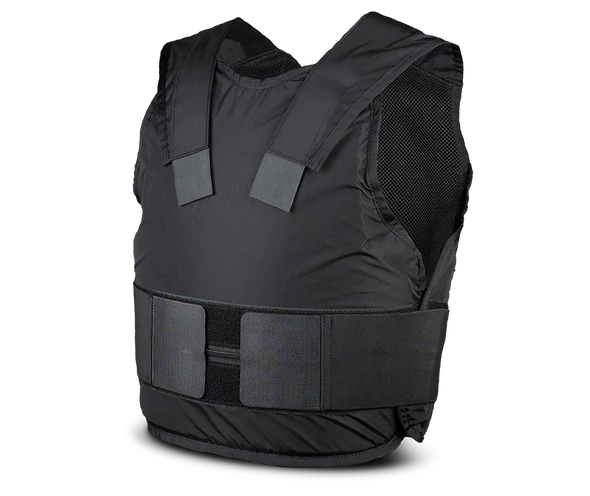
The PPSS Covert Stab Proof Vest is purpose-built for officers whose primary threat is edged weapons rather than firearms. Custom spacer-mesh liner promotes airflow, average weight is around 4 lb, and the thin shoulder straps are deliberately less detectable under a dress shirt. Available in black or white.
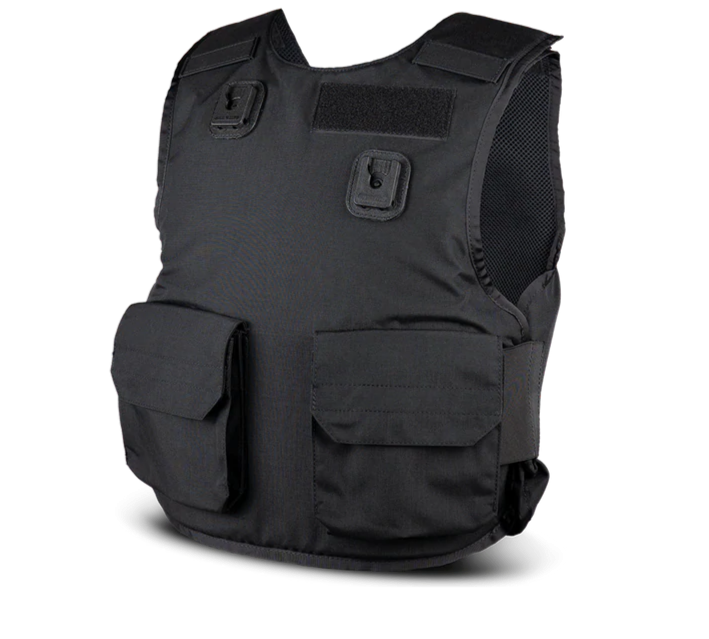
Its overt sibling, the PPSS Overt Stab Proof Vest, adds twin KlickFast-compatible docks for body cameras and radios, dual front utility pockets, and high-visibility reflective tape options in yellow, navy, or black. Stab protection on PPSS panels is independently tested to UK Home Office HOSDB KR1 / SP1 parameters, which most U.S. agencies treat as roughly equivalent to NIJ-STD 0115.00 Level 1.
K-9 ballistic vests
K-9 officers are sent forward on suspect apprehensions, narcotics sweeps, and explosive-detection callouts more often than any human handler. The 2024 Officer Down Memorial Page records dozens of police K-9 line-of-duty deaths, with gunfire as a leading cause. A properly fitted ballistic K-9 vest covers the chest and belly without restricting the dog's gait or scent-cone work.
Armor Express Agile Canine Vest (ACV)

The Agile Canine Vest is in service with German Shepherd Aston of the Evanston Police Department (Evanston PD bulletin) and is endorsed by the Wisconsin Vest-A-Dog program. Configurable to NIJ Level IIA, II, or IIIA ballistic plus stab/spike Level 2 or 3, with a BOA micro-adjustable fit dial, hidden cummerbund, and a crowd-control handle. Eight color options (black, coyote, LAPD navy, Multicam, OD green, ranger, tactical gray, tan 499) and alpha sizing for handler-fit work.
LOF Defence Systems K-9 StreetFighter Vest
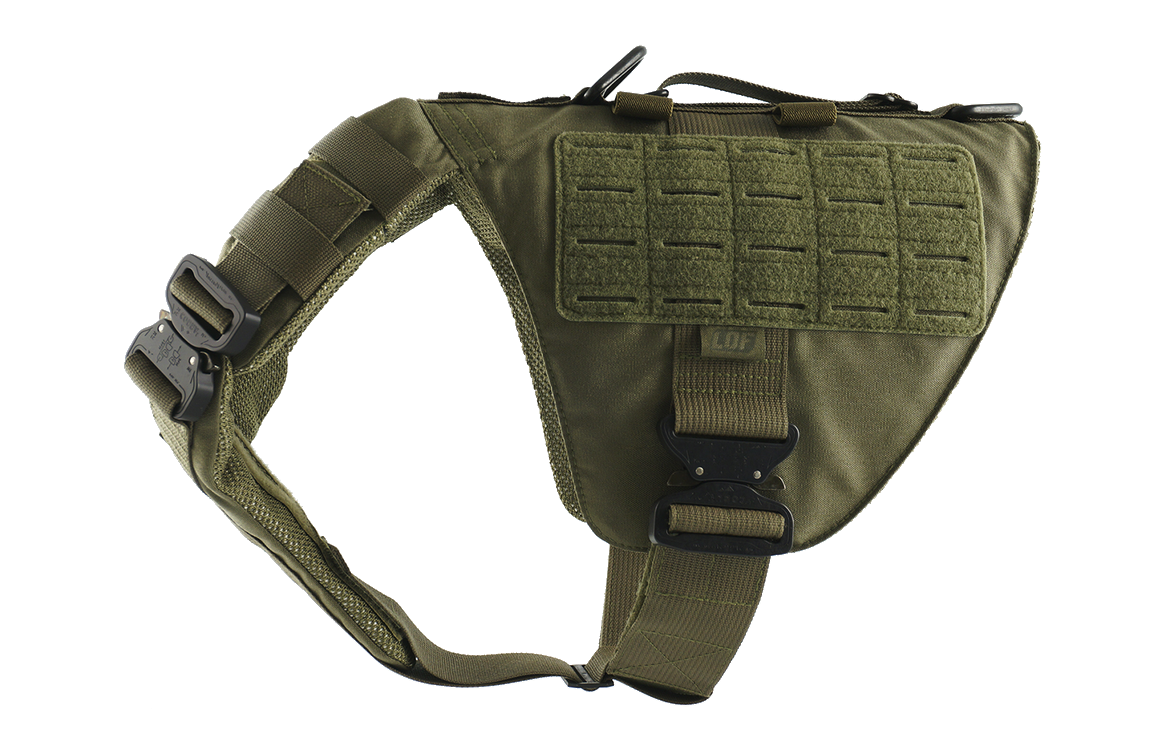
The K-9 StreetFighter is in service with K-9 units in Mendon, Abbotsford, Lawrenceville, South Fulton, Pendergrass, Westport, Parma, and Austell among others. Interchangeable soft panels are configurable to NIJ Level II or IIIA ballistic plus Level 2 or 3 stab/spike. Carrier maxes at 4.4 lb and integrates an Outlast thermo-regulating layer plus a flotation-assisted harness. Ten color and pattern options (Multicam, Multicam black, Multicam alpine, black, navy, ranger green, wolf gray, coyote brown, OD green, blaze orange) with custom sizing.
Plate carriers for tactical units
Concealed plate carrier: warrant service and protective details

The Spartan DL Concealment Plate Carrier is a low-profile bottom-loader that fits 10"×12" or 11"×14" Level IIIA panels and accepts the manufacturer's AR500 Omega Level III or AR550 hard plates for rifle threats. 500-denier nylon/polyethylene shell, 4" elastic cummerbund with integrated mag holders, and a 2" shoulder adjustment. Note that AR500-series steel plates are not NIJ Listed under 0101.06 (Spartan markets them as "tested to meet NIJ standards"); spalling and back-face deformation behavior on steel differs materially from ceramic or polyethylene, which affects the trauma-pad selection downstream.
Tactical plate carrier: SWAT, MACTAC, fugitive task force

The Shellback Tactical Banshee Elite 3.0 is in service with multiple SWAT and MACTAC teams. Bottom-loading pockets fit SAPI or shooter-cut hard plates up to 10"×12"; cummerbund pockets accept the matching Banshee Elite 3.0 Level IIIA soft inserts. Rip-stop water-repellent 500-denier Cordura shell, 3D spacer padding on front, rear, and shoulders, laser-cut MOLLE on every face, 34" extendable drag handle, and a rear hydration pocket sized for a 2 L bladder. Cummerbund sizes S/M (32"–39") and L/XL (39"–46"); colors black, coyote, ranger green, Multicam.
Helmets, shields, and trauma pads
Ballistic helmets
Tactical headgear protects against thrown projectiles, impact weapons, and pistol-velocity rounds. Helmets are not patrol-issue, but active-shooter response, high-risk warrant service, and barricaded-suspect callouts make them essential for tactical units. For deeper sizing and shape guidance see our bulletproof helmet buyer's guide.
Galvion Batlskin Viper A3 Mid Cut
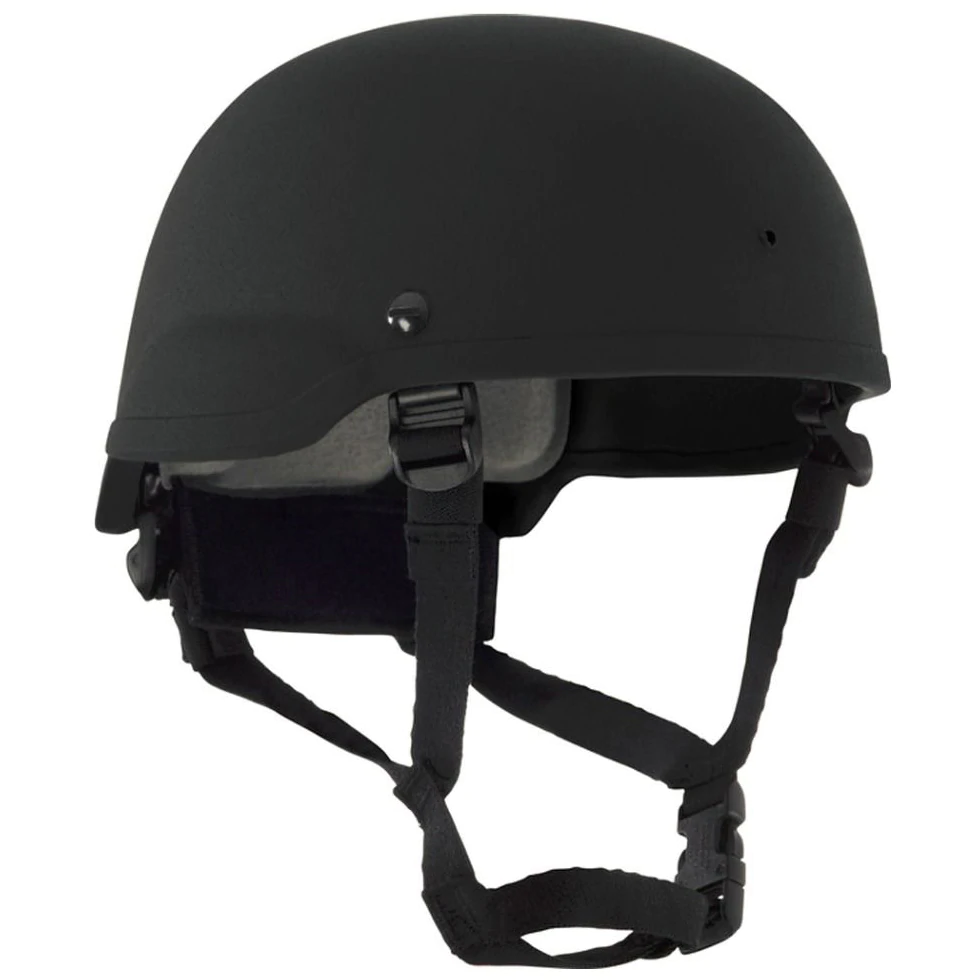
The Galveston Police Department fields the Viper A3 Mid Cut, and Galvion's helmets have been documented saving an Orlando SWAT officer from a fatal headshot (Task & Purpose, 2018). Monolithic aramid shell rated to NIJ Level IIIA, mid-cut profile that clears most peltor-style headsets, and a modular front mount/rail system for NVGs and white-light. Sizes S (2.54 lb), M (2.70 lb), L (2.89 lb), XL (3.23 lb).
Protection Group Denmark ARCH High Cut
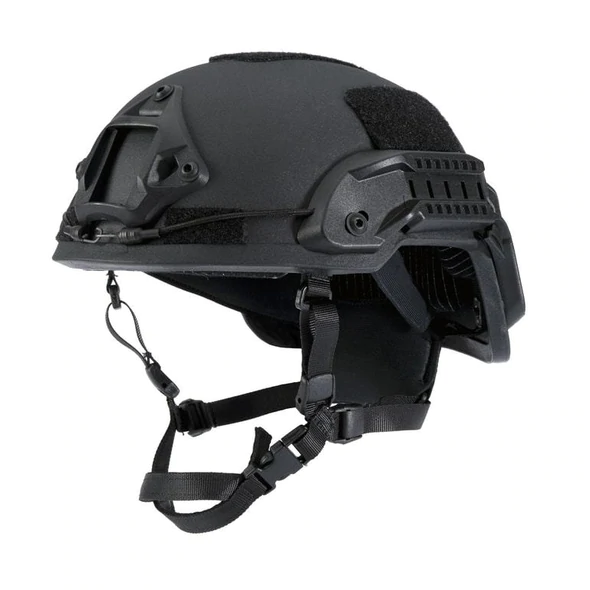
The PGD-ARCH is a high-cut FAST-style shell built for officers running active hearing protection or comms. DuPont Kevlar construction, NIJ Level IIIA rated, polyurea-coated outer for weather and chemical resistance, BOA-style retention dial, and a 10-pad memory-foam liner. 2.5 lb shell weight in L or XL, with side and front shroud ARC rails for NVGs, gas masks, and Picatinny adapters. Six colors including Multicam Black and Multicam Alpine.
Ballistic shields
Tactical shields shorten the gap between cover and contact during dynamic entries, hostage rescue, and high-risk warrant service. Anti-riot deployments and patrol callouts to barricaded subjects also benefit from a one-officer-portable Level IIIA shield staged in the trunk.
Chase Tactical Bellfire LTS
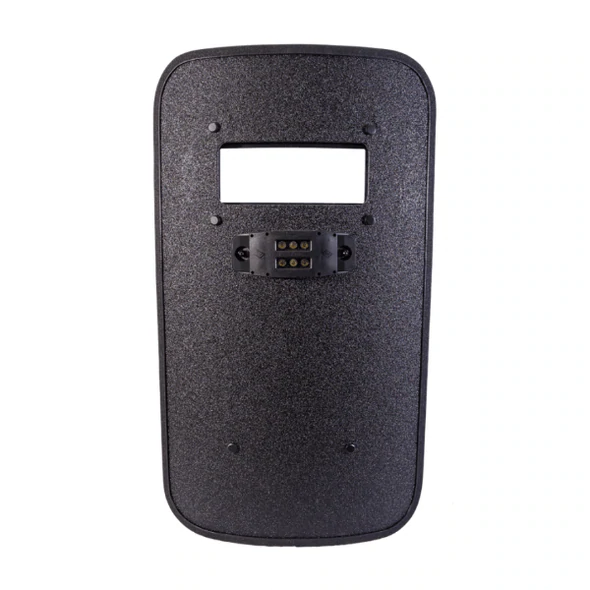
The Bellfire LTS is in service with Special Response Teams across the U.S. and the Mexican National Guard. UHMWPE construction, NIJ Level IIIA rated, multi-hit capable to NIJ-STD 0108.01, with a Rhino Extreme 1150FR anti-spall flame-retardant exterior. Ambidextrous handle, quick-release shoulder strap, 4"×10" viewport. Six sizes from 18"×24" (8 lb) to 24"×51" (17 lb), with an optional integrated LED strike-face lighting upgrade adding 2 lb.
Vector Defensive Systems Patrol Shield
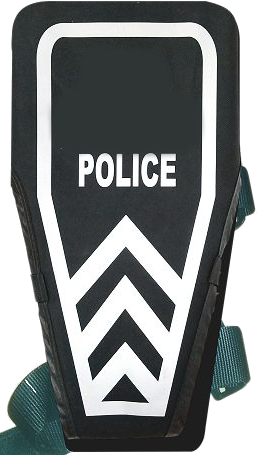
The Vector Patrol Shield is fielded by the Boston Police Department, Shenandoah County Sheriff's Office, Massachusetts DOC, FBI elements, the U.S. Marshals Service, and CBP. It covers the centerline (head, neck, upper chest) and is rated NIJ Level III for rifle protection at 8 lb, with an energy-dispersing handle, blast-resistant PAXCON coating, and a three-point retention system that lets the officer open doors without grounding the shield. Each unit ships with electronic training; Vector accessories include reflective dazzle covers, slings, vehicle storage bags, and a tactical light.
Trauma pads
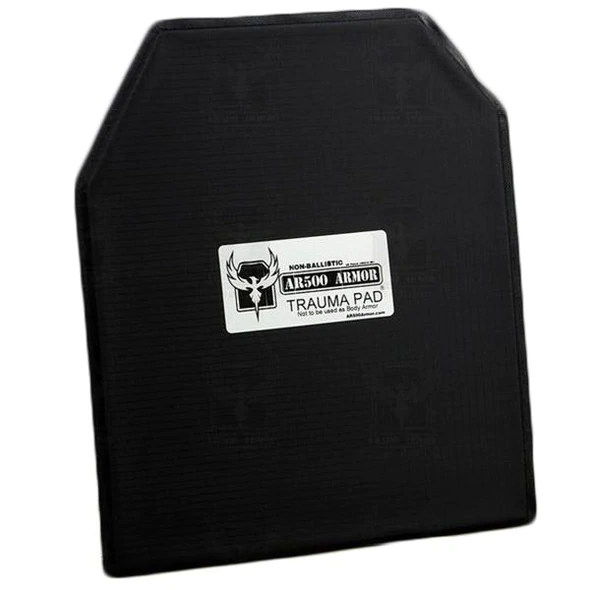
Trauma pads are the most underrated piece of a duty kit. They sit behind a hard plate and absorb back-face deformation — the residual energy that punches into the wearer's chest even when the round is stopped. The AR500 Armor Trauma Pad (Gen II) uses a non-Newtonian fluid layer that hardens on impact. Available in 9"×9", 10"×12", and 11"×14" Advanced Shooter's Cut sizes, 0.25" thick, around 6 oz each. For officers running steel plates, a trauma pad is non-negotiable; for ceramic and polyethylene, it materially reduces blunt-force injury risk.
Frequently asked questions
What threat level should a patrol officer's vest be?
Most U.S. patrol officers wear NIJ Level IIIA soft armor under uniform. Level IIIA is the highest pistol-rated soft-armor threat level under NIJ 0101.06 and stops common duty-relevant rounds up to .44 Magnum at the published test parameters. For rifle threats, officers transition to a plate carrier with Level III or Level IV hard plates.
Is body armor legal for off-duty police officers?
Yes in 49 of 50 U.S. states for sworn officers. New York is the exception under NY Penal Law § 270.21; sworn law-enforcement officers are explicitly listed as eligible professions and may purchase from the NY Department of State registry. Federal law (18 U.S.C. § 931) prohibits possession by anyone convicted of a violent felony, with a narrow employer-certification exception. See our state-by-state body armor legality guide for jurisdiction details.
How long does a police vest last before it needs to be replaced?
Soft armor panels carry a manufacturer-rated service life, typically five years from date of manufacture. Heat, sweat, and physical wear can shorten that window. Hard plates (ceramic, polyethylene, steel) generally rate at 5–10 years depending on construction. Always check the manufacturer's rated service date and the panel itself for delamination, contamination, or moisture damage. Vests struck by a round must be retired even if the panel appears intact.
What's the difference between IIIA and IIIA+ ratings?
NIJ Standard 0101.06 defines Level IIIA. The "+" designation (IIIA+, III+) is manufacturer marketing language and is not part of the NIJ Standard 0101.06 nomenclature. A "+" rating typically means the manufacturer claims testing against rounds outside the published 0101.06 protocol, but the test report and methodology are the manufacturer's, not NIJ's. For procurement, specify "NIJ Listed Level IIIA under 0101.06" to remove ambiguity.
Can female officers wear standard-issue body armor?
Standard panels frequently fit female officers poorly across the chest and shoulder, which leaves coverage gaps and causes pressure points during shift wear. Female-cut panels (SafeguardArmor's FemPro variant, Point Blank's Female panel, Survival Armor's Lady Hawk) reshape the front panel for the bust line and reduce the most common fit complaint we see from women on patrol. The 30x30 Initiative, a national coalition working to advance representation of women in policing, treats properly fitting protective equipment as a baseline retention and recruitment requirement.
Do I need a separate K-9 vest, or can the dog wear standard armor?
Standard human armor will not fit a working dog. Canine vests are cut for the dog's chest and belly anatomy and use harness-style retention rather than shoulder straps. Common K-9 ratings are NIJ IIA, II, or IIIA ballistic plus Level 2 or 3 stab and spike. Departments that handle narcotics, fugitive apprehension, and SWAT-support K-9s typically opt for IIIA + stab Level 3.
Will Bulletproof Zone ship to all 50 states?
Bulletproof Zone ships body armor to 49 U.S. states. We do not ship body armor to consumer addresses in New York. Connecticut sales are restricted to face-to-face transfers with a valid CT firearm permit per Conn. Gen. Stat. § 53-341b. Sworn law-enforcement officers in NY may purchase under the Department of State registry exception. Pending litigation in Heeter v. James (W.D.N.Y. 1:24-cv-00623) is in summary-judgment briefing through end of June 2026; if the ruling reopens civilian purchase, our policy will update within seven days.
The right vest is the one that's on you when it counts
Officer-purchased gear has been the difference in line-of-duty incidents for as long as patrol vests have existed. Pick the threat level your assignment actually faces, fit it to your body (not your sergeant's), and replace it on the manufacturer's schedule. Bulletproof Zone offers payment plans and free shipping over $100 in the continental U.S., and we'll honor a price match on any in-stock SKU. If you've worn a vest in the field, leave a note on what worked and what didn't. The next officer reading this guide will benefit from your shift.
Disclaimer: This article is for informational purposes only and does not constitute legal or product-fitting advice. Body armor laws change frequently at the federal and state levels; consult a licensed attorney in your jurisdiction. Bulletproof Zone makes no claim that body armor will provide complete protection in any scenario; no body armor is bulletproof. Verify NIJ Listed status at nij.ojp.gov and consult the manufacturer for current service-life dates before purchase. Last verified May 2026.