


How to Build a First Aid Kit: Checklist 2026

Quick answer: To build a first aid kit, choose a waterproof container and fill it based on your scenario. A home kit needs bandages, antiseptic, and OTC meds. A trauma kit (IFAK) requires a CAT or SOFTT-W tourniquet, hemostatic gauze, chest seals, and a pressure dressing. Budget $30–$150 for a general kit, $75–$300 for a trauma kit.
Accidents happen whether you're ready for them or not. A well-built first aid kit is the difference between treating a problem on the spot and waiting 14 minutes for rural EMS while someone bleeds out from a femoral wound. You already know you need one. The question is what goes in it and why.
- What is a first aid kit?
- Why first aid kits matter
- Should you buy pre-made or build your own?
- What container should you use?
- Camping and hiking kit
- Home defense trauma kit
- Disaster and emergency preparedness kit
- Tactical IFAK
- How much does it cost?
- How do you pack and organize a kit?
- Where should you keep a first aid kit?
- How do you maintain a first aid kit?
- Frequently asked questions
What is a first aid kit?
A first aid kit is a collection of medical supplies and equipment for treating injuries and health emergencies before professional care is available. There are two distinct categories that serve very different purposes.
Traditional first aid kit
The standard household kit handles minor injuries: cuts, scrapes, blisters, sprains, and common ailments. It needs no medical training to use, works for multiple people, and covers repeated low-severity treatments.

Individual First Aid Kit (IFAK)
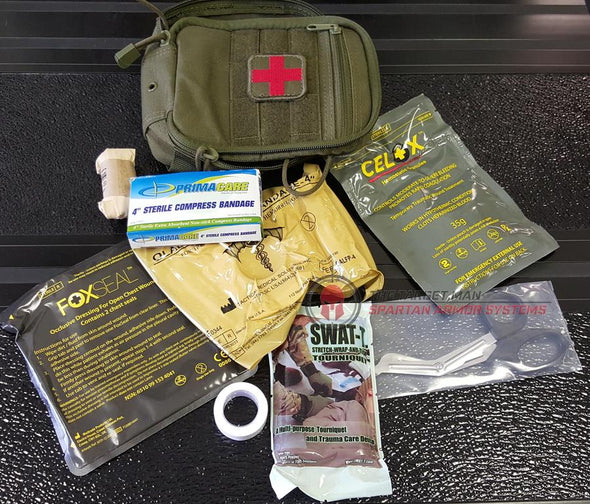
Also called a trauma kit, blow-out kit, or tactical first aid kit. An IFAK is built for life-threatening injuries: arterial bleeds, sucking chest wounds, airway obstructions. It's sized for one person and designed to stabilize a casualty until EMS arrives. The specialized components require proper training; carrying an NPA you don't know how to use is dead weight.
Why first aid kits matter
The American College of Surgeons' Stop the Bleed program documents the core reason: uncontrolled hemorrhage is the leading preventable cause of trauma death. National average EMS response is 7 minutes urban and 14 minutes rural. A tourniquet applied in the first 3 minutes after arterial injury dramatically changes the outcome.
Beyond hemorrhage control, here's what a properly built kit does for you:
- Immediate treatment cuts complication risk and wound severity before EMS arrives.
- Off-grid scenarios, from backcountry hunting trips to hurricane aftermath, put you miles or hours from professional care.
- Preparedness removes the panic variable; you're not improvising with a t-shirt and duct tape.
- For employers: OSHA and most state workplace-safety regulations require accessible first aid supplies. A documented kit covers the liability baseline.
Should you buy pre-made or build your own?
Both options have legitimate uses. The honest answer depends on your scenario and how much you care about what's actually inside.
Buying a ready-made first aid kit
Both conventional kits and IFAKs come pre-assembled from brands like North American Rescue, My Medic, Combat Medical, and American Red Cross. Pre-made kits include an instruction booklet and are ready out of the box.

The tradeoff is cost and fit. Pre-made kits run higher, and they're optimized for the average scenario, not yours. You may end up with twelve band-aids you'll never touch and no hemostatic gauze.

Building your own first aid kit
Survival and medical professionals generally prefer custom builds. You pick the contents, you know exactly what's there, and you can tailor the kit to your specific risks.
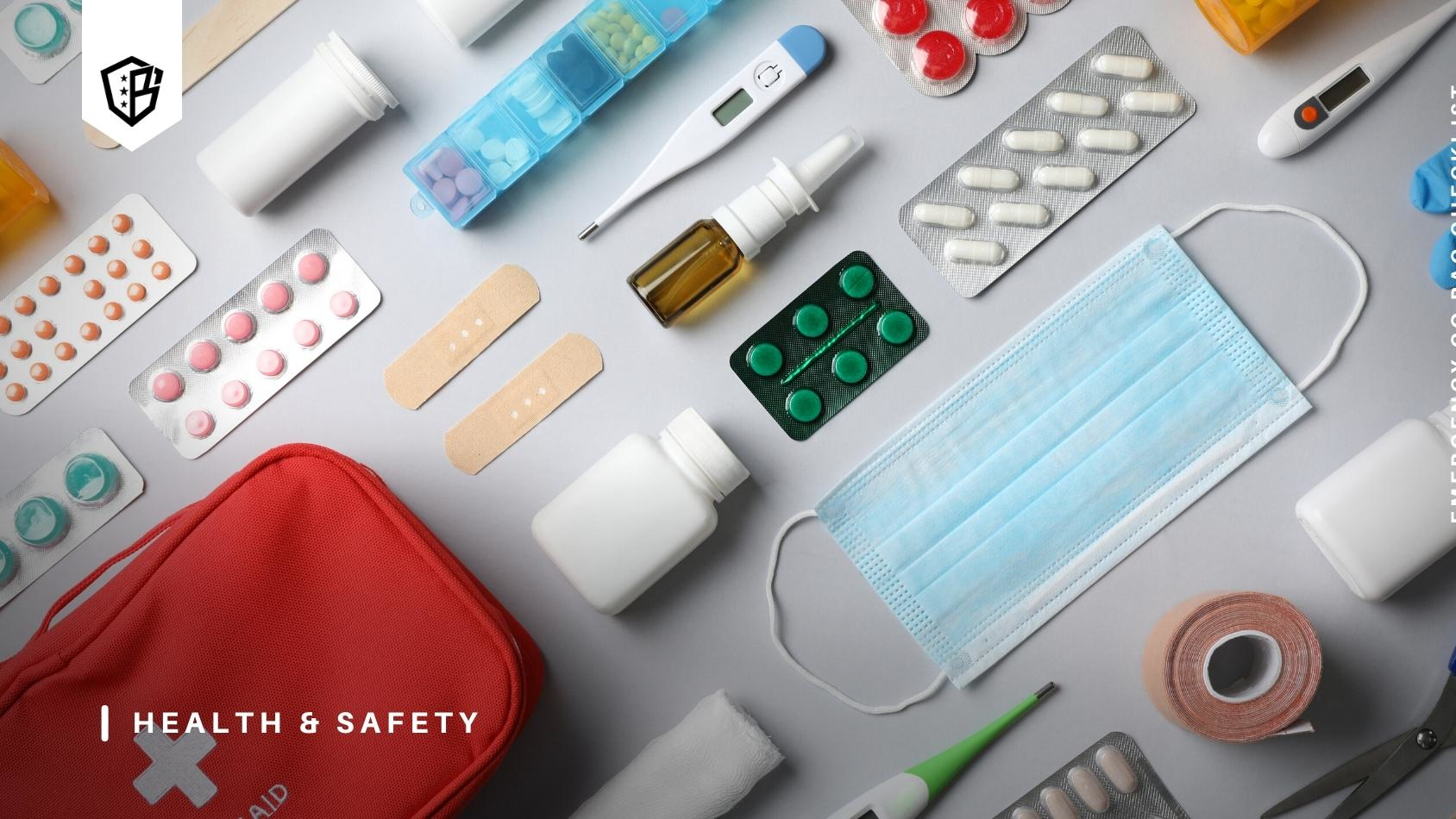
The DIY route takes more time and requires intentional choices. But it costs less, trains you on what's inside, and eliminates items you'll never use. For any scenario beyond basic household boo-boos, that knowledge matters during a real emergency.
What container should you use?
The container is not an afterthought. A first aid kit that gets damaged, contaminated, or takes three minutes to open is not a first aid kit when it counts.
Whatever container you choose, it should meet these criteria:
- Enough capacity for everything you need, without forcing you to layer items so deeply that retrieval becomes a puzzle.
- Hard-sided or heavy-duty fabric so contents don't get crushed, wet, or contaminated.
- Internal compartments, color-coding, or clear pouches so you can identify items without digging.
- Clearly labeled on the outside with the international first aid symbol, "First Aid," or "IFAK."
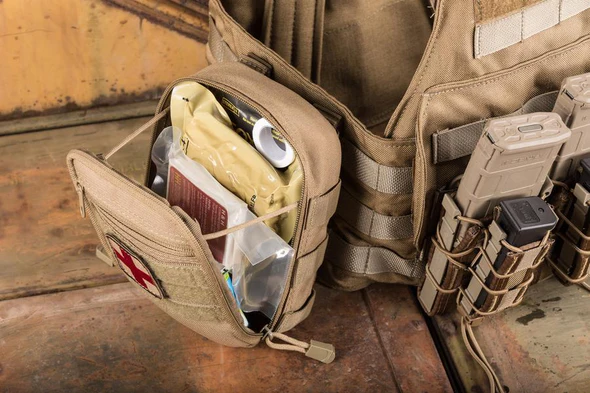
For a kit that stays put, the container matters less: a Pelican 1510 case, a drawer system, or even a heavy-duty plastic bin works fine. For field carry, small and protective wins. Ziplock bags work for ultralight day hikes but fail when wet. A proper MOLLE-compatible first aid pouch holds up better.
IFAKs almost always mount in a MOLLE pouch or holster designed to attach to a tactical vest, chest rig, plate carrier, or duty belt.
What goes in a camping and hiking first aid kit?
Out in the backcountry you're dealing with twisted ankles, lacerations from falls, food and water poisoning, insect bites, sunburn, hypothermia, and altitude sickness if you're going above 2,500 meters. The kit needs to handle all of it. I learned the hard way on a five-day ridge traverse in the Hill Country in July 2023 that a single forgotten blister kit can shut down your whole trip by day two when the temperature hits 104°F and your feet are soaked from a creek crossing.
Prescription medications (consult your physician):
- Epinephrine auto-injector (EpiPen) for severe allergic reaction.
- Dexamethasone or acetazolamide (Diamox) for severe Acute Mountain Sickness above 2,500 meters.
- Aqueous activated charcoal for toxic-mushroom poisoning if foraging.
- Oral antibiotics such as doxycycline or ampicillin for bacterial infections.
Over-the-counter medications:
- Antidiarrheal: Imodium (loperamide) to slow acute diarrhea.
- Oral rehydration electrolytes to replace minerals lost from vomiting or diarrhea.
- Antacid: Pepto-Bismol (bismuth subsalicylate) for nausea, heartburn, and upset stomach.
- Analgesics: Tylenol (acetaminophen) and Advil (ibuprofen) for pain and inflammation.
- Antihistamines: Benadryl (diphenhydramine) and Zyrtec (cetirizine) for mild allergic reactions.
Bandages and dressings:
- Blister tape and cushions for foot blisters.
- Adhesive bandages (band-aids), assorted sizes, for small cuts and scrapes.
- Butterfly bandages or My Medic Zzips to close open wounds without sutures.
- Elastic compression bandages to reduce swelling from sprains and strains.
- Triangular/cravat bandages for use as an arm sling or bleeding-control pad.
- Gauze roll to wrap wounds or secure dressings in hard-to-bandage areas.
Wound care:
- Aloe vera gel or cream for burns, rashes, and insect stings.
- Topical antibiotic ointment (Neosporin / bacitracin) for minor skin injuries.
- Antiseptic wipes to clean and disinfect wounds.
- Benzoin tincture to help bandages adhere to skin around a wound.
Personal protection and tools:
- Hand sanitizer (62% alcohol minimum) to kill germs before wound care.
- CPR pocket mask as a contamination barrier for CPR.
- Medical tape and assorted safety pins to secure dressings.
- Aluminum splint to immobilize dislocated or broken limbs.
- Tweezers to remove splinters and debris from wounds.
- Scissors to cut clothing, bandages, or tape.
- Space/Mylar blanket to trap body heat against hypothermia.
- Cotton swabs for applying topical medications.
- Instant cold packs to reduce swelling in sprains.
- Instant heat packs to ease muscle and joint stiffness.
- Insect repellent and SPF 30+ sunscreen.
- Thermometer for monitoring core temperature.
What goes in a home defense trauma kit?
A home invasion involving an armed intruder carries a real risk of gunshot or stab wounds: arterial bleeding and airway compromise are the two immediate killers. Your kitchen first aid kit handles none of that. A separate micro trauma kit should live somewhere accessible, ideally near wherever you keep your home defense firearm.
At minimum, that kit needs:
- A SOF-T Wide tourniquet or Combat Application Tourniquet Gen 7 (CAT-7) to stop arterial bleeding in an extremity.
- A Sharpie permanent marker to record tourniquet application time on the strap.
- A pressure dressing such as an Israeli or OLAES bandage for wounds where a tourniquet can't reach.
- Celox hemostatic granules as a blood-clotting agent for junctional wounds.
- Disposable non-latex exam gloves to prevent cross-contamination.
A word on tourniquets: the counterfeit CAT market is a real problem. Generic "tactical tourniquets" sold on Amazon under brands you've never heard of routinely fail pull tests at 600 N of arterial pressure. The genuine CAT Gen 7 holds 800 N-plus. For a $30–$40 item that is the difference between stopping a bleed and not stopping it, skip the Amazon knockoffs entirely.
For a more capable home kit, add:
- Hemostatic gauze: QuikClot Combat Gauze or Celox Rapid Gauze for wound packing.
- Rolled gauze to cover and secure wounds.
- Medical tape and safety pins to hold dressings.
- Trauma shears to cut clothing and reach wounds.
- A vented chest seal to prevent tension pneumothorax from a sucking chest wound. Pack two: one entry, one exit.
- Nasopharyngeal airway (NPA) with water-soluble lubricant to clear airway obstruction.
- CPR pocket mask as a contamination barrier.
This same kit handles tool injuries: a nail gun puncture, a table saw laceration, a power drill through the hand. The mechanism is different; the hemorrhage-control principles are identical.
What goes in a disaster and emergency preparedness kit?
FEMA recommends 72 hours of emergency supplies as a baseline. A week's worth is smarter: post-hurricane scenarios routinely stretch past three days before outside relief arrives. Your disaster medical kit needs to cover a broad spectrum of physical health problems because you won't know which one you're dealing with until you're in it.
Pack at minimum a 72-hour supply of all personal prescription medications before anything else. Then add:
Prescription medications (consult your physician):
- Epinephrine auto-injector (EpiPen).
- Oral antibiotics such as doxycycline or ampicillin to protect against bacterial infections.
Over-the-counter medications:
- Oral rehydration electrolytes to replace minerals lost from diarrhea or vomiting.
- Antidiarrheal: Imodium (loperamide).
- Antacid: Pepto-Bismol (bismuth subsalicylate).
- Analgesics: Tylenol (acetaminophen) and Advil (ibuprofen).
- Antihistamines: Benadryl (diphenhydramine) and Zyrtec (cetirizine).
Bandages and dressings:
- Adhesive bandages (band-aids), assorted sizes.
- Butterfly bandages and My Medic Zzips to close lacerations.
- Self-adhesive occlusive dressings to seal wounds from air and contaminants.
- Elastic compression bandages for sprains.
- Triangular/cravat bandages.
- Roller gauze.
Wound care:
- Aloe vera gel or cream for burns, rashes, and stings.
- Topical antibiotic ointment (Neosporin).
- Antiseptic wipes.
- Benzoin tincture.
- Hemostatic agent: gauze, pads, or granules to control catastrophic bleeding.
Personal protection and tools:
- Hand sanitizer.
- CPR pocket mask.
- Disposable non-latex exam gloves, at least two pairs.
- Surgical tape and safety pins.
- Aluminum splint.
- Tweezers and scissors or trauma shears.
- Emergency blanket.
- SWAT tourniquet as a backup tourniquet or pressure dressing.
- Permanent marker (Sharpie) to time-stamp tourniquet application.
- Cotton swabs, instant cold packs, and instant heat packs.
- Insect repellent, SPF 30+ sunscreen, and thermometer.
What goes in a tactical IFAK?
Tactical scenarios involving firearms, edged weapons, or blast fragments produce penetrating trauma: arterial hemorrhage, airway compromise, and tension pneumothorax are the primary killers. A purpose-built IFAK, configured per TCCC guidelines for military and law enforcement, or TECC guidelines for civilians, addresses all three.
For the correct setup of an IFAK with a plate carrier, see our chest rig setup guide. For understanding the threat levels your body armor actually covers, see our NIJ protection levels guide.
The non-negotiable core of a tactical IFAK:
- One or both of: SOF-T Wide tourniquet and Combat Application Tourniquet Gen 7 (CAT-7). Both are CoTCCC-recommended. Avoid generic knockoffs; see the tourniquet note in the home defense section above.
- Sharpie permanent marker to write tourniquet application time on the strap.
- Hemostatic gauze: QuikClot Combat Gauze (chitosan-impregnated) or Celox Rapid Gauze (preferred in cold weather; performs to -20°F). For wound packing.
- Field dressing: OLAES modular bandage or Israeli pressure bandage for junctional and non-extremity bleeding.
- Two vented chest seals. Two because penetrating chest wounds typically have both entry and exit points. A non-vented seal on a tension pneumothorax can kill; use vented.
- Nasopharyngeal airway (NPA) 28F with water-soluble lubricant to clear nasal airway obstruction.
- Safety glasses and at least two pairs of disposable nitrile surgical gloves.
Optional additions for a more capable kit:
- Trauma shears to cut clothing from wounds.
- Rolled gauze to wrap and secure wound dressings.
- Combat duct tape to hold dressings under movement stress.
- CPR face shield.
- NCD catheter for trained users only to treat tension pneumothorax when no vented seal is available.
- Water-Jel burn dressings or burn blanket for thermal injuries.
- Cravat/triangular bandages.
- Splinting material for fractures and dislocations.
- Oral antibiotics (moxifloxacin or levofloxacin) for extended operations.
- Analgesics: Tylenol (acetaminophen) and Mobic (meloxicam).
- Mylar emergency blanket to prevent hypothermia.
How much does building a first aid kit cost?
The cost range is wide because the scenarios are wide. As a rough guide:
- Basic household kit built from scratch: $30 to $100.
- Trauma/home defense micro kit: $75 to $200, depending on whether you include an NPA and chest seals.
- Full tactical IFAK with quality tourniquet, hemostatic gauze, and vented chest seals: $100 to $300.
- Comprehensive disaster preparedness kit with 72 hours of medications: $150 to $500.
- Top-tier combo kit covering all scenarios: $400 to $1,500-plus.
The one place not to economize is the tourniquet. Genuine CAT Gen 7 and SOFTT-W run $30 to $45 each. A counterfeit that fails under load is worse than nothing because it creates a false sense of security while the casualty keeps bleeding. Buy from authorized distributors, not Amazon third-party listings.
How do you pack and organize a first aid kit?
Randomly dumping supplies into a bag turns every emergency into a scavenger hunt. The goal is to find any item in under ten seconds under stress, ideally one-handed and possibly in the dark.
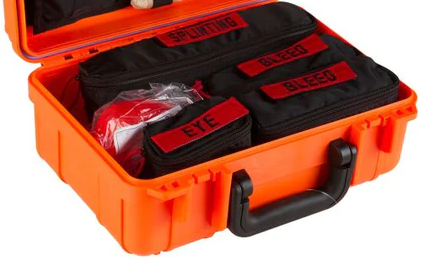
Two organizational approaches work well in practice. The first is grouping similar items together: all tourniquets accessible at the top, all bandages in one section, all medications in another. The second is a modular approach where compartments correspond to problems: a "bleed" module, an "airway" module, a "medications" module. Modular works better for IFAKs under stress. Grouped works better for general household kits where you're looking for a specific item.
Whatever system you use, prioritize by urgency first, then frequency of use. The tourniquet should be reachable without opening a single compartment. The blister kit can be buried a layer deeper.
Where should you keep a first aid kit?
On your person
Military and law enforcement IFAKs are worn on the body, most often on the non-dominant side of the duty belt or battle belt, just behind the mag pouches. This placement allows one-handed access when the dominant arm is incapacitated and lets a buddy locate the kit on a downed teammate without guessing.
For civilians doing EDC, a compact kit fits in trouser or jacket pockets or a fanny pack. For larger kits, the inside of a daypack's lid pocket provides fast access.
In a building
Household kits belong in the kitchen or bathroom, where most household accidents happen. A trauma kit for home defense can go on a nightstand or inside a range bag. A bug-out or bug-in pack with a first aid component lives near an exit: a closet, under the bed, or in the garage.
Store everything cool and dry. If children are present, keep medications and sharps out of reach.
In a vehicle
A car kit goes in the glove compartment or, inside a larger emergency bag, in the trunk. Some police departments still mount IFAKs to the rear of front-seat headrests so the driver can reach back while seated. For larger EMS or fire vehicles, a lockable exterior bay closest to the passenger compartment is standard.
Wherever the kit lives, it has to be reachable fast. If it's body-worn, placement must not block movement or access to other gear. One-hand openable, every time.
How do you maintain a first aid kit?
Medications expire. Hemostatic dressings lose efficacy. Antiseptic wipes dry out. Tourniquet straps degrade in UV exposure. A first aid kit that hasn't been checked in two years is not a first aid kit you can trust.
Two maintenance cycles keep a kit functional:
- Scheduled inspection every three to six months: replace expired items, check tourniquet strap integrity, confirm hemostatic gauze packaging is intact, restock anything depleted.
- Event-based inspection after any use or after any change in group members' health needs: restock immediately after an item is deployed, and revise the kit if someone in the group has a new medication requirement or allergy.
Bulletproof Zone stocks individual replacements across tourniquets, hemostatic gauze, chest seals, and bandages so you can restock specific items without buying a full new kit after every training deployment.
Frequently Asked Questions
What is the most important item in a trauma first aid kit?
A CoTCCC-recommended tourniquet, specifically the CAT Gen 7 or SOFTT-W, is the single most critical item in a trauma kit. Uncontrolled arterial hemorrhage is the leading preventable cause of trauma death, and a tourniquet applied correctly within three minutes dramatically changes survival odds. Everything else in the kit is secondary to stopping a major bleed.
What is the difference between an IFAK and a regular first aid kit?
A regular first aid kit treats minor injuries: cuts, blisters, sprains, and common ailments. An IFAK (Individual First Aid Kit) is purpose-built for life-threatening trauma: arterial bleeding, sucking chest wounds, and airway obstruction. IFAKs contain tourniquets, hemostatic gauze, chest seals, and NPAs — none of which belong in a household boo-boo kit. IFAKs are also intended for single-person use; you treat yourself or one casualty, then replenish.
How much hemostatic gauze should I include in a trauma kit?
A minimum of one pack of hemostatic gauze, either QuikClot Combat Gauze or Celox Rapid, is the baseline for an IFAK. Celox Rapid is preferred in cold-weather environments because it maintains efficacy at temperatures down to -20°F. If you're building a multiple-casualty kit (MFAK), double all consumables including hemostatic gauze.
Do I need training to use a first aid kit?
For a general household kit, no formal certification is required. The Stop the Bleed course from the American College of Surgeons (free, two hours) is the minimum recommended training for anyone carrying a trauma kit, covering tourniquet application and wound packing. TCCC-Combatant or TECC training is the appropriate standard before deploying advanced airway tools like an NPA or a needle chest decompression catheter. Carrying tools you haven't trained with is a liability, not a capability.
How often should I replace items in my first aid kit?
Inspect every three to six months. Most OTC medications have a one to two year shelf life from purchase; hemostatic dressings typically carry a five-year expiration from manufacture. Check tourniquet straps and buckles for UV cracking annually if the kit is stored in a vehicle, where temperatures spike. Replace any item immediately after it's used, not at the next scheduled inspection.
What container is best for a trauma kit?
For body-worn IFAKs, a MOLLE-compatible ripaway pouch with a single-pull deployment tab is the standard. It mounts to a plate carrier, chest rig, or duty belt and can be detached one-handed in under two seconds. For vehicle or home storage, a hard-sided case with foam inserts or a clearly labeled waterproof bag keeps contents organized and protected. Avoid soft bags without internal structure: items shift and retrieval slows under stress.
What is the SWAT tourniquet and when would I use it?
The SWAT-T (Stretch Wrap and Tuck) is a flexible, multipurpose device that functions as a tourniquet, pressure dressing, or elastic bandage. It is not a substitute for a CAT or SOFTT-W as a primary tourniquet in arterial bleed scenarios, but it serves as a solid backup or as an improvised pressure wrap when a rigid tourniquet is not available. Several disaster preparedness kits include one specifically for its versatility across multiple injury types.
Key takeaways:
- Match your kit to your scenario: a hiking kit needs blister treatment and altitude meds; a tactical IFAK needs a tourniquet, hemostatic gauze, and chest seals.
- The tourniquet is the most critical item in any trauma kit. Buy genuine CAT Gen 7 or SOFTT-W from authorized distributors; counterfeit tourniquets fail pull tests at pressures far below arterial.
- FEMA recommends 72 hours of supplies minimum for disaster preparedness; a week's supply is more practical for post-hurricane or infrastructure-failure scenarios.
- A first aid kit requires maintenance: inspect every three to six months, replace expired items, and restock immediately after any use.
- Training determines what your kit can actually do. The Stop the Bleed course (free, two hours) is the minimum bar for anyone carrying a trauma kit.
Disclaimer: This article is for informational purposes only and does not, and is not intended to, constitute medical or legal advice. First aid kits and trauma supplies are not a substitute for professional emergency medical care. Use of trauma supplies including tourniquets, hemostatic agents, chest seals, and airway tools requires proper training; misuse can cause harm. Bulletproof Zone makes no claim that any product will provide complete protection in any scenario. Last verified: May 2026.
Product specifications referenced in this article are based on each manufacturer's stated specifications at time of publication. Bulletproof Zone is a multi-brand retailer; product availability and configurations may change. Verify current product details on the relevant product page before purchase. Counterfeit tourniquets are a documented safety issue in the civilian segment; purchase only from authorized dealers and verify CoTCCC recommendation status before relying on a tourniquet in a real emergency.