


When Were Bulletproof Vests Invented? Full History 2026

Quick answer: The first practical bullet-resistant vest was a silk garment patented by Polish-Catholic priest Casimir Zeglen in 1897 in Chicago, after the 1893 assassination of Mayor Carter Harrison drove him to design protective clothing. The modern Kevlar-based concealable vest was invented in 1971 by Richard Davis after DuPont chemist Stephanie Kwolek discovered the para-aramid fiber in 1965.
Bulletproof Zone updates this history page when verified primary-source dates change. The proper term is bullet-resistant vest, not bulletproof. No body armor stops every threat at every angle.
- Pre-firearm body armor: chain mail to breastplates
- 19th-century experiments: silk in Dublin, cotton in Korea
- Casimir Zeglen and the first patented bullet-resistant vest
- Stephanie Kwolek and the 1965 Kevlar discovery
- Richard Davis and the first concealable Kevlar vest
- Bullet-resistant vests in 2026
- Frequently asked questions
Pre-firearm body armor: chain mail to breastplates
Body armor predates the firearm by thousands of years. The earliest documented attempt to design armor specifically against gunfire dates to 1538, when Francesco Maria I della Rovere, Duke of Urbino, commissioned a bullet-resistant suit from the celebrated Milanese armorer Filippo Negroli. The piece itself is unconfirmed in surviving records, but the request is historically attested.
Holy Roman Emperor Maximilian II later test-fired small arms against plated armor in the late 16th century. Steel breastplates, chain mail, and assorted plate armor remained in sporadic military use against early firearms for another three centuries.
The problem was simple physics. Steel that was thick enough to deflect a musket ball was too heavy to wear into combat. As powder charges and projectile velocities climbed through the 17th and 18th centuries, plate armor lost its margin against firearms entirely.
19th-century experiments: silk in Dublin, cotton in Korea
The earliest documented soft body armor vest came from a Dublin tailor in December 1847. He posted in the Cork Examiner advertising "The Landlord's Protective Garment," a multi-layer silk vest aimed at Anglo-Irish landlords during the post-Famine agrarian unrest. Surviving examples are scarce, but the advertisement itself is in the historical record.
Two decades later, Joseon-era Korea produced the first soft armor that saw documented combat use. The myeonje baegab, invented around 1867 by order of Heungseon Daewongun after the 1866 French expedition, was constructed from 13 to 30 folds of cotton and weighed roughly 8 pounds. Korean troops wore it during the 1871 Shinmiyangyo conflict on Ganghwa Island against US Navy and Marine forces.
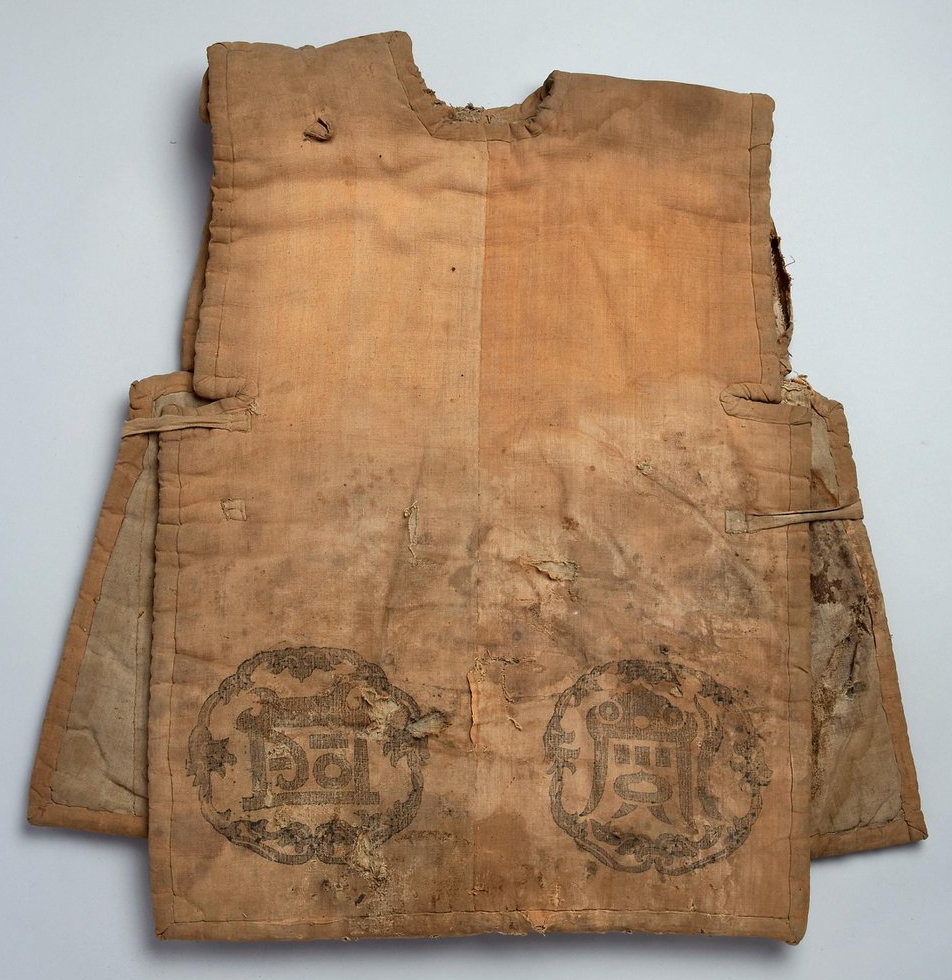
The cotton vest worked against older smoothbore muskets. It failed against the higher-velocity Springfield rifled muskets the US forces carried. The pattern is the same one that defines body armor today: armor solves the threat in front of it, then a new threat shows up.
Casimir Zeglen and the first patented bullet-resistant vest
Casimir Zeglen, a Polish-born Catholic priest at St. Stanislaus Kostka Church in Chicago, became the first inventor to patent a working bullet-resistant garment. His motivation was specific: the October 28, 1893 assassination of Chicago Mayor Carter Henry Harrison Sr., shot at home by Eugene Patrick Prendergast just before the closing of the World's Columbian Exposition.
Zeglen tried several materials first. He tested steel shavings and moss before reading the work of Dr. George E. Goodfellow, the Tombstone "gunshot physician" who had documented silk's bullet-resistive properties in the 1880s.
Multi-layer woven silk turned out to be the breakthrough. Zeglen partnered with Polish inventor Jan Szczepanik in 1897 and produced silk vests at weaving mills in Vienna and Aachen. He patented the design and demonstrated it publicly in Chicago in March 1897, taking a hired marksman's revolver round to the chest at eight paces. He stayed on his feet. The crowd, by all contemporary newspaper accounts, lost it.
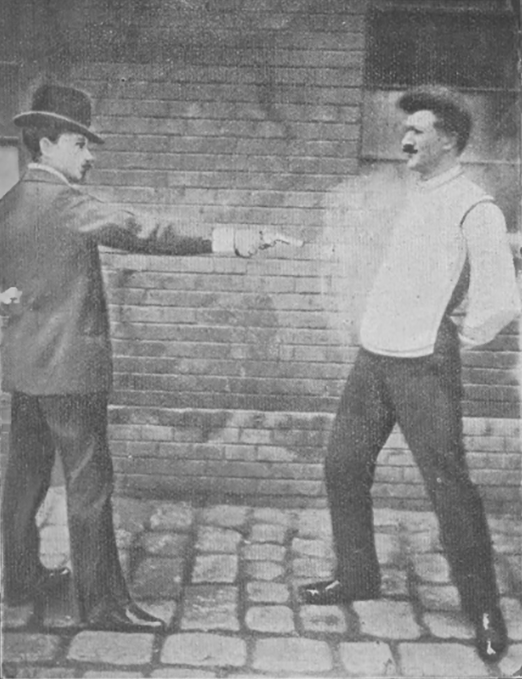
Zeglen's silk vests sold for the equivalent of around $6,000 each in today's money. They saw limited adoption with European police and military buyers through the early 20th century. Silk vests were eventually credited with surviving the bullet that killed Archduke Franz Ferdinand's wife Sophie in 1914, though the rounds that struck the Archduke himself hit the throat above the collar.
Stephanie Kwolek and the 1965 Kevlar discovery
Silk hit a ceiling against handgun calibers above .38, and the material was wildly expensive. The next jump came from a DuPont research lab in Wilmington, Delaware.
In 1965, chemist Stephanie Kwolek was working on a project to develop a stronger, lighter polymer fiber for tire reinforcement. The brief was fuel economy, not body armor. Kwolek synthesized poly-paraphenylene terephthalamide and noticed the solution was thin and cloudy where conventional polymers were viscous and clear. Most chemists would have discarded the batch. Kwolek pressed the lab's spinneret operator to spin it into fiber anyway.
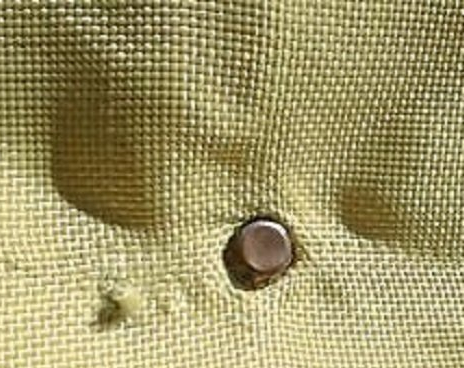
The fiber that came out was, pound for pound, roughly five times stronger than steel. DuPont commercialized it as Kevlar in 1971. The Science History Institute and the Lemelson Center both credit Kwolek's specific 1965 batch as the foundational discovery.
Richard Davis and the first concealable Kevlar vest
Richard Davis, an ex-Marine and Detroit pizzeria owner, was shot during a delivery run on June 17, 1969 in an attempted robbery. He survived. He spent the next two years researching ballistic materials, starting with high-tenacity ballistic nylon (the same fabric used in Vietnam-era flak jackets) and moving to Kevlar as DuPont brought it to market in 1971.
Davis founded Second Chance Body Armor that year and patented his Soft Concealable Body Armor design (US Patent #3,783,449). His sales pitch was unconventional. He shot himself in the chest while wearing his own vests, in front of police departments and military buyers, somewhere between 192 and 200 documented times across his career. The Walled Lake, Michigan police department was the first agency that bought after watching him do it.
Second Chance vests went to law enforcement and military buyers in volume through the 1970s and 1980s. The company's later collapse in the early 2000s, after Zylon-fiber vests degraded faster than advertised and contributed to officer fatalities, is a separate and unflattering chapter. The 2022 Showtime documentary 2nd Chance covers it in detail.
Bullet-resistant vests in 2026
Half a century on, Kevlar and competing para-aramid fibers (Twaron, Heracron) plus newer ultra-high-molecular-weight polyethylene (Spectra, Dyneema) carry the entire civilian and police soft-armor market. Concealable soft-armor vests are typically rated NIJ Listed under 0101.06 Level IIIA (the new HG2 designation under NIJ Standard 0101.07, published November 2023). These vests stop most handgun rounds up through .44 Magnum but not rifle threats.
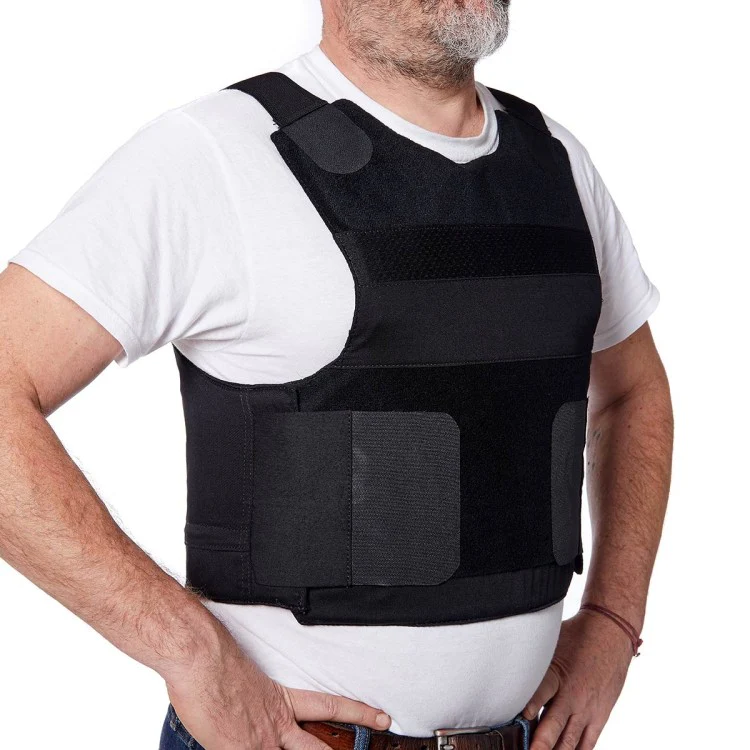
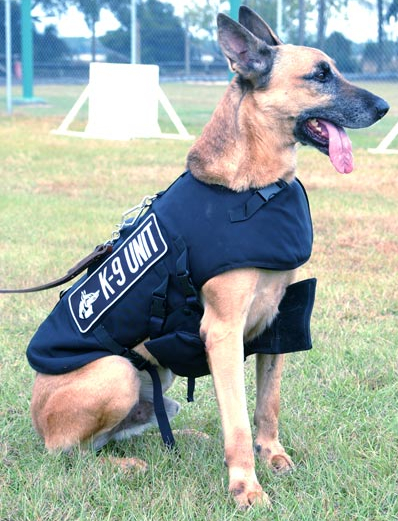
Some current models add stab and spike protection (especially for corrections officers) or are paired with hard rifle plates in plate carriers, often alongside ballistic helmets and bullet-resistant clothing on the rifle-threat end of the spectrum. Wearership has expanded well past military and law enforcement. K9 dogs, EMS responders, journalists in conflict zones, private security personnel, and a growing population of civilians all wear body armor today.
Pricing has collapsed. Where Zeglen's silk vest cost about $6,000 in 2026 dollars, a NIJ Listed Level IIIA concealable vest from a serious manufacturer (Safe Life Defense, Premier Body Armor, Spartan Armor) now runs $300–$700. The low-cost end of the market was opened up by BulletSafe in 2011. Bulletproof Zone's own ProtectVest is a current example of the same price-tier shift.
What hasn't changed since Zeglen is the basic principle. A vest absorbs and disperses a projectile's kinetic energy across woven fibers stronger than steel, leaving the wearer with blunt-force trauma instead of penetration. As of May 2026, no soft armor stops every threat at every angle, no manufacturer "100% guarantees" anything, and the NIJ standard is still the only real arbiter of what a vest does and doesn't do.
Frequently asked questions
Who invented the first bulletproof vest?
Polish-Catholic priest Casimir Zeglen patented the first practical bullet-resistant vest in 1897, using multi-layer woven silk. Earlier soft-armor experiments (an 1847 Dublin silk vest and the 1867 Korean myeonje baegab cotton vest) predate Zeglen's design but were not patented or widely produced. The modern concealable Kevlar vest was invented separately by Richard Davis in 1971.
When was Kevlar invented?
Stephanie Kwolek synthesized poly-paraphenylene terephthalamide at DuPont in 1965. DuPont commercialized the fiber as Kevlar in 1971. Kwolek's original brief was a stronger fiber for tire reinforcement, not body armor. The ballistic application emerged later when researchers recognized the fiber's tensile strength.
What is a bulletproof vest actually called?
Body armor industry standard terminology is "bullet-resistant vest" or "ballistic vest." No body armor is bulletproof in the literal sense. Every NIJ Standard, including the current 0101.06 and the 2023 0101.07, defines threat levels as ranges of projectile velocity, mass, and caliber that a vest is rated to defeat under controlled lab conditions. The colloquial "bulletproof vest" is shorthand, not technical.
How does a soft body armor vest stop a bullet?
A soft armor vest is built from many layers of woven para-aramid (Kevlar, Twaron) or ultra-high-molecular-weight polyethylene (Spectra, Dyneema) fiber. When a projectile hits, the woven fibers catch and deform the bullet, spreading kinetic energy across a wide area of the vest and into the wearer's torso as blunt-force impact. The vest stops penetration. The wearer still absorbs significant trauma, usually a deep bruise or, for heavier rounds, broken ribs.
What threats can a Level IIIA vest stop?
NIJ Listed Level IIIA under Standard 0101.06 (now designated HG2 under 0101.07, published November 2023) is rated against most common handgun rounds up through .44 Magnum and .357 SIG at specified velocities. Level IIIA does not stop rifle threats. For rifle protection, the wearer needs hard armor plates rated RF1, RF2, or RF3 under 0101.07 (the legacy III, intermediate, and IV classifications under 0101.06).
How long does a bullet-resistant vest last?
Most manufacturers warranty soft armor for 5 years from date of issue. NIJ does not certify any vest for longer. The Kevlar fibers degrade through cumulative exposure to UV light, sweat, and body oils. The carrier itself can wear another decade, but the ballistic panel inside has a hard service life. After 5 years, the panel should be replaced even if the vest looks fine.
Are bulletproof vests legal for civilians?
Federal law (18 U.S.C. § 931) prohibits possession by anyone convicted of a violent felony. Civilian purchase and possession is legal in 48 of 50 states for non-felon adults. New York and Connecticut restrict civilian purchase. Bulletproof Zone does not ship body armor to consumer addresses in either state. See the state-by-state legality breakdown for current restrictions. The Heeter v. James litigation (W.D.N.Y. 1:24-cv-00623) is in summary-judgment briefing through end of June 2026 and may alter New York's framework.
Key takeaways:
- The first patented bullet-resistant vest was Casimir Zeglen's 1897 silk design, made in response to the 1893 Carter Harrison Sr. assassination in Chicago.
- Kevlar (poly-paraphenylene terephthalamide) was discovered by Stephanie Kwolek at DuPont in 1965 and commercialized in 1971.
- Richard Davis founded Second Chance and patented the modern concealable Kevlar vest in 1971; his marketing strategy was shooting himself, on camera, ~200 times.
- Today's NIJ Listed Level IIIA (HG2) vests still rely on woven para-aramid or UHMWPE fiber. The operating principle has not changed since 1971; weave, weight, and stand-off improved iteratively.
- "Bulletproof" is colloquial. The accurate term is bullet-resistant. Every vest defeats a defined threat profile, not every projectile.
Disclaimer: This article is for informational purposes only and does not, and is not intended to, constitute legal advice. Body armor laws change frequently at both federal and state levels. Consult a licensed attorney in your jurisdiction before relying on any information presented here. Bulletproof Zone makes no claim that body armor will provide complete protection in any scenario; no body armor is bulletproof. Last verified against published statutes and the NIJ Compliant Products List on May 3, 2026.