


Bulletproof Mask Guide: Ballistic Face Masks Explained

Quick answer: A bulletproof mask, also called a ballistic face mask, is bullet-resistant facial armor built around a Kevlar or Twaron soft-armor shell roughly 10 mm thick. Most modern masks are Listed under NIJ Standard 0101.06 at Level IIIA, which covers .44 Magnum at 1,400–1,460 fps and 9 mm handgun threats. They do not stop rifle rounds.
The current National Institute of Justice ballistic standard for soft armor is 0101.06 (the 0101.07 successor was published November 29, 2023, and as of April 2026 NIJ has not published a 0101.07 Compliant Products List, so face-mask product claims still cite the .06 standard). Most armored masks weigh 1.2 to 2.2 lb, fit a single curved size, and are sold to law enforcement teams, military turret gunners, and airsoft players. They are not body armor in the legal sense and they do not replace a ballistic helmet.
- What is a bulletproof mask, exactly?
- What types of bulletproof masks are there?
- What is a ballistic face mask made of?
- Do bulletproof masks actually work?
- Who actually wears bulletproof masks?
- Which bulletproof masks does Bulletproof Zone stock?
- What are the alternatives to a ballistic face mask?
- Frequently asked questions
What is a bulletproof mask, exactly?
A bulletproof mask is a curved facial shell, soft-armor-cored, designed to absorb energy from handgun rounds and fragmentation before that energy reaches the wearer's skull. The other industry term for the same product is "ballistic face mask," which is the more accurate label, since no body armor is actually bulletproof. Manufacturers and federal agencies use the two terms interchangeably.
The category sits between a tactical helmet and a face shield. A helmet protects the cranium and offers no facial coverage below the brow line. A clear riot face shield blocks blunt-force objects but is not rated for ballistic threats. A ballistic face mask covers the face from chin to brow (or full forehead, on full-face designs) and is rated against specific NIJ threat levels.
Armored masks have a long history
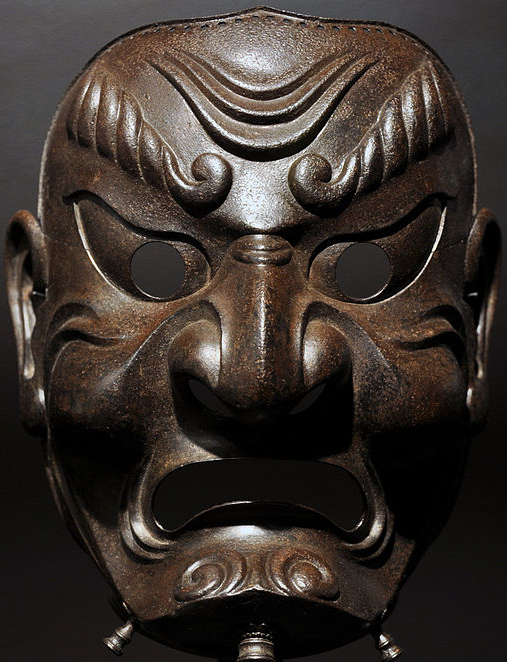
Facial armor predates firearms by centuries. Samurai in feudal Japan wore men-yoroi (literally "face armor"), iron or leather face plates that came in four common patterns: sōmen (full face), menpō (nose to chin), hanbō (lower face only), and happuri (forehead and cheeks). The men-yoroi served two purposes at once. It deflected sword strikes and arrow shafts, and its grotesque features were meant to unnerve the opponent before contact.
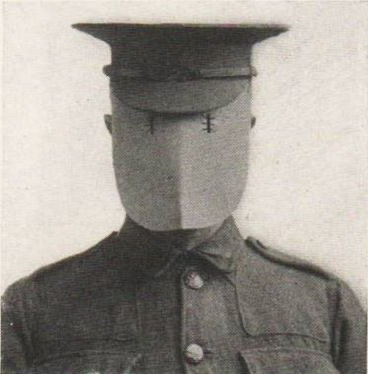
The first modern ballistic face protection appeared in the trenches of WWI. Allied soldiers wore steel-plate visors fitted to combat helmets, which slowed shrapnel but were far too heavy for sustained use. The first practical soft-armor mask did not arrive until the 1980s, when American Body Armor introduced the TAC-100R, a Kevlar-based mask rated at NIJ Level II (9 mm and .357 Magnum from short barrels). It was sold primarily to DEA field teams and metropolitan SWAT units for close-quarters work and stayed in service through the early 1990s.
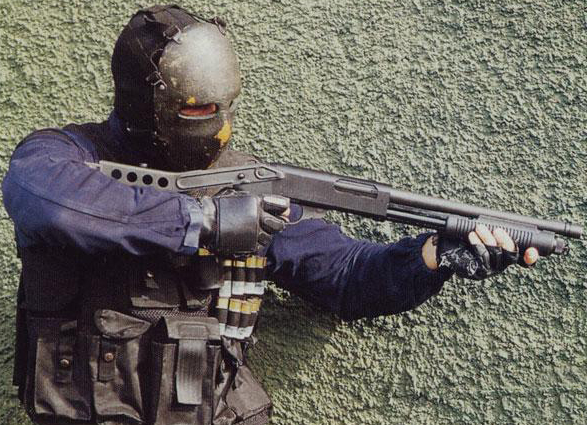
What types of bulletproof masks are there?
Two form factors dominate the modern catalog.
Half-face (helmet-cut)
- Covers the lower face from below the chin to roughly mid-forehead, leaving the upper forehead exposed for helmet integration.
- Designed to pair with a ballistic helmet so that the helmet cut and mask edge meet without interference. Most use 5-point retention.

Full-face
- Encloses the entire face from chin to top of forehead. No helmet required.
- Higher retention point count (typically 6) and 0.25 lb more weight than the helmet-cut variant. Better suited to standalone wear in airsoft, paintball, or training environments.

What is a ballistic face mask made of?
A modern ballistic face mask is a sandwich. The outer skin is a thin polymer or paint shell roughly 1 mm thick, often with anti-reflective finish so it does not glare in low light. The structural body is a soft-armor laminate of 15 to 30 layers of woven para-aramid fibers, most commonly DuPont Kevlar or Teijin Twaron, totaling about 10 mm of stack. The aramid weave catches a bullet, deforms it, and spreads its energy across many fibers. Behind the laminate sits a foam compression pad (forehead, temples, and cheeks) that takes up roughly half the impact dwell time before the force reaches skin.
High-Density Polyethylene (HDPE) is sometimes molded into the inner shell to give the mask a contoured fit. Total weight runs 1.2 to 2.2 lb, which is light by hard-armor standards but heavy enough that wearers usually rotate the mask off during long static posts.
Mounting and retention
Multiple elasticated straps converge at the back of the head, with adjustment buckles at each anchor point. Strap routing is the difference between a mask you can wear for an hour and one you cannot wear for ten minutes. The half-face / helmet-cut variant typically uses 5-point retention; full-face designs use 6-point. Both can accommodate a balaclava, a comms headset, or eye protection underneath, but the order matters: comms first, then mask, then helmet.
Do bulletproof masks actually work?
The honest answer is: against the threats they are rated for, yes. Against everything else, no.
Most current ballistic face masks are NIJ Listed under 0101.06 Level IIIA. That threat profile covers .44 Magnum semi-jacketed hollow point at 1,400 to 1,460 fps and .357 SIG FMJ flat nose at 1,430 to 1,500 fps, plus all lower threats (9 mm, .40 S&W, .45 ACP, .357 Magnum). Lab tests show a properly Listed IIIA mask can take three to six hits in the IIIA velocity envelope without penetration. Older masks like the TAC-100R were Level II, which is one rung lower and does not include .44 Magnum.
Note: "+" ratings (IIIA+, III+) are manufacturer designations and are not part of the NIJ Standard 0101.06 or 0101.07 nomenclature.
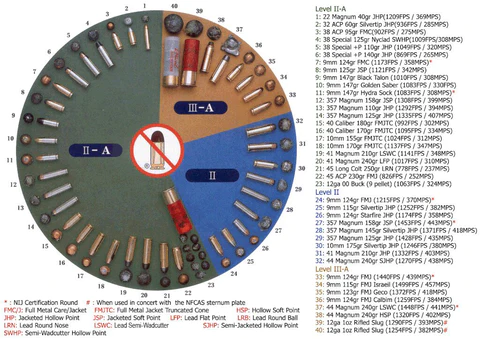
Penetration is not the only failure mode. Even a stop counts as an impact. The mask transfers residual energy through the foam liner into the face, which is more vulnerable to blunt-force trauma than the torso. A IIIA mask hit by a center-mass .44 Magnum can leave the wearer with concussion, facial fractures, severe orbital bruising, or a broken nose. A stopped round is still a punch.
What ballistic face masks do not do: stop rifle rounds. Anything from 5.56 NATO upward will defeat the laminate and the wearer. Hard-armor masks made of steel or ceramic could in theory handle rifle threats, but the weight (5+ lb on the head) makes them impractical outside of EOD applications. For rifle exposure, the answer is cover, not a face mask, and a bulletproof vest with rifle plates pulls priority. The face mask is for handgun and fragmentation threats.
How NIJ Level IIIA on a face mask compares to a vest
A IIIA-rated soft-armor vest covers about 6 to 8 times the surface area of a face mask. The same energy spread across a larger panel hits the body softer than the same energy spread across a small mask. This is why a vest hit to the chest typically leaves a backface deformation bruise; a mask hit to the cheekbone can fracture it.
For threat-level context across the full body-armor catalog, see our explainer on NIJ protection levels, which walks through the IIA / II / IIIA / III / IV crosswalk to the new 0101.07 HG1 / HG2 / RF1 / RF2 / RF3 nomenclature.
Who actually wears bulletproof masks?
Ballistic face masks are role-specific gear, not a general-issue item. They are typically worn by personnel exposed to fixed lines of fire from a known direction: turret gunners, sentry posts, point-man positions on entry teams, and bomb disposal operators. They are not worn on routine foot patrol because they reduce peripheral vision, muffle hearing, and trap heat.
Armed Forces
Documented unit-level use of ballistic face masks includes:
- U.S. Special Operations Command (SOCOM) elements during the Global War on Terror in Iraq and Afghanistan, primarily on entry and turret-gunner roles.
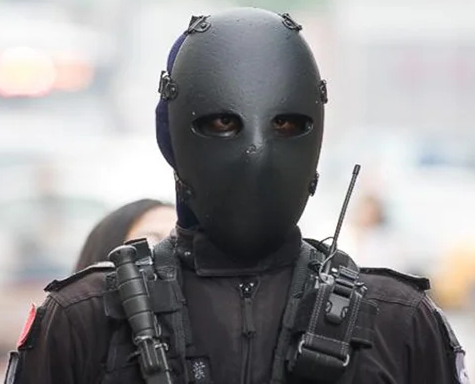
- Republic of China (Taiwan) Army Special Forces, photographed in Atomic Defense IIIA masks during 2023 training exercises.
Law Enforcement
Ballistic masks appear in U.S. federal and metropolitan teams during dynamic-entry, narcotics raids, hostage rescues, high-risk warrant service, and active-shooter response. They are generally not worn by community-facing patrol officers; the optics tradeoff outweighs the protective gain at routine traffic-stop ranges.
Documented agency use:
- U.S. Special Weapons and Tactics (SWAT) teams at the federal and metropolitan level.
- U.S. Drug Enforcement Administration (DEA), tracing back to TAC-100R adoption in the 1980s.
- U.S. Bureau of Alcohol, Tobacco, Firearms and Explosives (ATF) special response teams.
- U.S. Department of Justice tactical components.
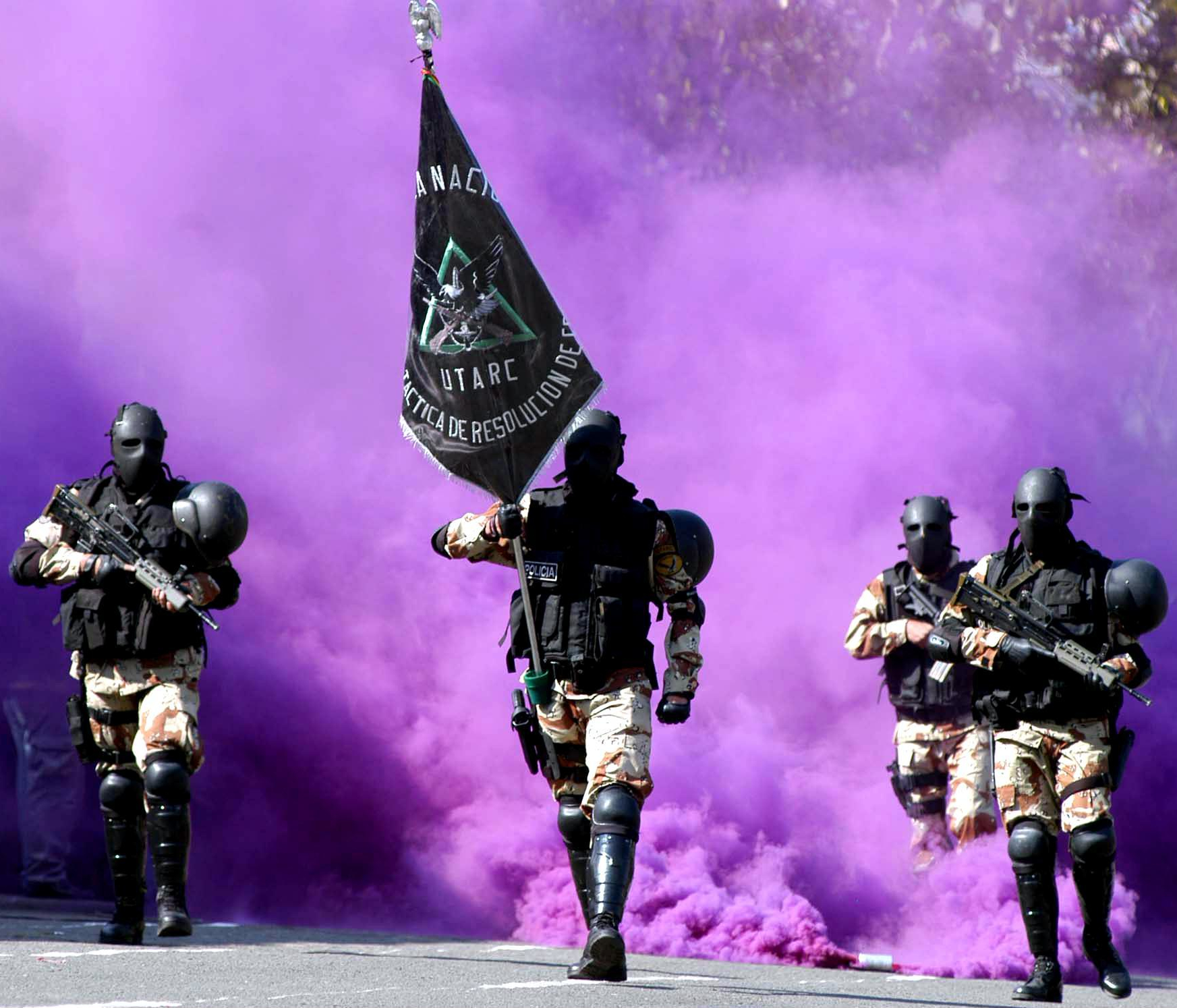
- The Tactical Crisis Resolution Unit (UTARC) of the Bolivian National Police, photographed in IIIA masks during operations.
Civilians
Civilian buyers split into two groups. The first is competitive airsoft and paintball, where a IIIA mask is wildly overspec for paint or BB rounds but happens to be the most durable face shell on the market and survives years of weekend force-on-force games. I ran an Atomic Defense full-face at a Texas summer event in 2025 across four hours of CQB, and the chafe under the cheek strap was the first thing I noticed. Heat buildup is real even with the foam vent gap.
The second is preparedness-minded civilians who buy a IIIA mask as part of a defensive load-out paired with soft armor, a plate carrier, and a helmet. Wearing a ballistic face mask in public outside of a sporting context will draw a panicked 911 call, so this is a stay-at-home or get-to-safe-room item, not an everyday-carry one.
A jurisdictional note for civilian buyers: ballistic face masks are not classified as body armor under most state statutes, but New York's Chapter 371 (eff. Sept 1, 2022) amended NY Penal Law § 270.21 to define body armor as "any product... intended to protect against gunfire, regardless of whether such product is to be worn alone or is sold as a complement to another product or garment." That language is broad enough that a NIJ-rated soft-armor face mask could plausibly fall inside the prohibition. Bulletproof Zone does not ship body armor or ballistic masks to New York or Connecticut consumer addresses.
Which bulletproof masks does Bulletproof Zone stock?
Bulletproof Zone carries Atomic Defense IIIA+ as the primary modern option in the ballistic masks collection. Two configurations:
Atomic Defense Level IIIA+ Full-Face Bulletproof Mask
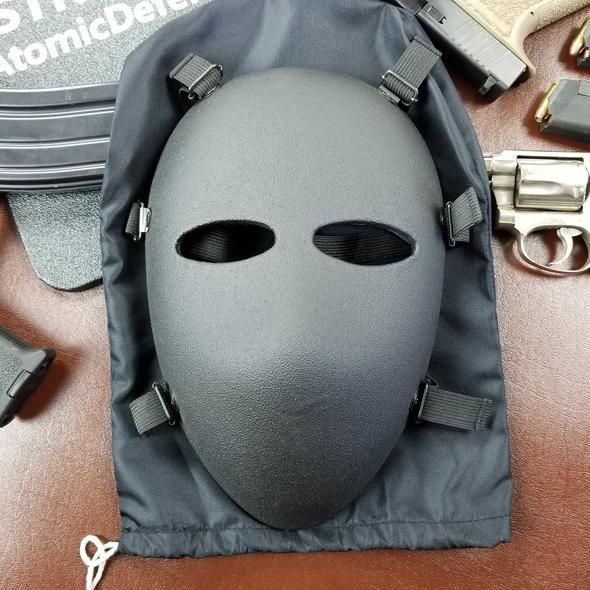

- Stand-alone wear (no helmet required), 6-point retention, 2.0 lb total weight.
- Kevlar laminate Listed under NIJ 0101.06 Level IIIA. The "+" suffix is the manufacturer's designation; not an NIJ tier.
- HDPE-shaped contour, anti-reflective black finish, water- and flame-resistant outer skin.
- Three-zone foam padding: forehead/temples, brow, cheeks.
- EverLast retention bands rated for repeated cycling without elasticity loss.
Atomic Defense Level IIIA+ Helmet-Cut (Half-Face) Bulletproof Mask
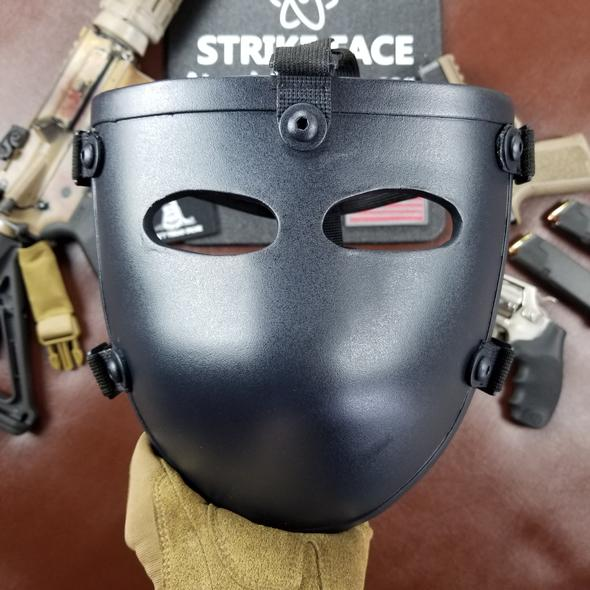
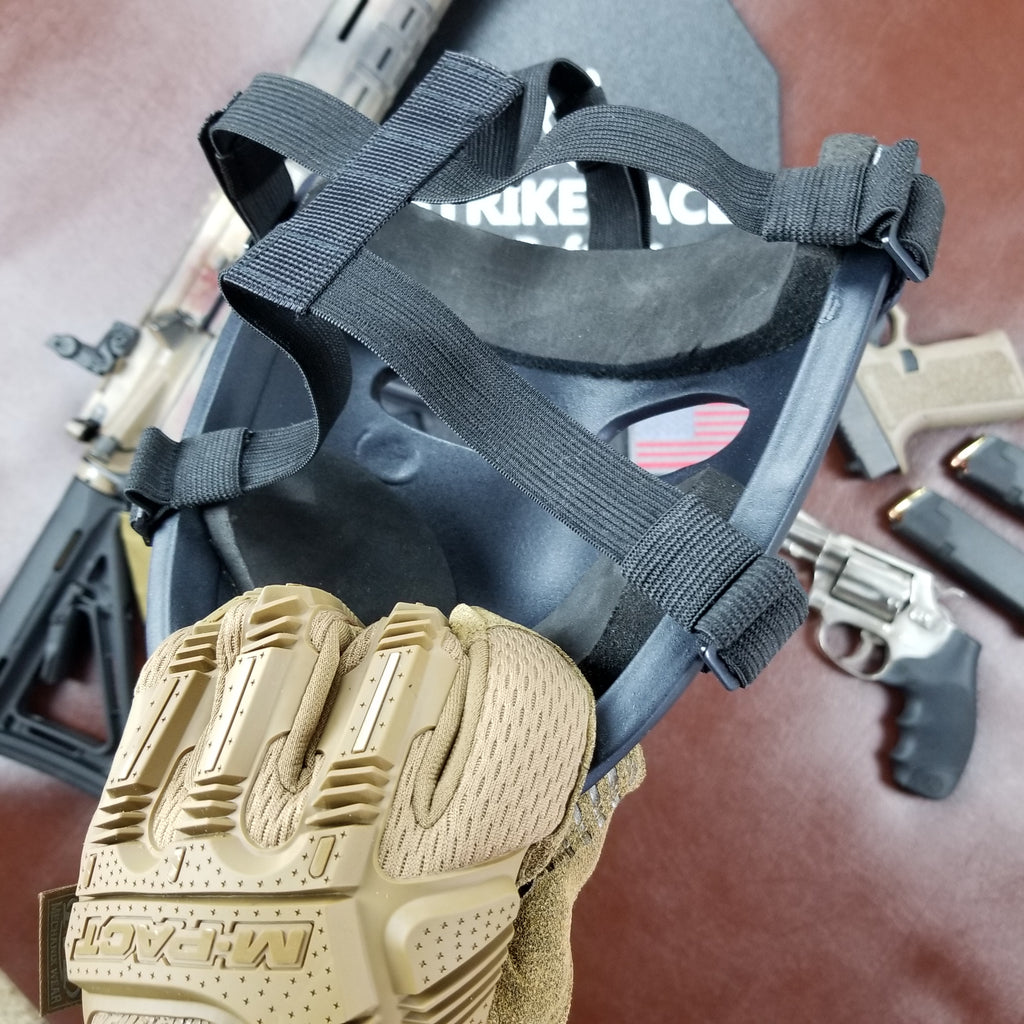
- Designed to pair with a ballistic helmet. 5-point retention, 1.75 lb total weight.
- Same Kevlar IIIA laminate as the full-face version, with the upper forehead removed for helmet integration.
- Same anti-reflective HDPE shell, foam padding, and EverLast bands.
- Universal sizing (single curved size, adjustable).
A note on the budget end of the market: there is a steady stream of "tactical IIIA" face masks listing under $120 on import marketplaces with no published lab paperwork, no NIJ Listing, and no traceable chain of custody. Skip those. The Atomic Defense product is positioned in the mid-tier of the niche; for verified IIIA performance you want either a Listed product or independent lab test results from a named NIJ-approved laboratory.
What are the alternatives to a ballistic face mask?
A ballistic face mask is not always the right tool. Three alternatives cover most of what a mask is asked to do:
Ballistic shield
Ballistic shields are deployed by police entry teams and occasionally by military tactical groups in narrow corridors or during barricaded-suspect callouts. Unlike a mask, a shield protects the entire body of the operator behind it and can be moved to cover whatever direction the threat is coming from. The trade-off is that a shield is one-handed (or strapped) gear, and it is significantly heavier than a face mask.

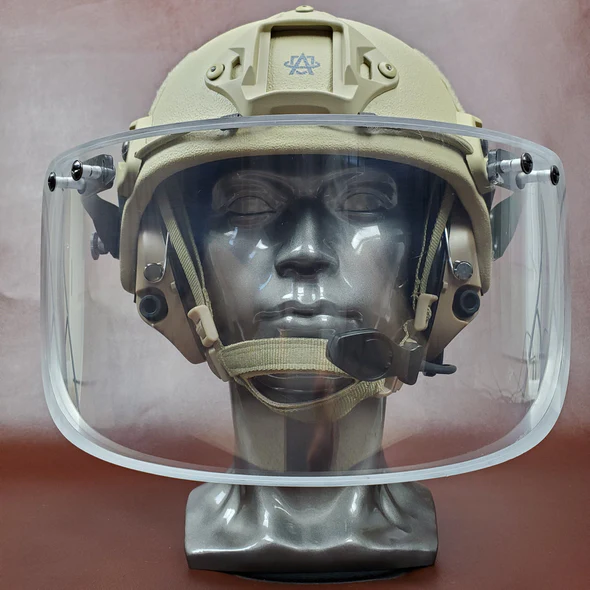
Ballistic visor
A ballistic visor (the welder-style transparent face shield seen on EOD techs) attaches to a combat helmet and gives the user a clear field of view at the cost of more weight on the neck. Most ballistic visors are rated only against fragmentation and low-velocity threats, not against IIIA handgun rounds. They are the right tool for explosive ordnance disposal and detection work, not for entry teams.
Cover
The unsexy answer is that the best face protection in any threat envelope above IIIA is a wall, a vehicle engine block, or distance. Body armor is a backup to good positioning, never a replacement.
Frequently Asked Questions
Is a bulletproof mask actually bulletproof?
No. The accurate term is bullet-resistant. A ballistic face mask Listed under NIJ 0101.06 Level IIIA is rated to stop .44 Magnum, .357 SIG, 9 mm, .40 S&W, and .45 ACP rounds within specified velocity envelopes. It will not stop rifle rounds (5.56 NATO and up), and even a stop in the IIIA range can transfer enough force to break facial bones.
What NIJ level is a ballistic face mask?
Most modern ballistic face masks are NIJ Listed under 0101.06 at Level IIIA, which is the highest soft-armor handgun threat rating. Some legacy products (like the 1980s American Body Armor TAC-100R) were Listed at Level II, which excludes .44 Magnum. As of April 2026, NIJ has not published a 0101.07 Compliant Products List, so face-mask claims still cite the .06 standard.
Will a bulletproof mask stop a rifle round?
No. NIJ Level IIIA covers handgun threats only. Rifle rounds (5.56 NATO, 7.62 NATO, .308 Winchester) require hard armor at NIJ Level III, RF1, or RF2 minimum, and a hard-armor face mask heavy enough to stop those rounds is impractical to wear for any sustained period. For rifle exposure, the answer is cover or a rated rifle plate, not a face mask.
How much does a ballistic face mask weigh?
Modern soft-armor ballistic face masks weigh 1.2 to 2.2 lb. The Atomic Defense IIIA+ full-face is 2.0 lb with 6-point retention; the helmet-cut (half-face) version is 1.75 lb with 5-point retention. Hard-armor masks (steel or ceramic) weigh 5 lb or more and are essentially limited to EOD applications.
Are bulletproof masks legal for civilians to own?
In 48 states, yes. Federal law (18 U.S.C. § 931) prohibits possession of body armor by anyone convicted of a violent felony, with a narrow employment-based affirmative defense. New York and Connecticut have stricter civilian-purchase rules that may sweep in soft-armor face masks; Bulletproof Zone does not ship to consumer addresses in those states. Wearing a ballistic mask in public outside of a sport context will draw law-enforcement attention almost everywhere.
Can a bulletproof mask be used for airsoft or paintball?
Yes, and many civilian buyers use them this way. A IIIA mask is far overspec for paint or 6 mm BB rounds, but it is also the most durable face shell sold for civilian use, and it survives long airsoft seasons. The trade-offs are weight (a 2 lb mask gets tiring at the four-hour mark) and heat buildup, since the foam liner traps facial heat even with vent gaps.
Key takeaways:
- A bulletproof mask is bullet-resistant facial armor with a Kevlar or Twaron laminate, NIJ Listed under 0101.06 at Level IIIA on most current products.
- IIIA covers .44 Magnum at 1,400 to 1,460 fps and all lower handgun threats; it does not stop rifle rounds.
- Form factors split into full-face (6-point retention, 2.0 lb) and helmet-cut / half-face (5-point retention, 1.75 lb).
- Documented users include U.S. SOCOM, SWAT, DEA, ATF, DOJ tactical components, and Bolivian UTARC; civilian use is dominated by airsoft and preparedness buyers.
- Bulletproof Zone does not ship body armor or ballistic masks to NY or CT consumer addresses; verify state law before ordering anywhere else.
Disclaimer: This article is for informational purposes only and does not, and is not intended to, constitute legal advice. Body armor laws change frequently at both federal and state levels. Consult a licensed attorney in your jurisdiction before relying on any information presented here. Bulletproof Zone makes no claim that body armor will provide complete protection in any scenario; no body armor is bulletproof. Last verified against published statutes and the NIJ Compliant Products List on April 2026.
Performance characterizations referenced in this article are based on the manufacturer's NIJ test parameters and/or independent laboratory testing as cited inline. NIJ does not "certify" body armor; products that pass the Compliance Testing Program are issued a Notice of Compliance and listed on the NIJ Compliant Products List. Models referenced as "tested to NIJ standards" have not necessarily completed the CTP. Verify CPL status at nij.ojp.gov before purchase.