


The Ultimate Emergency Go Bag Checklist - Are You Disaster Ready?

Quick answer: An emergency go bag is a 72-hour kit containing essential supplies to keep you alive for at least three days after evacuation. FEMA data shows over half of households lack one. Your bag should include water, food, first aid, documents, and protective gear to survive disasters until help arrives or conditions stabilize.
If events like the COVID-19 pandemic and the Russia-Ukraine war have shown us anything, it's that disasters can strike suddenly and without warning. Yet, alarmingly, the National Household Survey by FEMA reveals that more than half of respondents haven't got an emergency go bag checklist.
While we can't predict when or what might happen, we should prepare for such scenarios. An important part of being ready is assembling an emergency go bag. However, figuring out what’s needed and putting it all together can be overwhelming.
That’s where Bulletproof Zone comes in. We've got you covered. In this guide, we’ll explore why you need an emergency go bag, how to choose the right one, what essentials to pack, where to store it, and how to maintain it. But first, let’s start with the basics: what exactly is an emergency go bag?

What is an Emergency Go Bag?
In short, an emergency go bag is a kit containing enough key supplies to keep you alive for at least three days. This assumes after the quick evacuation of your home or workplace. This type of bag goes by many names—battle box, disaster bag, Get Out Of Dodge (GOOD) bag, get-home bag, bail-out bag, evac bag, Quick Run Bag (QRB), and Escape & Evasion (E&E) bag. Perhaps the most descriptive terms are the 72-hour bag or Bug Out Bag (BOB).
Why 72 hours? In the aftermath of a major disaster or emergency, it typically takes government agencies like FEMA or first responders—police, firefighters, EMTs—about three days to arrive at the scene.
When sheltering in place isn't an option, an emergency go bag acts as a short-term solution. It keeps you hydrated, fed, warm, dry, and safe until help arrives or the situation stabilizes enough for you to return home.
Why do you need an Emergency Go Bag, anyway?
When disasters or emergencies strike without warning, every second counts. Having a bug-out bag ready to grab at a moment’s notice means you won’t be frantically scrambling to gather supplies or figuring out what to do next. Instead, you’ll be able to calmly focus your time and energy on getting to safety.
Preparing a bug-out bag is a key part of emergency preparedness and half the battle. It equips you to survive various scenarios. This can range from natural disasters like storms, earthquakes, and volcanic eruptions, to man-made crises like active shootings, bioterrorism, and hazardous material spills.
Now that you’re wisely on board with the idea of having an emergency go bag, the next step is knowing what essentials to pack.

How do you build an Emergency Go Bag?
Pre-made emergency go bags are available for those short on time and motivation, or working with a tight budget. While these are better than nothing, be aware that you might end up with low-quality items or gear you wouldn’t use in a real disaster.
Plus, there’s no one-size-fits-all solution for a bug-out bag as too many variables come into play. Though it requires more effort and money, creating your own emergency go bag gives you full control over the quality and contents of this potentially life-saving tool. Let’s start with what you’ll need.
The Right Bag for Your Go Bag
For most people, an emergency go bag typically comes in the form of either a tactical rucksack or a hiking backpack. These offer more comfort and a low-profile design. Regardless of your preference, the bag must be up to the task. A flimsy everyday carry made from cheap materials won’t last, even for three days.
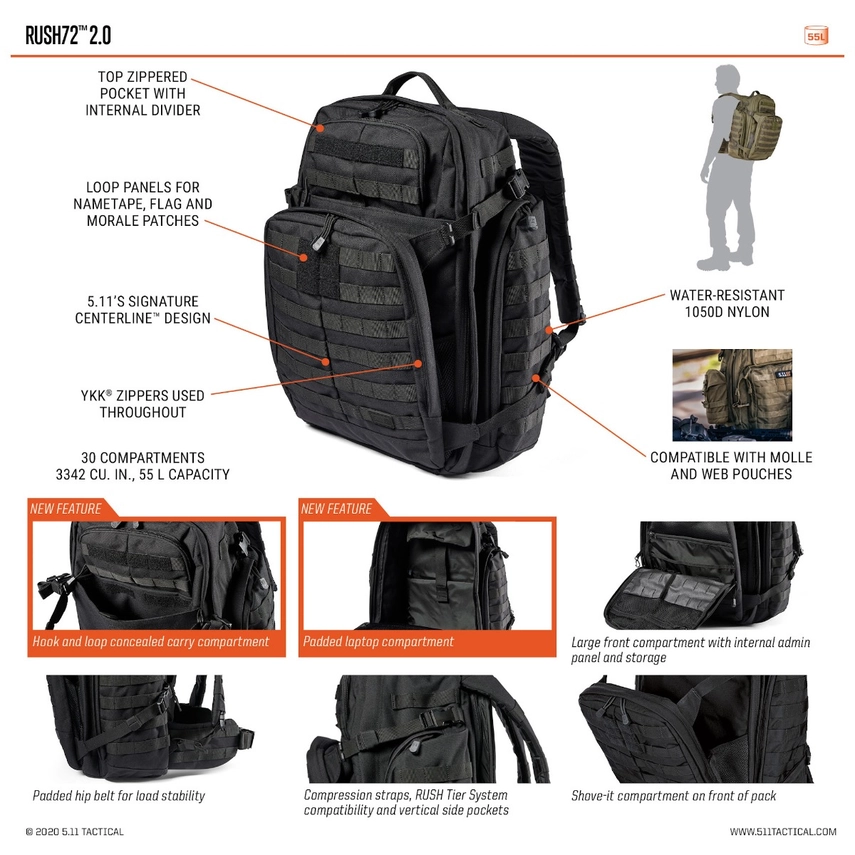
You can browse our bag and backpack collection for options. However, in terms of value for money and performance, the 2.0 generation 5.11 RUSH72 Backpack is the top choice for extended-range use.
Here are its features:
- Engineered to be a full-featured bug-out bag
- Generous 55-liter capacity with a weight (empty) of only 5.3lbs
- Available in 4 colors (black, double tap, kangaroo, and ranger green)
- Tough, water-repellent 1050 Denier nylon fabric construction with reinforced stitching throughout
- Signature CenterLine design
- Rugged, self-healing zippers
- Wrap-around SlickStick-compatible Modular Lightweight Load-Carrying Equipment [MOLLE] webbing for mounting accessories and gear
- Integrated drainage grommets and lashing points on the bottom of the pack
- Back panel ventilation channels
- Features a total of 30 compartments. This includes dual-zippered front and main sections with molded grip pulls, a 3-liter hydration pouch with hangers and toggles, vertical zippered side pockets on both sides and a top zippered pocket with an internal divider.
It also includes a strategically placed concealed carry weapon (CCW) compartment with a breakaway hook-and-loop, a gusseted Shove-It compartment, a fleece-lined pocket for eyewear or media, an internal admin organizer panel, a padded sleeve for a 15-inch laptop.
- The contoured yoke harness features adjustable quick-release shoulder straps, along with closed-cell foam padding on the shoulders, sternum, and waist belt. This design promises load stability and a customized fit during extended use.
- High-density polyethylene/stay frame sheet with ergonomic aluminum stay bar for enhanced back support
- Grab and go handle
- Expanded storage capability by connecting a RUSH MOAB Sling Pack via the RUSH TIER 4-piece strap system
- A worthy addition is an outdoor rain cover for added water resistance and inconspicuousness

The Ultimate Emergency Go Bag Checklist

After packing your luggage, it's time to decide what to put in your emergency go bag. Focus only on items that would be necessary in a life-or-death situation. This isn’t about preparing for a long-term survival scenario or packing for a vacation. It’s fine to bring a small comfort item for morale like your favorite magazine, but keep it minimal.
When thinking about your bug-out bag checklist, always take into account:
- The specific needs of yourself and any family members, including adults, children, and pets. Take into account dietary needs, medical requirements, and first aid supplies.
- Your environment and what hazards you’re likely to encounter. This includes factors like the type of terrain, the climate/season, and whether you’ll be in an urban or wilderness setting.
At the same time, don’t compromise on gear quality. You don't want it to fail in a critical moment. To save money and reduce weight, choose multi-purpose items like a tarp. It can serve as a shelter, bedding, rain collector, or emergency stretcher.
However, some single-use gadgets may perform better than their multi-function counterparts. Build redundancy into your bag by packing items with overlapping uses. Bring enough food and gear that lets you hunt, fish, or forage.
Pack spare parts like extra batteries, first aid supplies, duct tape, and key documents for key items. Keep your bag’s weight manageable and aim for 15-20% of your body weight. Overpacking will slow you down, cause quicker fatigue, and limit the distance you can cover.
While the exact contents of an emergency go bag will vary depending on individual needs, we’ve created a categorized list of essential gear and supplies. Let’s start with the most valuable resource of all:
Clean Drinking Water

For hydration, plan for at least half a gallon of potable water per person per day. Store your water in a couple of single-walled stainless-steel canteens.
Water is heavy and weighs around 8.3 pounds per gallon. Instead of carrying too much, pack enough for the first day and bring water treatment tools. Filtration is ideal as it provides immediate results, making it a practical alternative to purification methods.
Food

Plan for at least 1,000 calories of food per adult, per day. Store food in tightly sealed containers, especially if you're in a bear country. Prioritize foods based on nutritional value (high-calorie), size and weight (compact and light), shelf life (non-perishable), and ease of preparation (requiring little to no cooking).
Popular options include military-style self-heating Meals Ready-to-Eat (MREs) and freeze-dried foods. Many of these options can be found in our ReadyWise Survival Kits. You can also choose energy-dense snacks like peanut butter, dried fruits and nuts, pemmican, and flapjacks. Avoid or limit canned foods, as they are heavy and often require manual opening and cooking.
Health and Safety

A well-stocked first aid kit is necessary. Be sure to include:
- No less than a week’s worth of personal meds
- Prescription eyeglasses/contact lenses and solution
- Surgical masks/respirators
- Mobility aids
- Insect repellent
- Hand sanitizer
- Sunscreen
- Trauma/first aid kit including medical gloves, broad-spectrum antibiotics (such as ampicillin), EpiPens, antiseptic/anti-bacterial wipes, pain relievers, gauze pads, bandages and band-aids, burn gel, and tourniquet
Tools and Equipment

Communication
- Whistle
- AM/FM band weather radio
- Signaling mirror
- Cell phone
Navigation
- A paper map of your local area, marked with your planned bug out route.
- GPS tracking device/mobile app
- Compass
Lighting
- Glow sticks
- Flashlight and headlamp (LED bulbed for brightness and lasts longer)
Fire Starting
- Waterproof matches, windproof lighter, or ferro rod
- Tinder
General Hardware
- Field Knife
- Hand-crank or solar charger
- Paracord
- Duct tape
- Multi-use utensils (like a spork)
Self-Protection

To protect against potential threats and challenging environments, experienced survivalists often equip themselves with a pistol. They also equip body armor like a ballistic vest and even a bulletproof backpack insert.
Personal Effects

Wearables
- Fabrics should be breathable, durable, moisture-wicking, quick-drying, and retain heat.
- Dress in layers.
- Pack only one change of clothing per person.
- Footwear should be sturdy and already broken in.
- Don a hat/cap, gloves, and hooded jacket/poncho to insulate from the elements.
Toiletries/Personal hygiene items
- Moist towelettes/wet wipes
- Bio-degradable toilet paper
- Mini toothbrush and paste
- Dental floss
- Soap bar
Important Documents
- Original and laminated copies of ID/passport, insurance policies, bank records, and prescriptions
Emergency Cash
- In the form of small bills
Once you've decided what to pack and created a detailed, tickable checklist of your chosen items, you're ready to load everything into your bag.
Packing and Organizing Your Go Bag
The virtues of a properly packed bug-out bag are four-fold:
- It's easier to retrieve the survival gear you need.
- More supplies can be accommodated.
- Distributing the load helps avoid back strain.
- Items can be easily rearranged or swapped out.
Though it might take a bit of experimenting, you’ll want to organize the items in your emergency go bag by weight. Then, followed by urgency and frequency of use:
Weight
As a rule of thumb, weight should be distributed from the bottom up. The heaviest paraphernalia is further down, centered, and closest to your spine. The lighter and bulkier gear should sit toward the base of the bag. It can also be securely attached to the outside via carabiner clips, fasteners, MOLLE, and the like.
Urgency
For this reason, smaller, less essential items should go in the bottom of the bag. Whereas, the key items should be easily accessible. They should be placed either near the top for a quick unzip or carried on your person.

Where Should You Store Your Emergency Go Bag?
Provided it’s financially doable, the Ready Campaign recommends having not one bag but several across different locations. This makes sure you won’t end up in a situation where all your gear is in one location and you’re unable to access it.
No matter where you store your emergency go bags, keep them in a cool, dry place out of direct sunlight. Make sure they are secure, out of sight, and locked to prevent damage, contamination, or theft.
Additionally, keep your emergency go bags in a location that’s easily accessible in case you need to leave quickly. While each storage spot has its pros and cons, here are the most common places to keep an emergency go bag:
- At home (The American Red Cross recommends storing it in a closet or storage area near an exit, under the bed, or in the garage.)
- At work
- In your vehicle
- At a self-storage facility (though this comes with rental costs)
- At school/daycare (if you have children)
- With a trusted friend or neighbor
- At one or more backup cache sites along your emergency evacuation route
Once your emergency go bags are strategically placed, you might think your disaster planning is complete. However, it’s just as important to periodically review and update your go bag’s contents.
Maintaining Your Emergency Go Bag
It’s wise to periodically review the contents of your emergency kit to make sure everything remains functional and relevant to your needs.
At regular intervals, review your emergency kit. Check food, water, medications, first aid supplies, and any other items with expiration dates, replacing or replenishing as needed. Inspect electronics to make sure they still function, test-fire a sample of your ammunition, and resharpen any knives.
Additionally, reassess and adjust your kit as your circumstances change. For example, update the contents if your group dynamic shifts (such as the addition of a newborn or a new medical prescription). Also, if you move to a different environment (urban to rural or cold to hot) or if a new threat emerges, update the contents too. Stay current by incorporating improved survival gear or new skills you've learned, such as bushcraft.
If you do make any alterations to your emergency go-bag inventory, don’t forget to update your checklist.
Don’t get caught off guard when disaster strikes. A fully equipped, thoughtfully prepared emergency go bag brings the peace of mind you need in an emergency. Our guide will save you time and effort in selecting the right gear for your bag.
Plus, with financing options, free U.S. shipping on orders over $100, and the Bulletproof Zone price match guarantee, we make it easier to stay prepared without breaking the bank.
At Bulletproof Zone, we provide premium tactical gear, including bulletproof vests, backpacks, and clothing, trusted by civilians and professionals alike. With over 5 years of experience, we are committed to delivering high-quality protection solutions. Explore our wide range of products today and find the safety gear that suits your needs!
What essentials do you have in your emergency go bag? Share your top tips and tricks for building, storing, or maintaining a 72-hour bug-out bag in the comments below—we’d love to hear your survival kit wisdom!

Relevant sources:
https://healthstandards.org/standard/emergency-disaster-preparedness/