


Plate Carrier for Big Guys: 2026 XL/2XL/3XL Fit Guide

(Updated May 2026)
Quick answer: A plate carrier for big guys needs three things off the rack: a cummerbund that runs to at least 48 in (XL) or 56 in (3XL), shoulder straps that adjust 4–6 in beyond standard, and side-plate pockets that accept 6×8 in plates without binding. The AR500 Testudo Gen 2 (M–3XL), Shellback SF (S–XL), and Spartan Sentinel (38–48 in chest) are three carriers we ship most often to readers above 6 ft and 240 lb.
If you wear a 2XL t-shirt and have ever shrugged on a plate carrier that pinched your traps, ran short across the gut, or left the back panel riding above your kidneys, you already know the problem. Most off-the-shelf carriers are spec'd for a 38–44 in chest. Anything past that and the carrier either compresses your ribs or slides around because the cummerbund maxed out three holes ago.
This guide is built for the larger frame: 6 ft and up, 220 lb and up, chest 46 in and up. We will cover what fit actually means for ballistic coverage, the four spec lines that matter when you size up, three carriers we currently sell that fit big and tall guys, and how to set them up so the load sits on your shoulders instead of your neck.
- Why does plate carrier fit matter for bigger guys?
- What should a big-and-tall buyer look for in a plate carrier?
- Is the AR500 Testudo Gen 2 a good plate carrier for big guys?
- How does the Shellback Tactical SF fit a larger frame?
- Who is the Spartan Armor Sentinel built for?
- How do you wear and adjust a plate carrier on a big-and-tall body?
- Frequently asked questions
Why does plate carrier fit matter for bigger guys?
Fit is a coverage problem before it is a comfort problem. A plate carrier sized correctly puts the top edge of the front plate roughly two finger-widths below your suprasternal notch (the dip at the base of your throat) and the bottom edge above your navel. That window protects the heart, lungs, and major vessels. Run a carrier that is too short across the chest or too narrow at the cummerbund and the plate rides high, low, or off-axis, and ballistic coverage shifts away from where rounds actually go.
For larger guys, the failure modes are predictable. The cummerbund maxes out before it wraps the torso, so the side panels gap. The shoulder straps run out of adjustment, so the front plate sags below the sternum. The plate bag itself is sized for a 10×12 in plate but the carrier shell does not extend wide enough to cover the lateral chest on a 50 in frame. None of this is an exotic problem; it is just that most carriers are spec'd to a smaller median.
The other half is comfort, and comfort is what determines whether you actually train in the rig. A carrier that pinches the trapezius after twenty minutes is a carrier that gets left in the truck. Padded shoulders, a load-bearing cummerbund, and a back panel that does not seesaw when you bend over are not luxuries on a big frame; they are what makes wearing the rig sustainable for a 2-hour range day or an all-day class.
What should a big-and-tall buyer look for in a plate carrier?
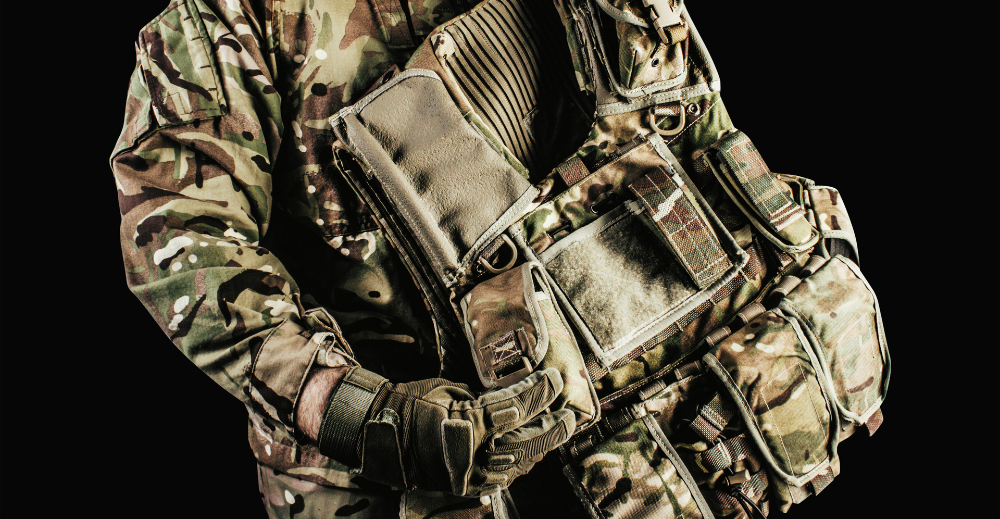
There are four spec lines that decide whether a carrier will work on a larger frame. Skip past the marketing photos and look at these on the product page before you order.
Cummerbund range
The cummerbund is the wrap that secures the carrier around your torso. On a big-and-tall buyer, this is the single most common failure point. You want a cummerbund that adjusts well past your measured waist so you have headroom for a sweater, a base layer, or just a heavier lunch. Functional ranges to look for: XL carriers should hit 48–52 in cummerbund, 2XL should hit 52–56 in, and 3XL should clear 58 in. Brands like 5.11 Tactical and Condor Outdoor publish sizing tables; AR500 publishes M through 3XL on the Testudo Gen 2.
Shoulder strap travel
Standard shoulder straps adjust 2–4 in. Big-and-tall carriers add another 2–4 in of strap travel, which is what lets the front plate ride at sternum height on a tall torso instead of sagging onto the abdomen. Look for "extended adjustability," "padded shoulder bridges," or M/L/XL torso lengths in the product copy.
Plate-bag dimensions
Most plate carriers ship to fit a 10×12 in SAPI-cut plate. Larger frames do not need a different plate size; they need the carrier shell to extend laterally far enough that the plate covers the heart and lungs without leaving a gap at the armpit. Side-plate pockets that accept 6×6 in or 6×8 in soft armor close that gap. Carriers like the Spartan Sentinel ship with side-plate pockets standard.
Back-panel length and weight distribution
A back panel that is too short rides up over the kidneys when you bend, lift, or sit in a vehicle. The fix is a longer back plate bag and a load-bearing cummerbund that ties the back panel to the front so weight is shared across the torso instead of dangling from the shoulders. Padded shoulder pads and an integrated cummerbund are how brands distribute the 6–8 lb of plates plus accessories without dumping it all onto your neck.
Is the AR500 Testudo Gen 2 a good plate carrier for big guys?
AR500 Armor Testudo™ Gen 2 Plate Carrier
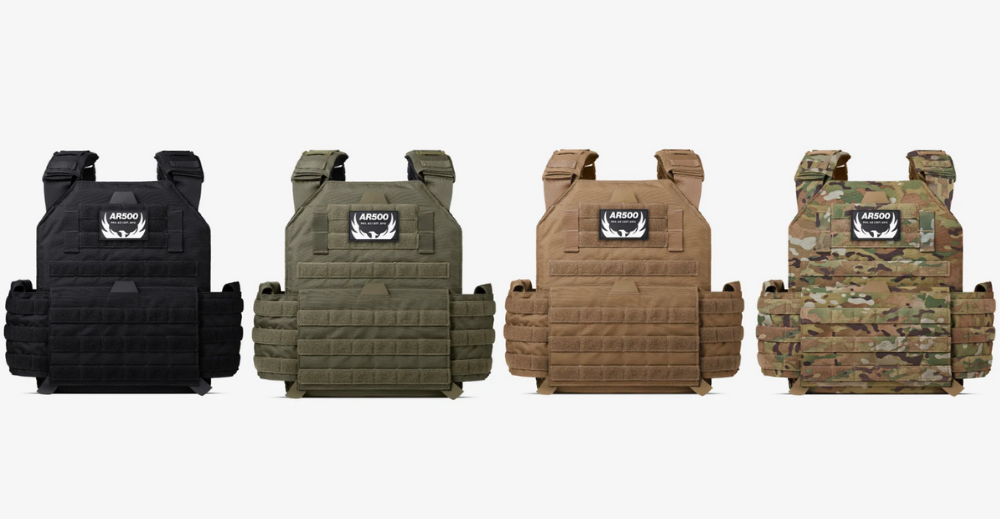
Yes, with the caveat that the Testudo runs broad in the cummerbund and shorter in the torso than some 2XL buyers expect. Named after the Roman tortoise-shell formation, the AR500 Armor Testudo Gen 2 is one of the few carriers that publishes sizing M through 3XL out of the box. The 500D Cordura nylon shell with bar-tacked stress points handles real-world abuse, and the built-in cummerbund accepts 6×6 in or 6×8 in side plates.
Where the Testudo lands well for larger buyers:
- Published 3XL sizing means a 56 in cummerbund range without aftermarket extenders.
- Built-in cummerbund with side-plate pouches, kangaroo pouch, and admin pouch reduce the number of MOLLE attachments you have to buy separately.
- 500D nylon resists abrasion at the shoulders, which is where wear shows first on a heavier load.
- MOLLE-compatible PALS webbing on every external panel for radio, mag, and IFAK pouches.
- Accepts AR500 Heritage and A1/A2 plates with the FragLock coating; the company rates the plates for a 20-year shelf life.
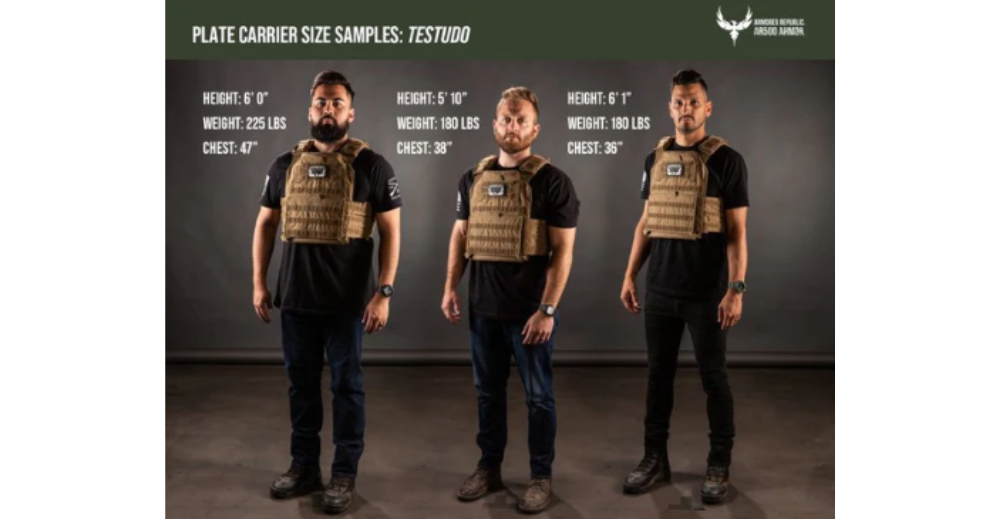
Customer feedback we hear most often:
- Comfort and craftsmanship are the two words that show up first; padded shoulder straps and the cummerbund cushion are doing real work on heavier loads.
- Sizing up is forgiving. Buyers who land between L and XL almost always sleep better in the XL after a couple of training sessions.
- Weight distribution holds up with steel plates installed; the load sits on the shoulders without the back panel kicking out.

How does the Shellback Tactical SF fit a larger frame?
Shellback Tactical SF Plate Carrier

The Shellback Tactical SF Plate Carrier caps at XL, which is the honest place to start. If you measure a 44–48 in chest the SF will fit. Past 48 in you are looking at the Testudo or Sentinel instead. Within its sizing range the SF is the carrier we hear about most for low-profile setups: 3D mesh shoulder pads, a cummerbund with padded comfort flaps that pad the rib cage, and a 500D Cordura shell that does not announce itself under a pullover.
Comfort
- 3D mesh shoulder pads spread the load and cut the heat trap that forms under solid foam pads on a long range day.
- The cummerbund includes padded spacer-mesh comfort flaps over the rib cage, which matters whether you are running side plates or not.
Durability
- 500D Cordura nylon main shell, the same fabric class used by 5.11 and Crye on their flagship carriers.
- Heavy-duty bar tacking at every load-bearing seam: shoulder anchors, cummerbund attachment points, drag handle.
Functionality
- Kangaroo pouch holds .223/5.56 magazines for fast reloads, which is the configuration most carbine classes are running.
- Adjustable on the shoulders and the cummerbund; accepts plates up to 11 in wide and 14 in tall.
- Full MOLLE/PALS webbing front and back for IFAK, radio, and admin pouches.

Customer notes that line up with our own bench checks: comfort and lightness are the two words that show up first; the brand reputation is consistent; the rig arrives in clean condition with the cummerbund pre-routed, which is a small thing that saves twenty minutes on first setup.
Who is the Spartan Armor Sentinel built for?
Spartan Armor Systems Sentinel Plate Carrier

The Spartan Armor Systems Sentinel is sized for a 38–48 in chest, which puts it squarely in the M–XL range. If you measure under 48 in around the chest and want a carrier with side-plate pockets standard, it is the rig we point most readers toward. Reader reports up to 6'2" / 300 lb confirm the carrier accommodates that build with the cummerbund near max extension.
- Personalized comfort and breathability: Padded mesh separators on the interior promote airflow on long-wear days. The chest range covers M through XL (38–48 in) with the cummerbund doing most of the size adjustment.
- Made to last: 1000-denier Cordura on the main shell is the high end of fabric weight in this price tier; it is the same denier you see on long-wear duty rigs.
- Bottom-loading design with removable cummerbund: Pockets accept 6×6 in and 6×8 in side plates, so you can run hard-armor side coverage without an aftermarket cummerbund. Velcro placements front and back accept patches, name tape, or admin panels.
- Safety features: Durable emergency drag handle, anti-slip shoulder padding that keeps the carrier from migrating during movement, and reinforced webbing on the load-bearing seams.

Customer feedback we have seen consistently:
- Comfort and size adjustability score high, especially from buyers in the 2XL t-shirt range. One reader at 6'2" / 300 lb reports a clean fit with the cummerbund near full extension.
- Build quality holds up over months of training; the construction reads as duty-grade.
- The one consistent gap: there is no quick-release pull, so if you train medical scenarios that require dropping armor in seconds, plan accordingly.
How do you wear and adjust a plate carrier on a big-and-tall body?
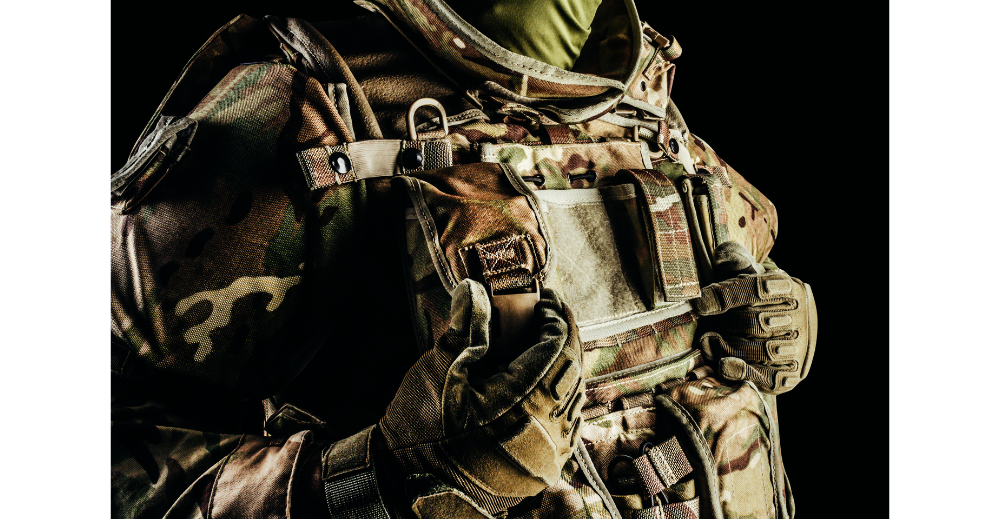
The setup process is the same on any body, but the slack is different. Larger frames need to start with every strap fully loosened and resize from the inside out. Skipping the loosening step is the most common reason a brand-new carrier feels wrong on the first wear.
Step 1: Loosen everything before you put it on.
- Lay the carrier flat on a table or the floor and open every buckle, every Velcro tab, and the cummerbund.
- Slip your arms through the armholes the way you would a regular vest, with the front panel facing you.
- Wrap the cummerbund around your torso and secure it to a snug fit. You should be able to slide a flat hand between the cummerbund and your ribs without restricting your breathing.
- Pull on the shoulder straps to lift the front plate slightly. The top edge of the front plate should sit at the level of your suprasternal notch (the dip at the base of your throat), and the bottom edge should sit above your navel.
Step 2: Dial in the load.
- Adjust both shoulder straps to even tension; weight should sit on the meat of the trapezius, not on the bony top of the shoulder, and not on your neck.
- Tighten the cummerbund until the side plates (or side-plate pockets) sit flush against your ribs without gapping. If the cummerbund is at full extension and still gapping, you need a larger carrier or a cummerbund extender.
- Verify that the padded panels are seated over the trapezius, not riding behind the shoulder blades.
Step 3: Pressure-test before you call it good.
- Move through a full range of motion: bend at the waist, raise both arms overhead, kneel, stand, and shoulder a long gun. The carrier should not ride up over your kidneys or shift across the chest.
- Check that the front and rear plates still cover the heart and lungs after movement; have a partner check the back if you can.
- Locate the emergency drag handle and confirm a partner can grip it on the first reach.
- Check pouch and magazine accessibility from the kit-up posture you actually use, not the version where you are standing still in the mirror.
Once the carrier sits where it should under movement, you are done. Most readers re-tune the cummerbund after the first hour of wear; some webbing relaxes 1/4 in to 1/2 in over the first session and settles after that.
Final notes on finding your fit
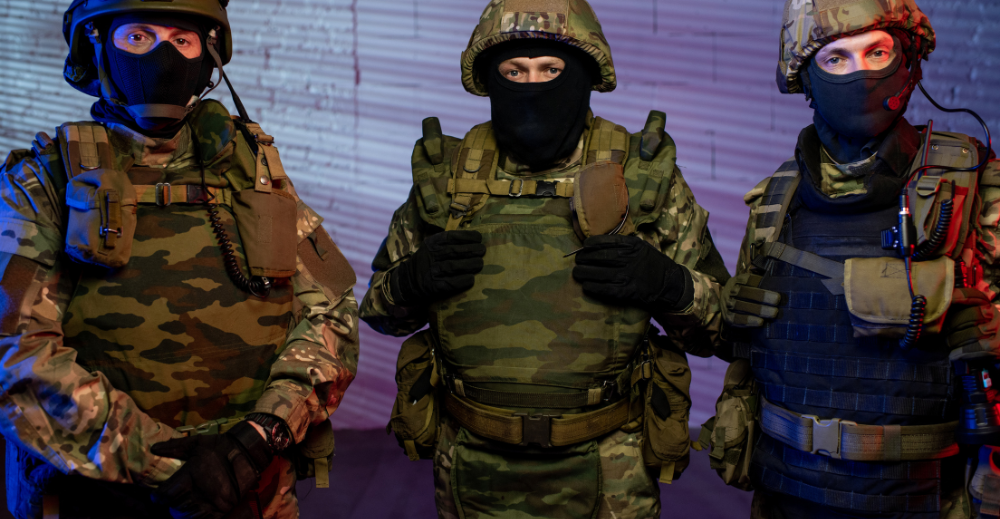
If you take only one thing from this guide, it is this: the carrier sizing chart is more important than the brand name. A "premium" carrier in the wrong size protects you worse than a mid-tier carrier that actually fits. Measure your chest and waist before you shop, write down the cummerbund range you need (your waist plus 4 in of headroom), and disqualify any carrier whose published max sits below that number.
For most readers in the 46–52 in chest range, the Shellback SF in XL or the Spartan Sentinel at 48 in chest covers the use case. For 52 in and up, or for buyers who know they will be running soft armor under a cold-weather layer, the AR500 Testudo in 2XL or 3XL is the rig with the most published sizing headroom in this catalog. Browse our full plate carriers collection for the current inventory, and if you are still building out the loadout, our how-to articles cover plate selection, IFAK setup, and ballistic standards in depth.
Frequently asked questions
What size plate carrier do I need if I wear a 2XL t-shirt?
Most 2XL t-shirt wearers measure 50–54 in around the chest. That puts you in XL or 2XL plate-carrier territory depending on the brand. Look for a cummerbund range that hits at least 52 in at full extension; the AR500 Testudo Gen 2 in 2XL covers this cleanly, the Shellback SF in XL covers the lower end, and the Spartan Sentinel at 48 in chest covers the bottom of the 2XL range. Always measure your actual chest circumference; t-shirt size is a rough proxy, not a spec.
Will a 10×12 plate cover a big guy?
Yes for the heart and lungs in nearly all builds; SAPI-cut 10×12 in plates are sized to the human chest cavity, which does not scale linearly with body weight. What changes on a larger frame is lateral coverage; the heart is still covered by a 10×12, but the side ribs are exposed. The fix is a carrier that accepts 6×6 or 6×8 in side plates in the cummerbund, which closes the underarm gap. The Spartan Sentinel and AR500 Testudo both ship with side-plate pockets standard.
How tight should the cummerbund be on a plate carrier?
Tight enough that the side plates or side panels sit flush against your ribs without gapping when you raise your arms, but loose enough that you can slide a flat hand between the cummerbund and your shirt. If the cummerbund is at full extension and still gapping, the carrier is too small; size up rather than running it slack.
What is the maximum chest size for an off-the-shelf plate carrier?
Most catalog carriers cap at a 48–52 in chest. The AR500 Testudo Gen 2 publishes a 3XL size that covers up to roughly 56 in chest. Past that, you are looking at custom orders from brands like Crye Precision or aftermarket cummerbund extenders. Cummerbund extenders are a legitimate fix; they are MOLLE-attached webbing panels that add 4–8 in of wrap.
Are heavier plate carriers better for big guys?
Not necessarily. A 1000D Cordura shell wears longer than a 500D shell on a heavier load, but the carrier weight itself adds to fatigue. Match the shell weight to the use case: 500D is fine for range training and short classes, 1000D is the right call for full-day duty wear or carriers you expect to run for a year of weekly classes. The Spartan Sentinel uses 1000D; the Testudo and Shellback SF use 500D.
Do I need side plates if I run a plate carrier?
Side plates are optional but recommended for larger frames. The lateral chest is exposed on a body wider than the front 10×12 in plate, and side plates close that gap. Soft armor side panels are lighter and cheaper than hard side plates and stop most pistol-caliber threats; hard 6×6 or 6×8 in side plates add rifle-caliber protection at a weight cost of 2–3 lb per side. Decide based on threat profile, not just budget.
Is a plate carrier legal to own in the United States?
Yes for civilians in 49 states; Connecticut restricts the sale of body armor to in-person transactions for civilians. Federal law prohibits possession by convicted violent felons under 18 USC § 931 (Cornell Law). State law varies on enhancements during the commission of a crime; check your state attorney general's site if you have a specific question. The plate carrier itself (the shell) is unregulated in all 50 states; it is the ballistic plates that some states address.