


School Safety Laws After Active Shootings: 2026 Guide

Quick answer: Since the February 14, 2018 Parkland shooting, Congress has passed the STOP School Violence Act (2018) and the Bipartisan Safer Communities Act (2022). At the state level, 67 gun-safety laws were enacted in 26 states in 2018 alone. Many districts now require clear backpacks or allow bullet-resistant backpack panels for enrolled students.
School safety changed faster after Parkland than at any point since Columbine. If you're a parent trying to figure out what your kid's district has actually put in place, the picture is genuinely complicated. Federal law sets a floor, state law adds the real variation, and local school boards layer on top of both. Here's what shifted and what it means practically.
What federal laws changed after Parkland?
Congress moved faster than usual. About one month after the February 14, 2018 shooting at Marjory Stoneman Douglas High School in Parkland, Florida, the STOP School Violence Act of 2018 was signed into law. It authorized roughly $75 million annually for school safety training, anonymous threat-reporting systems, and crisis-intervention teams.
The 2019 federal budget also increased school safety funding. In December 2018, the Trump administration finalized a bump-stock ban, with the rule taking effect March 26, 2019. Bump stocks are devices that allow a semiautomatic rifle to fire at near-automatic rates by harnessing the recoil energy of the trigger mechanism.
The bigger federal law came four years later. The Bipartisan Safer Communities Act, signed June 25, 2022 in the weeks after the May 24, 2022 Uvalde, Texas, shooting at Robb Elementary School, included enhanced background checks for buyers under 21, funding for state crisis-intervention programs, and clarified the federal definition of a licensed firearms dealer. It was the most significant federal gun legislation in nearly 30 years.
What did states do in 2018?
The Giffords Law Center tracked 1,638 firearm bills introduced in 2018. Of those, 67 gun-safety laws were enacted across 26 states and the District of Columbia. The changes broke into several categories.
Background checks and age limits. Seven states, including Florida, passed laws addressing background checks. Four states raised the minimum age to purchase or possess certain firearms.
High-capacity magazine restrictions. D.C., Vermont, and New Jersey passed legislation targeting magazines above certain capacities, either capping size or raising penalties for violations.
Extreme risk protection orders (ERPOs). D.C. and eight states enacted "red flag" laws allowing law enforcement or family members to petition a court to temporarily remove firearm access from at-risk individuals. New Jersey and Delaware already had laws allowing firearm removal tied to mental illness adjudications.
School grounds restrictions. Vermont banned unauthorized possession of firearms on school buses and in K-12 buildings. Nine states — including Florida, California, Illinois, Connecticut, Massachusetts, Maryland, New York, Rhode Island, and Nebraska — funded urban gun-violence reduction programs.
Florida's Marjory Stoneman Douglas High School Public Safety Act also created a school guardian program, allowing certain trained school staff to be armed, and mandated active shooter drills at defined intervals. Whether to expand armed-staff programs has remained contentious in every legislative session since.
What changed after Uvalde in 2022?
The May 24, 2022 shooting at Robb Elementary in Uvalde killed 19 students and two teachers. It reopened the federal legislative window that had been closed since the 1994 assault weapons ban, resulting in the Bipartisan Safer Communities Act described above.
At the state level, 2022 and 2023 saw another wave of school safety legislation. Several states passed requirements for annual safety assessments, secure entrance vestibules, and improved coordination between school resource officers and local law enforcement. A number of states also passed laws expanding or restricting armed-teacher programs, depending on the political direction of the legislature.
As of May 2026, legislation in this space is still active at the state level. If you want the current status of laws in your state, the Giffords Law Center state scorecards are updated annually and are the best single source for verified, jurisdiction-specific comparisons.
How did student activism shape policy?
Parkland survivors launched the Never Again MSD movement within days of the shooting and organized the March for Our Lives rally on March 24, 2018. An estimated 1.2 million people participated in marches across the country. The political effect was real: Florida's legislative response came within weeks, and congressional attention to school safety funding accelerated.
Student activism has continued in waves after subsequent shootings. The honest picture, though, is that the policy response has been uneven. Teacher unions focused more on pay, class size, and mental health resources than on gun policy specifically. The partisan divide on firearms legislation has kept most federal proposals from advancing past committee, and the most durable changes have happened at the state level, driven more by local activism and legislative timing than by any single national movement.
How did backpack rules change?
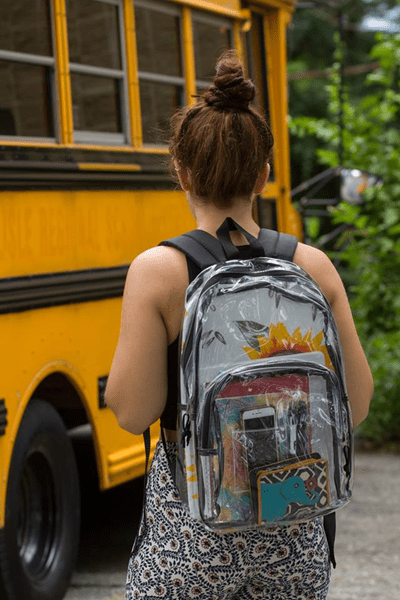
Hundreds of districts moved to require clear or mesh backpacks after Parkland, partly for security screening and partly as a visible deterrent. If your child's school has a clear-backpack requirement, the Bulletblocker NIJ Level IIIA Clear Backpack satisfies that requirement while also providing ballistic protection rated to stop rounds up to .357 SIG FMJ and .44 Magnum SJHP. It is NIJ Listed under 0101.06 at Level IIIA.
For schools that still allow standard backpacks, Tuffypacks Backpack Armor panels are designed to slide into a regular backpack's laptop sleeve. They add meaningful ballistic protection without changing your kid's daily bag. Both options are available at Bulletproof Zone. Worth knowing: no backpack insert provides complete protection, and Louisiana's school-zone body armor law (La. R.S. 14:95.9) expressly exempts bullet-resistant student backpacks from its restrictions. Most other states have no restriction on backpack panels.
For a deeper look at the options and what the ratings mean, see our guide on bullet-resistant armor for children.
What can parents do right now?
The most useful thing you can do is know your own district's actual plan, not the one in the press release. Ask specifically: Does the school have a secure vestibule and visitor credentialing? Is there a school resource officer? When did the last active-shooter drill happen and what protocol did it use? Has the district adopted the Standard Response Protocol or ALICE training?
If you've had that conversation with your kid's principal and the answers are vague, that's information too. Most districts have improved significantly since 2018, but improvement is uneven. Our article on preparing children for an active shooter situation covers how to have those conversations with kids at different ages without creating unnecessary fear. If the threat-level question comes up, our NIJ protection levels guide explains what IIIA, III, and IV ratings actually stop.
Frequently Asked Questions
What is the STOP School Violence Act?
The STOP School Violence Act of 2018 authorized approximately $75 million per year for grants to improve school safety. Funds went to threat-assessment and crisis-intervention programs, anonymous reporting systems for students to flag potential threats, and safety training for school staff and law enforcement. It did not regulate firearms directly.
What did the Bipartisan Safer Communities Act do?
Signed June 25, 2022, after the Uvalde shooting, the Bipartisan Safer Communities Act enhanced background-check requirements for firearm buyers under 21, provided $750 million in state crisis-intervention funding, and narrowed loopholes in the federal definition of a firearms dealer. It was the most significant federal gun legislation since the Brady Handgun Violence Prevention Act of 1993.
What is a red flag law and which states have one?
Red flag laws, formally called extreme risk protection orders (ERPOs), allow a court to temporarily remove firearm access from individuals deemed a credible risk to themselves or others. After Parkland, the number of states with ERPO laws expanded rapidly. As of 2026, more than 20 states have some form of ERPO law. State laws vary significantly in who can file a petition and what evidence is required.
Are bullet-resistant backpacks legal to bring to school?
In most states, yes. Louisiana is the one state with a school-zone body armor restriction (La. R.S. 14:95.9), and that law expressly exempts bullet-resistant student backpacks. No other state currently prohibits backpack armor in schools as of May 2026. Always confirm your district's specific policy, as individual schools can set stricter rules than state law requires.
What NIJ rating do school backpack armor panels use?
Most civilian backpack armor panels are rated to NIJ Level IIIA under 0101.06, which means they are independently tested to stop rounds up to .357 SIG FMJ flat-nose and .44 Magnum SJHP at standard test velocities. Level IIIA stops handgun threats but not rifle rounds. If you want coverage against rifle threats, that requires hard armor — Level III or IV plates — which are not practical for a student backpack. The Bulletblocker clear backpack sold by Bulletproof Zone uses NIJ Listed IIIA soft armor panels.
Did states allow teachers to carry guns after Parkland?
Florida's Marjory Stoneman Douglas High School Public Safety Act created a guardian program allowing certain trained school employees to be armed on campus, though the law initially excluded classroom teachers. Several other states have passed or expanded similar armed-staff laws since 2018, while others have passed laws explicitly prohibiting armed teachers. This remains one of the most contested areas of school safety policy, with no federal rule setting a floor in either direction.
What should I ask my child's school about their safety plan?
Ask specifically whether the school has a secured vestibule and visitor credentialing system, what active-shooter response protocol is in use (Run-Hide-Fight, ALICE, or Standard Response Protocol), how recently the last drill occurred, and whether a school resource officer is on campus. Vague answers are themselves useful data. Many districts improved substantially after 2018, but implementation quality varies widely even within the same district.
Key takeaways:
- The STOP School Violence Act (2018) and the Bipartisan Safer Communities Act (2022) are the two most significant federal responses to school shootings since Columbine.
- In 2018 alone, 67 state gun-safety laws were enacted across 26 states, covering background checks, red flag orders, magazine restrictions, and school-zone firearm rules.
- Clear-backpack mandates spread to hundreds of districts after Parkland; bullet-resistant backpack panels (NIJ Level IIIA) are legal to bring to school in nearly every state.
- The most useful action for any parent is knowing the specific safety plan at their child's school, not the national average.
- Bulletproof Zone carries NIJ Listed IIIA clear backpacks and soft-armor backpack panels for students whose schools permit them.
Disclaimer: This article is for informational purposes only and does not, and is not intended to, constitute legal advice. Body armor laws change frequently at both federal and state levels. Consult a licensed attorney in your jurisdiction before relying on any information presented here. Bulletproof Zone makes no claim that body armor will provide complete protection in any scenario; no body armor is bulletproof. Last verified against published statutes and the NIJ Compliant Products List on May 2026.
Federal law (18 U.S.C. § 931) prohibits possession of body armor by anyone convicted of a violent felony. State restrictions vary; New York and Connecticut have the most stringent civilian-purchase restrictions. Bulletproof Zone does not ship body armor to New York or Connecticut consumer addresses. Pending litigation (Heeter v. James, W.D.N.Y. 1:24-cv-00623) may alter New York's regulatory landscape; the case is in summary judgment briefing through end of June 2026.