


Best Bulletproof Backpacks 2026: A Buyer's Guide | BPZ
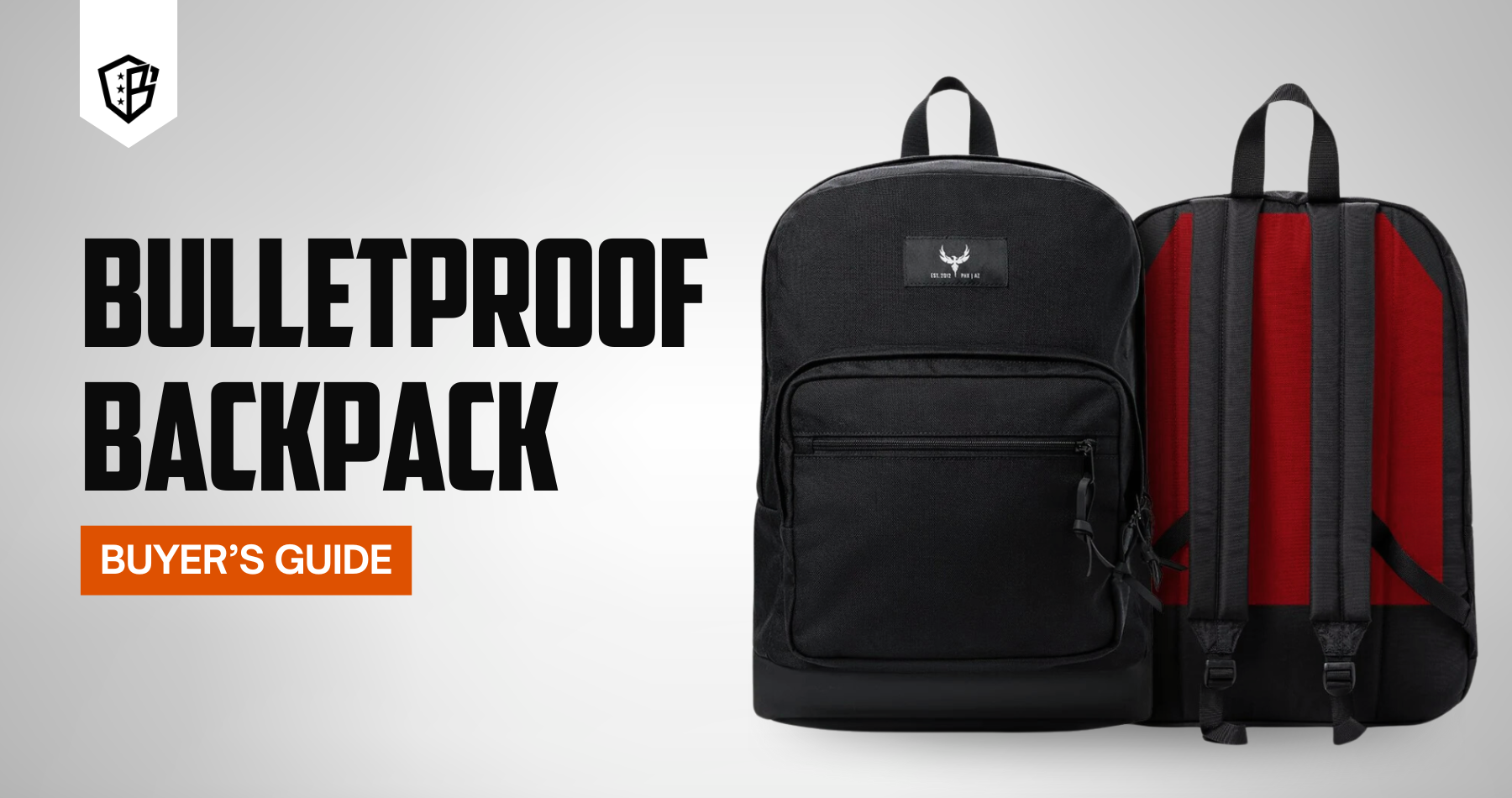
Quick answer: The best bulletproof backpacks for civilians in 2026 are NIJ Level IIIA models that weigh 1 to 4 lb and stop handgun rounds up through .44 Magnum. The ProtectPanel 10x13 IIIA insert (1.5 lb) is the lightest pick, the Guard Dog ProShield Scout (1.27 lb) suits students, and the Atomic Defense Level III+ Lightweight is the only kids' bag rated to stop an AR-15. Expect to spend $99 to $490.
A bulletproof backpack is a daily-carry bag with a ballistic panel sewn into a dedicated sleeve, or a standard backpack fitted with a removable armor insert. Most civilian models are tested to NIJ Level IIIA, which stops handgun rounds up through .44 Magnum and most submachine-gun fire. Level III and Level III+ models add rifle protection but weigh several pounds more.
Here at Bulletproof Zone, this guide covers who should consider a bulletproof backpack, whether they actually work, what they cost, the legality of carrying one, what NIJ levels mean, how to use one in an emergency, and the eight current top picks from our bulletproof bags and backpacks collection.
- Do I need a bulletproof backpack?
- Do bulletproof backpacks really work?
- How much do bulletproof backpacks cost?
- Are bulletproof backpacks legal?
- Can I bring a bulletproof backpack on a plane?
- Types of bulletproof backpack inserts and armors
- What does NIJ Protection Level mean?
- NIJ Protection Levels at a glance
- What protection level should I buy?
- How do I use a bulletproof backpack?
- Bulletproof backpacks: featured selection
- Is a bulletproof backpack worth it?
- Frequently Asked Questions
Do I need a bulletproof backpack?
A bulletproof backpack makes sense if you or someone in your household:
- Spends the day on a school or college campus, as a student, teacher, or staff member.
- Serves in the military.
- Works in law enforcement, security, or executive protection.
- Lives, works, or travels in a high-crime area.
Anyone in those situations may benefit from ballistic protection that is lighter, less expensive, and less conspicuous than a vest. Even a concealable bulletproof vest would be obvious when changing for gym class. A backpack travels with the wearer everywhere a normal bag goes, with no second look.
It is the kind of purchase you hope you never have to use. Knowing it is there is the value.
Do bulletproof backpacks really work?
Yes, when used correctly. Ballistic panels rated to NIJ Level IIIA are tested to stop the rounds listed in the standard, and the National Institute of Justice estimates that body armor wearers in officer-involved shootings have roughly a 95 percent survival rate against threats their armor was designed to defeat. A bulletproof backpack puts that same protection between a bullet and your torso when you orient the panel correctly.
What "work" does not mean is invincibility. Three points are worth being honest about before you buy.
What a bulletproof backpack does not do
No piece of armor is truly bulletproof in the sense that bullets have no effect on it. The industry term is bullet resistant: the armor resists penetration from a defined range of threats.
It does not make you invincible
Body armor is not indestructible. It does not protect against unlimited rounds, every weapon ever made, or stabbings (unless rated as multi-threat). It also does not eliminate blunt-force trauma. The energy that does not penetrate the panel still has to go somewhere, and some of it will reach you.
It does not guarantee a clean walk-away
Active-shooter incidents are unpredictable. The angle, distance, weapon caliber, and round type all affect the outcome. A backpack panel cannot guarantee zero injury. It can shift the odds, often turning what would have been a major injury into a minor one.
It does not stop rifles unless rated for them
Most civilian backpacks are Level IIIA. Stopping rifle rounds requires a Level III or Level IV hard plate, which weighs more and adds cost. We cover this in detail in the NIJ section below.
What a bulletproof backpack does do
It resists ballistic impact
Inside the panel sits a web of layered fibers, ceramic, or steel. These layers absorb and spread the force of an incoming round across the entire panel. The bullet expends its energy deforming or breaking up against the layers rather than passing through.
It puts something between you and the threat
Most items in a typical classroom, hotel room, or office cannot stop a bullet. Desks, doors, and drywall provide concealment, not protection. A IIIA panel pulled in front of your chest gives you a defensible barrier where you previously had none.
It protects what is inside the bag
A laptop, tablet, or phone behind the panel gets the same ballistic protection. The panel also adds blunt-impact protection for fragile gear during normal drops and accidents.
How much do bulletproof backpacks cost?

Civilian bulletproof backpacks run from about $99 at the low end to $490 for premium models. Plate carrier backpacks usually cost more if the price does not include the plates. Three rough tiers are useful when shopping:
- Entry level ($99 to $200). Soft IIIA inserts and basic backpacks with a sewn-in panel. Suitable for students and daily carry.
- Mid-range ($200 to $350). Combination packs with better materials, more pockets, lighter panels, and tech-friendly features.
- Premium ($350 to $490). Plate-carrier backpacks, hard-plate combos, and tactical packs with rifle-rated armor (Level III or III+).
Price tracks the panel quality, the bag construction, and the NIJ protection level. Cheap is not the right metric. Pick the level that matches the threat you are planning for.
Are bulletproof backpacks legal?
In the United States, federal law allows civilians to buy and wear ballistic body armor, including bulletproof backpacks. The exception is felons: 18 U.S.C. § 931 prohibits anyone with a violent-felony conviction from possessing body armor.
State law adds a layer on top. New York and Connecticut have the strictest civilian-purchase rules, and Bulletproof Zone does not ship body armor to consumer addresses in those states. Other states have their own rules; verify before traveling with a backpack panel.
Most states also treat the wearing of body armor during the commission of a felony as an additional offense, which is the rule mentioned at the federal level too.
Can I bring a bulletproof backpack on a plane?
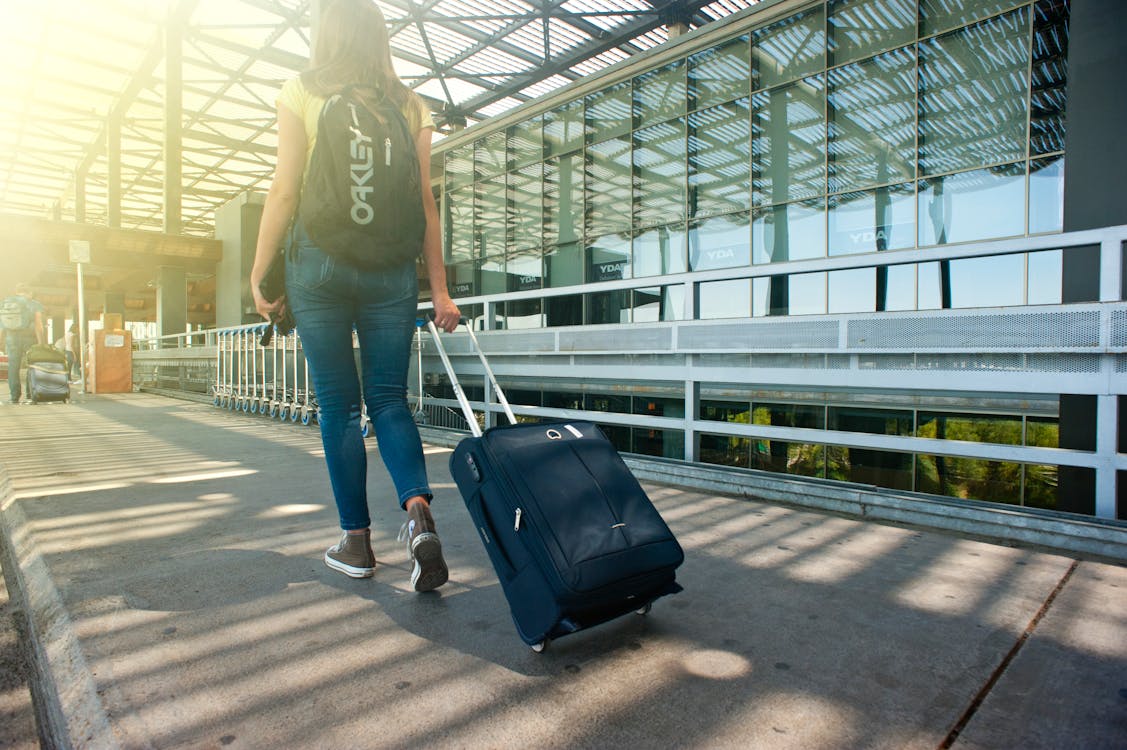
Generally, yes. The TSA's body armor page states that body armor is allowed in carry-on or checked baggage. You may not wear the armor through the airport or onto the aircraft.
Two caveats matter at the checkpoint:
- The TSA officer at the lane has final authority. Even though armor is permitted, they can require you to remove it from the bag for inspection or refuse it for any safety-related reason.
- Some international destinations restrict body armor by law. If you are flying outside the US, check the destination country's rules with your airline before you leave.
Types of bulletproof backpack inserts and armors
Bulletproof backpacks use either soft body armor panels or hard body armor plates. The bag can ship with the panel already sewn into a dedicated sleeve, or you can buy an insert separately and slide it into a conventional backpack.
Soft body armor
Soft armor panels are the most common backpack format. They are lightweight, flexible, and rated up to NIJ Level IIIA. Soft armor uses one of two fiber families.
Para-aramid fibers
Aramid fibers like Kevlar (DuPont) and Twaron (Teijin) have a tensile strength roughly five times that of steel by weight. Cross-woven into multiple layers, they absorb and spread the energy of a bullet across the full panel. Aramid is heat resistant and used in military body armor since the early 1970s.
Ultra-high-molecular-weight polyethylene (UHMWPE)
UHMWPE fibers like Dyneema (DSM) and Spectra (Honeywell) are based on long-chain polyethylene molecules. UHMWPE is lighter than aramid and has excellent ballistic and water resistance, which makes it the go-to material for the lightest IIIA panels on the market today. Honeywell's Gold Shield and Spectra Shield laminates appear in many plate carrier backpack inserts.
Hard body armor
Hard armor weighs more but defeats a wider range of threats, up through rifle rounds. Hard plates use one of two materials, sometimes layered together.
Ballistic steel
Hardened steel processed for bullet resistance and reduced spalling. Steel plates are durable and inexpensive but heavy. Most steel plates used in Level III backpack inserts run 6 to 8 lb each.
Ceramic
Ceramic plates use a hard ceramic strike face (alumina, silicon carbide, or boron carbide) backed by aramid or UHMWPE composite. The strike face shatters the incoming round; the composite backing catches the fragments. Ceramic plates are lighter than steel for the same protection level but more expensive and more sensitive to drops.
What does NIJ Protection Level mean?
Quality body armor is tested to National Institute of Justice (NIJ) standards. The most recent standard for ballistic-resistant armor is NIJ 0101.07, finalized in 2023. Earlier 0101.06-tested armor remains in service. The level a panel earns describes the threats it stopped during testing.
You will see the same level written several different ways:
- NIJ Level IIIA, NIJ IIIA, Level IIIA, Type IIIA, or just IIIA
- NIJ Level III or NIJ III
- NIJ Level III+ (a manufacturer rating, not an official NIJ level)
- NIJ Level IV or NIJ IV
NIJ Protection Levels at a glance
This is the practical breakdown for backpack shoppers. NIJ = National Institute of Justice; FMJ = full metal jacket; AP = armor piercing; ACP = automatic Colt pistol.
Soft body armor levels
Level IIA. Stops 9mm FMJ and .40 S&W. Rare in modern backpacks; superseded by IIIA in most product lines.
Level II. Stops Level IIA threats plus higher-velocity 9mm and .357 Magnum. Found mostly in lightweight covert vests.
Level IIIA. Stops Level II threats plus .357 SIG and .44 Magnum. The civilian backpack standard. Available in soft panels and a few semi-rigid plates.
Hard body armor levels
Level III. Stops Level IIIA threats plus 7.62×51mm NATO M80 (FMJ) rifle rounds. Hard plate territory. Suitable when an active-shooter scenario with rifle threats is the planning concern.
Level III+. A manufacturer rating, not an official NIJ level. Typically tested against 5.56×45mm M193 (an AR-15 round) and M855 green-tip in addition to the Level III battery. Buy from a brand whose test report you can read.
Level IV. Stops Level III threats plus a single .30-06 M2 AP round. Highest standard NIJ level; ceramic in nearly all cases. Heavy. Generally overkill for civilian backpack use.
What protection level should I buy?
For most civilian buyers, Level IIIA is the right answer. It stops every common handgun round, including .357 Magnum, .357 SIG, and .44 Magnum. It is also light enough to carry every day in a school or commute backpack without strain. A IIIA backpack panel typically weighs 1 to 2 lb.
The trade-off has not changed since the days of plate armor: the higher the protection level, the heavier the load. Going from IIIA (1 to 2 lb) up to Level III (5 to 8 lb) more than triples the weight. For a child, that is the difference between a wearable everyday bag and a panel that gets left at home.
Always factor in weight
Reputable product pages list weight with the panel installed. If a plate carrier backpack looks suspiciously light in the listing, the weight is probably for the empty bag. Verify before buying. Do not buy a setup for a child that is too heavy to carry every day with school books inside.
Can a bulletproof backpack stop an AR-15?
Yes, but only if the panel is rated NIJ Level III or higher (or Level III+ tested against 5.56×45mm). Level IIIA panels stop handgun rounds; they will not reliably stop the 5.56 round an AR-15 fires. Atomic Defense's Level III+ Lightweight backpack is the rare kids-sized option that meets the rifle-rated standard.
How do I use a bulletproof backpack?
The principle is to make yourself a smaller target and put the panel between yourself and the threat. There are three positions worth practicing:
- Frontal cover. Slip the bag off and hold it against your chest, panel facing the threat. Crouch behind it.
- Back cover. Keep the bag on, turn your back to the threat, and curl forward to protect your head and neck.
- Shield-on-the-move. Hold the bag in front of you with both hands while moving to a hard-cover position (a wall, a vehicle, a thick door). Body armor is for the moments before you reach hard cover, not a substitute for it.

People under stress, especially children, can forget what to do. Walking through the drill a couple of times a year keeps it fresh.
Bulletproof backpacks: featured selection
Eight current top picks from our bags and backpacks collection, grouped by use case.
ProtectPanel 10" x 13" Level IIIA Backpack Insert
The ProtectPanel is the lightest and most flexible IIIA insert in our catalog. It comes in four shapes and sizes, fits standard backpacks, kids' backpacks, and laptop pockets, and weighs 1.5 lb across the range. Best fit: anyone who already owns a backpack they like and wants to add a panel.
- Customizable: round-top and rectangular shapes, four sizes.
- Protective: tested to NIJ Level IIIA.
- Lightweight: 1.5 lb.
Guard Dog ProShield Scout Backpack
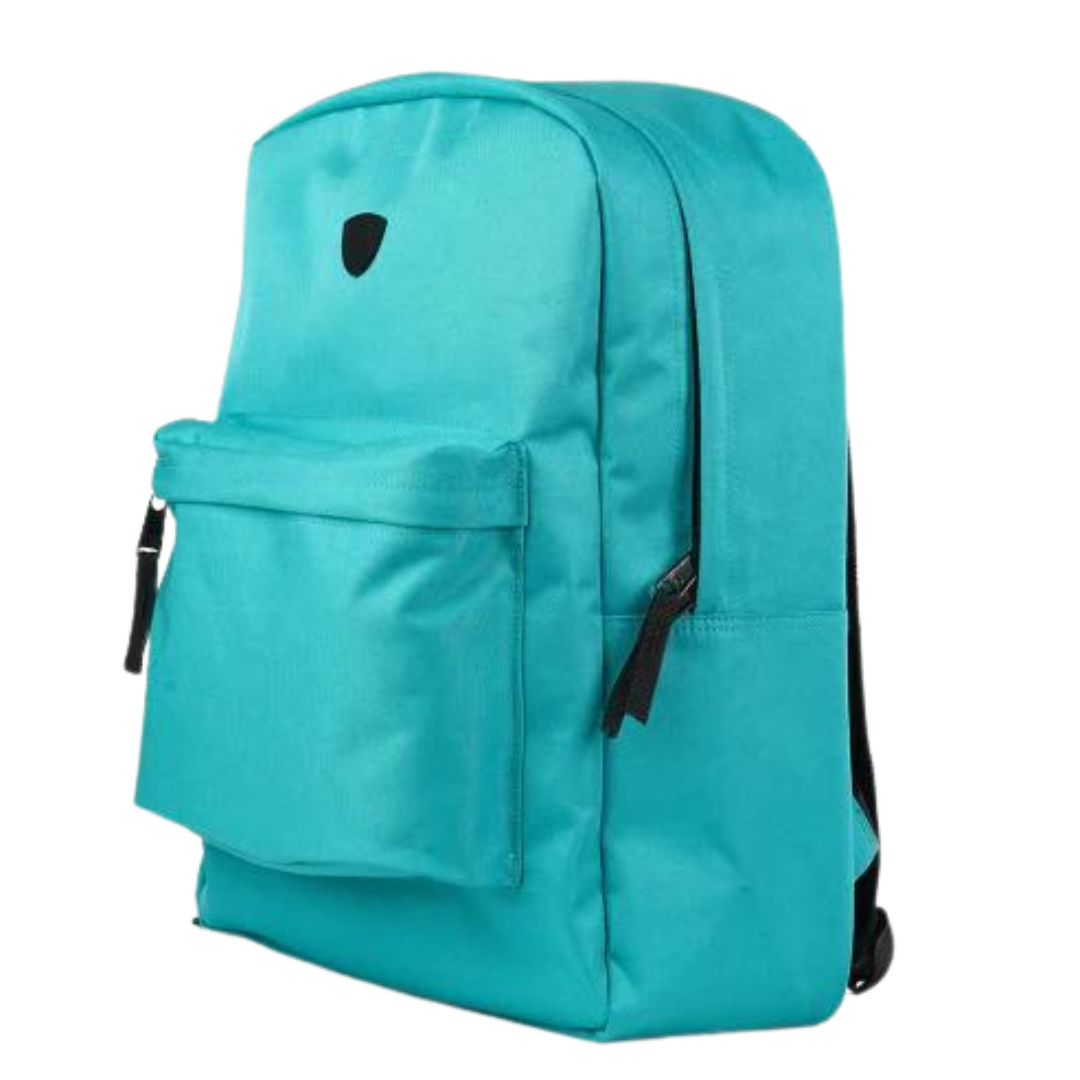
Built for students. Just ounces heavier than a conventional backpack, IIIA protection, three colors, and 20+ pockets including a media-compatible audio port. Empty weight 1.27 lb (580 g).
- Aesthetic: black, pink, or teal.
- Protective: NIJ Level IIIA.
- Comfortable: 1.27 lb empty, padded shoulder straps.
- Tech-friendly: media port and laptop sleeve.
- Convenient: 20+ organizational compartments.
Atomic Defense Bulletproof Backpack for Kids
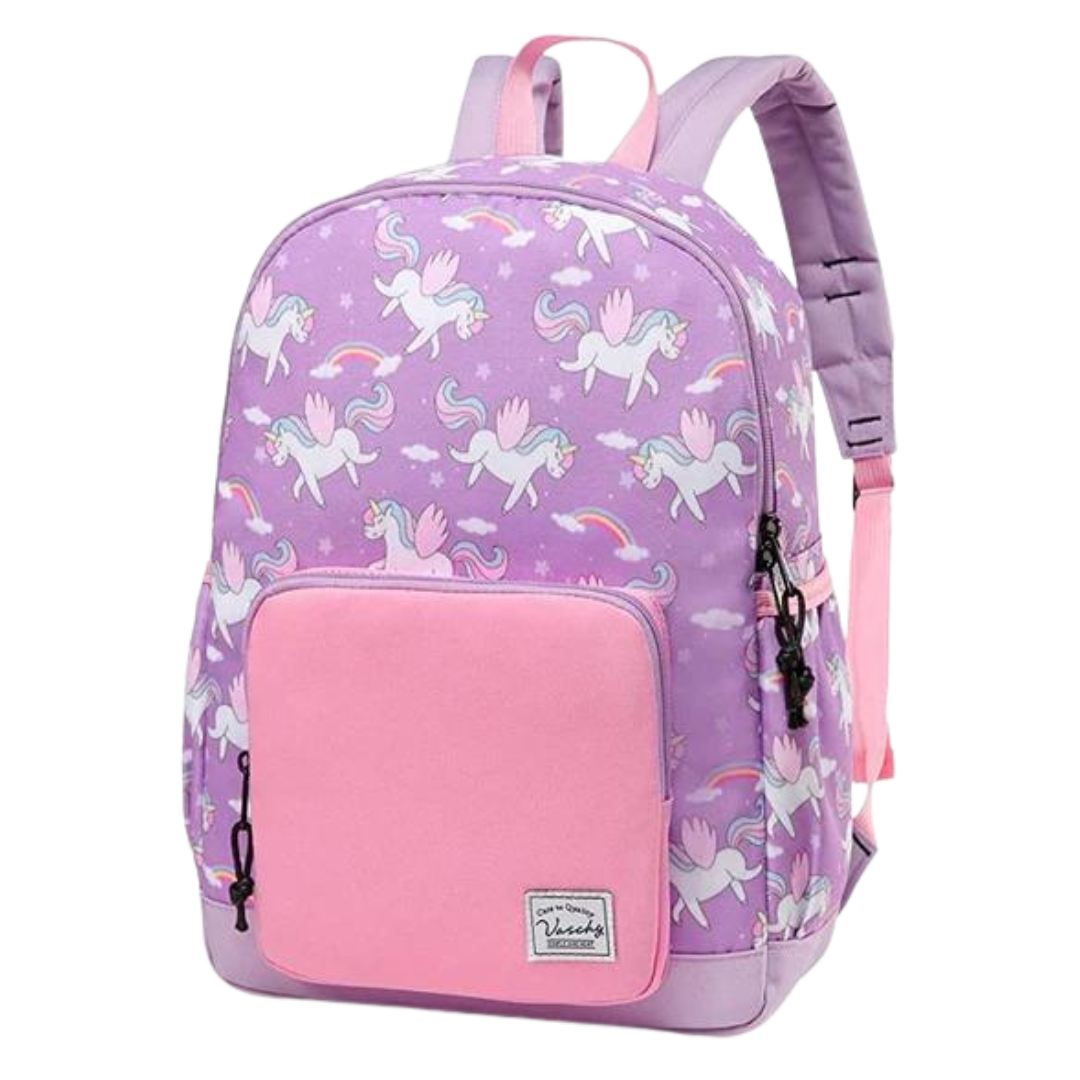
Customizable in design, weight, and protection level. The IIIA Lightweight version trims 22 percent off the soft-armor weight; the Level III+ Lightweight is the only kids-sized backpack we sell that is rated to stop an AR-15. Best fit: parents who want rifle-rated protection in a child-appropriate bag.
- Customizable armor: IIIA, IIIA Lightweight, or III+ for rifle (AR-15) protection.
- Lightweight: IIIA 1 to 2 lb, III+ 5 to 6 lb, III+ Lightweight 4 to 5 lb.
- Range of designs: 14 patterns, from unicorns to dinosaurs to ocean creatures.
- Practical: side pockets, front pocket, internal organizer.
Guard Dog ProShield II Multimedia Level IIIA Backpack
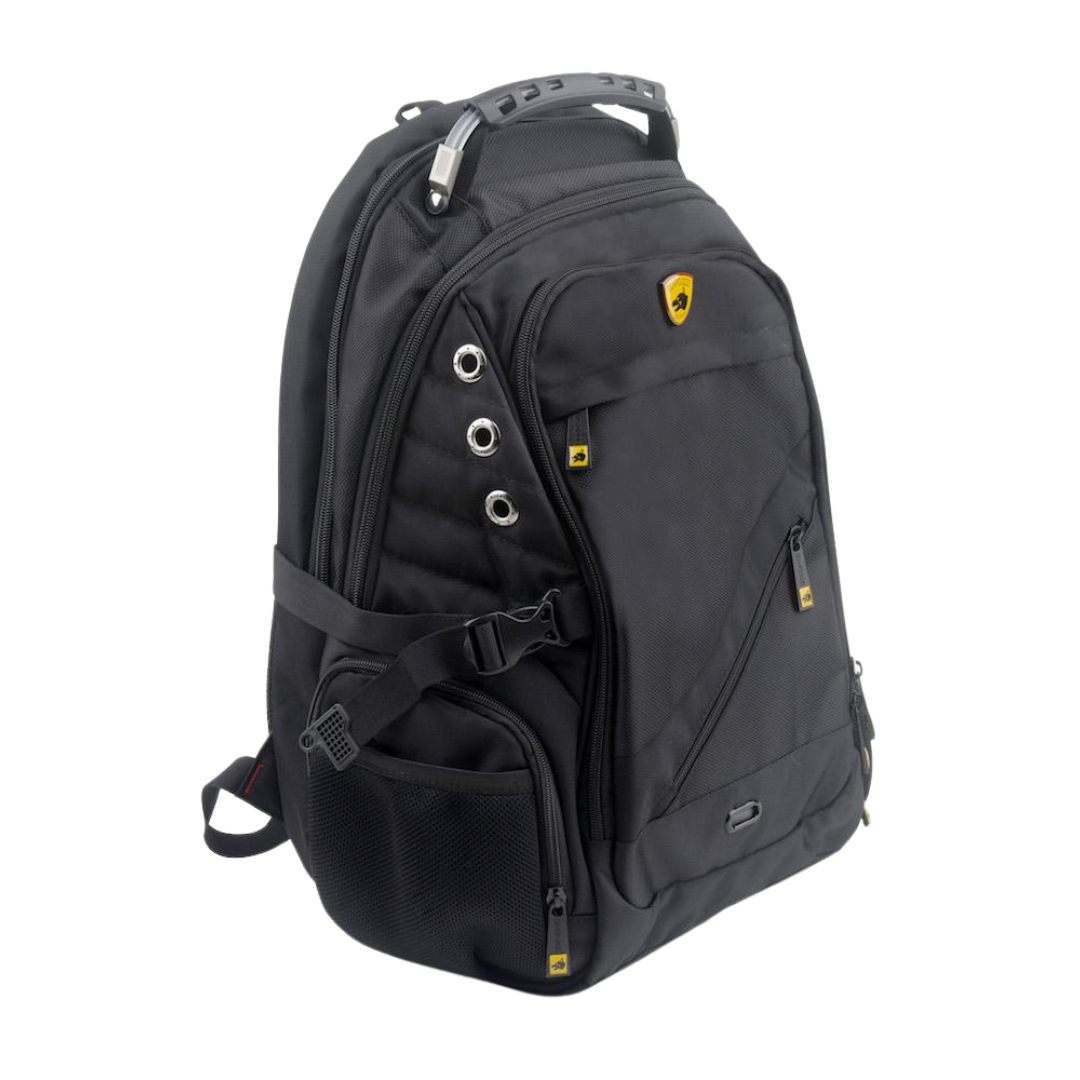
The ProShield II is a step up from the Scout for adults who want extra organization and gel padding. Same IIIA protection, more pockets, more support. Empty weight 3.86 lb (1,753 g).
- Tech-ready: auxiliary multimedia connection, laptop and tablet sleeves.
- Convenient: 20+ pockets.
- Comfortable: gel padding on shoulder straps and back panel.
- Weight: 3.86 lb (1,753 g).
Guard Dog ProShield Smart with Charging Bank
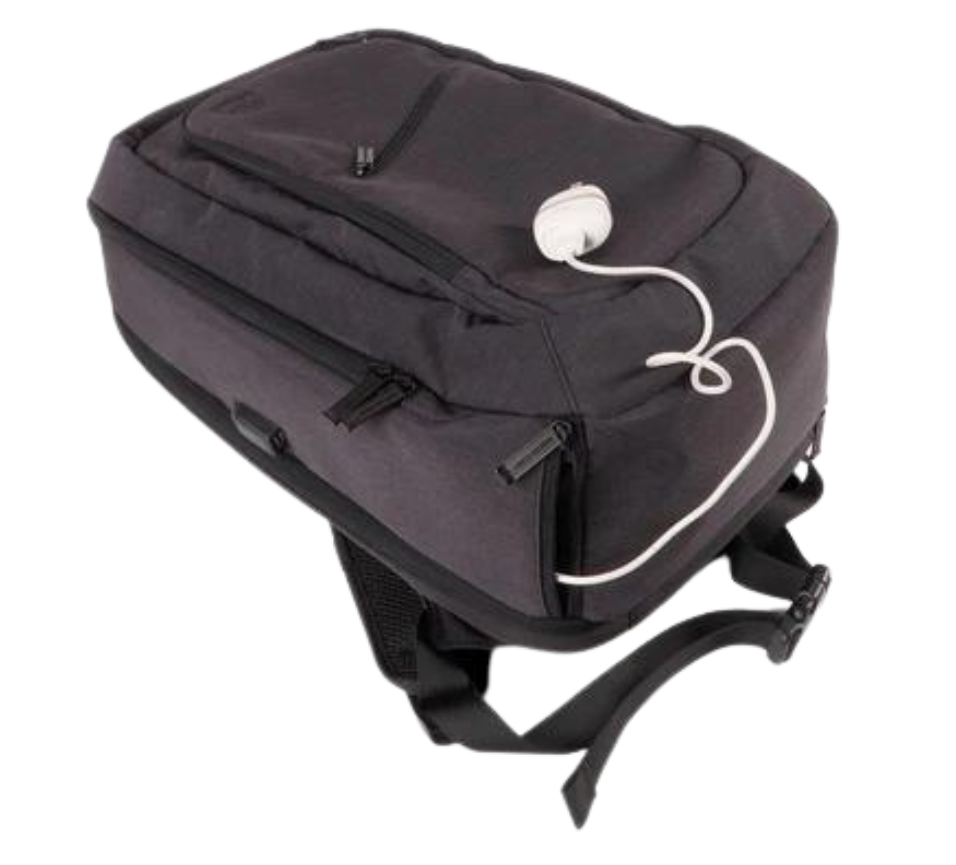
The travel-friendly pick. A built-in charging bank with an external USB port, a TSA-friendly opening that lets you skip removing the laptop at security, and a deployable rain poncho that unzips from the bottom of the bag. Same IIIA panel as the rest of the ProShield line.
- Protective: NIJ Level IIIA.
- Convenient: RFID-blocking pocket, separate laptop and tablet sleeves, TSA-friendly opening, hands-free phone suction cups, 20+ pockets.
- Tech-ready: laptop and tablet sleeves, integrated charging bank with external port, deployable rain poncho.
- Lightweight: only a few ounces heavier than a non-armored backpack.
Caliber Armor CaliberX Vertx IIIA Backpack Combo

The Vertx Ready Pac 2.0 is a low-viz tactical backpack with hidden MOLLE under a clean exterior. The CaliberX soft IIIA insert that ships with it is 10 percent lighter and reportedly produces 15 percent less backface deformation than competing IIIA panels (per Caliber Armor's published test data). Best fit: armed professionals or off-duty carry where the bag should not look tactical.
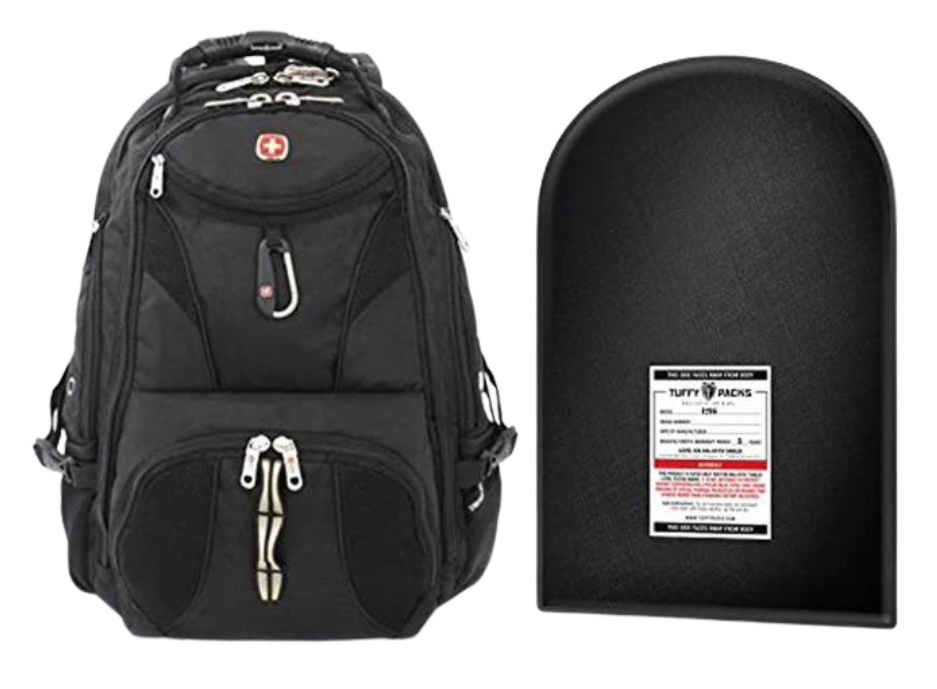
- Protective: NIJ Level IIIA insert with reduced backface deformation versus stated competitor brands.
- Convenient: RFID pocket, laptop and tablet sleeves, internal organizer, easy-access compartments, exterior MOLLE under a low-viz cover.
Military Tactical Plate Carrier Backpack + Level IIIA Insert
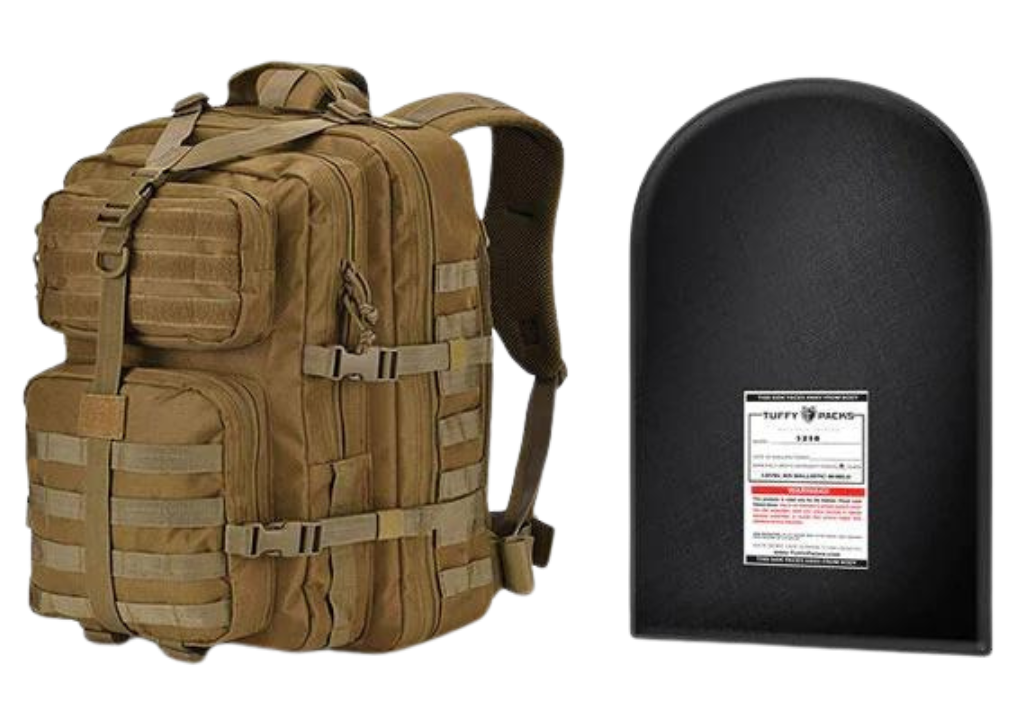
A combo set: one Military Tactical 3-Day Assault Backpack plus one 12" x 18" TuffyPacks Level IIIA Ballistic Backpack Shield. Built for tactical missions, hunting, hiking, or hardened daily use. The TuffyPacks insert uses 24 layers of Twaron and carries a 5-year warranty.
- Functional: hydration sleeve, 3-piece D-ring with MOLLE webbing for accessory pouches.
- Durable: 600D fabric, water resistant, double-stitched, heavy-duty zippers, side and front compression straps.
- Comfortable: ventilated mesh padded back panel and shoulder straps.
- Insert: 24-layer Twaron, NIJ Level IIIA, fits most kids' bags and 12 x 18 day packs, 24 oz, 5-year warranty.
TuffyPacks All-in-One Level IIIA Backpack
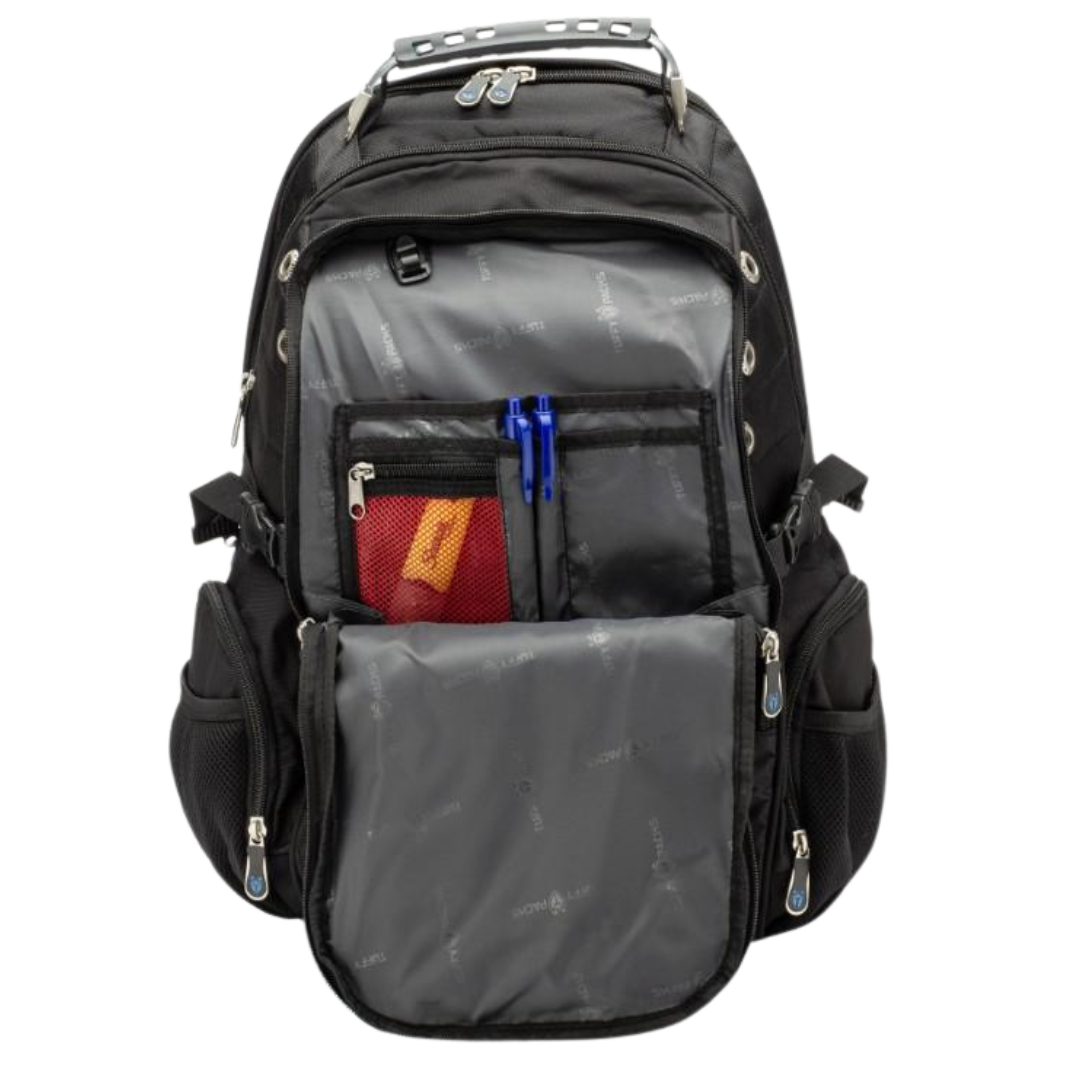
The integrated answer. The IIIA panel is sewn directly into the backpack, so there is no insert to install or remove. Larger protected surface area than most bag-plus-insert combos, plus the standard media-ready features of a modern student bag.
- High quality: durable construction, sewn-in panel.
- Tech-ready: media-friendly compartments.
- Protective: lab-tested for NIJ Level IIIA, larger protective surface area than most insert-style bags. Includes lab test documents and a parental guide.
BulletBlocker NIJ Level IIIA Clear Backpack
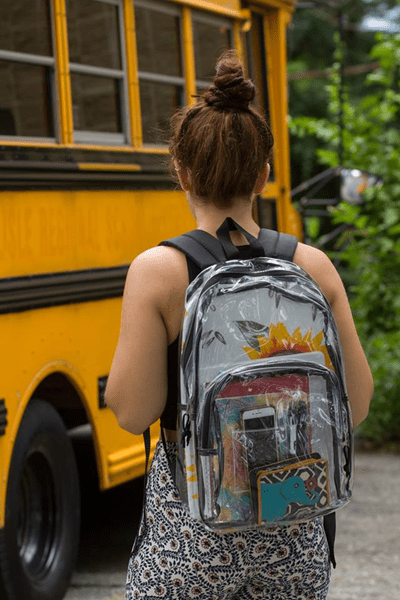
Clear backpacks are increasingly required in schools and stadiums. BulletBlocker's clear bag adds a discreet IIIA panel inside the back wall, so the bag still meets clear-bag policy at the door but carries the same handgun-rated protection as an opaque IIIA backpack.
- Protective: NIJ IIIA tested panel hidden inside the back wall.
- Durable: waterproof PVC vinyl, easy to clean.
- Functional: front accessory pocket plus a large inner compartment for books or a laptop.
Is a bulletproof backpack worth it?

The Violence Project's mass-shooter database tracks public mass shootings in the United States using a strict four-or-more-fatality definition. The database covers more than five decades of incidents and is updated each year as new events are independently verified. The pattern is clear: incidents continue to occur in workplaces, schools, places of worship, and public spaces.
A bulletproof backpack will not change those numbers. What it can change is the outcome for one person who has to make it through the next 60 seconds. The math is simple. A panel that puts something between you and a bullet beats no panel at all.
Backpacks do not wrap around the chest the way a vest does. They are lighter, less expensive, and far more wearable for a child. They are also a single panel, not a 360-degree solution. That is the trade.
If this guide was useful, our follow-up article on how to choose between bag styles and insert styles walks through the next decision in detail.
Frequently Asked Questions
What is the best bulletproof backpack for kids?
For most children, the Guard Dog ProShield Scout (1.27 lb empty, NIJ IIIA, three colors) is the easiest pick. It looks and weighs like a normal student backpack. For parents who want rifle protection, the Atomic Defense Bulletproof Backpack for Kids in the Level III+ Lightweight configuration is the only kid-sized bag in our catalog tested to stop an AR-15. The ProtectPanel 10x13 Level IIIA insert is the right answer for a child who is attached to a specific backpack already.
Will a bulletproof backpack stop an AR-15?
Only if the panel is rated NIJ Level III or Level III+. A Level IIIA panel, which is what most civilian bulletproof backpacks ship with, is tested against handgun rounds up through .44 Magnum and will not reliably stop the 5.56×45mm round an AR-15 fires. Level III+ panels are tested against 5.56×45mm M193 and M855. The Atomic Defense Level III+ Lightweight is the rifle-rated kids' bag in this guide.
How much does a bulletproof backpack weigh?
A Level IIIA backpack panel typically weighs 1 to 2 lb, and the bags around them weigh 1 to 4 lb empty. The Guard Dog ProShield Scout is 1.27 lb total. The ProtectPanel insert is 1.5 lb. A Level III rifle-rated panel adds 5 to 8 lb on top of the bag's empty weight, which is why most civilian backpacks stop at IIIA.
Are bulletproof backpacks legal in all 50 states?
Yes for non-felons in 48 states. Federal law (18 U.S.C. § 931) bars anyone with a violent-felony conviction from possessing body armor. New York and Connecticut add the strictest civilian-purchase restrictions; Bulletproof Zone does not ship body armor to consumer addresses in those states. Several other states (notably Louisiana and Kentucky) prohibit wearing body armor on school grounds. Confirm your state and city rules before traveling.
Can I take a bulletproof backpack on a plane?
Yes, in the United States. The TSA's published policy permits body armor in carry-on or checked bags. You may not wear the armor through the airport or onto the aircraft, and the TSA officer at the lane can require you to remove the panel from the bag for inspection. International rules vary; check the destination country's law before flying.
How long does a bulletproof backpack panel last?
Most manufacturer warranties on IIIA panels run 5 years from the date of manufacture, after which the protective rating is no longer guaranteed. Aramid degrades with prolonged UV exposure and moisture, while UHMWPE is more resistant to both. Replace any panel that has been hit, soaked, or stored in a hot car for an extended period. Our expiration-date guide covers replacement criteria in more detail.
Can a bulletproof backpack be used as a shield?
Yes. Held by both shoulder straps with the panel facing the threat, a IIIA backpack acts as a portable handgun-rated shield. Practice with the bag empty and full, since loaded weight changes how it carries. The bag is not a substitute for hard cover (a wall, a vehicle, a thick door); it is the protection you have for the seconds before you get to hard cover.
Key takeaways:
- NIJ Level IIIA is the right answer for almost every civilian buyer. It stops handgun rounds up through .44 Magnum at 1 to 2 lb of panel weight.
- Choose Level III+ only when rifle protection is the planning concern. Atomic Defense's III+ Lightweight is the kids' bag in this category.
- Expect to spend $99 to $490. Cheap is not the right metric; verify the panel weight, NIJ rating, and warranty before buying.
- Federal law allows civilian ownership for non-felons. New York and Connecticut have strict purchase restrictions. Bulletproof Zone does not ship body armor to consumer addresses in NY or CT.
- The bag is a single panel, not a vest. It works best held in front of the chest, with hard cover the next move whenever it is available.
Disclaimer: This article is for informational purposes only and does not constitute legal advice. Body armor laws change at both federal and state levels; consult a licensed attorney in your jurisdiction before relying on any information presented here. Bulletproof Zone makes no claim that body armor will provide complete protection in any scenario; no body armor is bulletproof. Last reviewed: May 2026.
Federal law (18 U.S.C. § 931) prohibits possession of body armor by anyone convicted of a violent felony. State restrictions vary; New York and Connecticut have the most stringent civilian-purchase restrictions. Bulletproof Zone does not ship body armor to New York or Connecticut consumer addresses.
Product specifications referenced in this article are based on each manufacturer's stated specifications at time of publication. Bulletproof Zone is a multi-brand retailer; product availability and configurations may change. Verify current product details on the relevant product page before purchase.