


Best Plate Carriers 2026: How to Choose and Buy

Quick answer: The best plate carrier depends on your threat level and load. For law enforcement and civilian use, the Shellback Banshee Elite 3.0 ($650) leads on durability; the Crye JPC 2.0 ($266) leads on weight. All carriers reviewed here accept NIJ Listed 0101.06 Level III or Level IV plates. Plate carriers are legal for civilians in 48 of 50 states under federal law.
A plate carrier is a load-bearing vest with front and back plate pockets designed to hold hard armor inserts rated for rifle threats. Unlike soft-armor bulletproof vests — which stop handgun rounds at NIJ Level II or IIIA — plate carriers accept hard armor plates rated at NIJ Level III (stops 7.62x51 M80 ball at 2,780 fps) or Level IV (stops .30 caliber armor-piercing at 2,880 fps). The carrier fabric, MOLLE webbing, and cummerbund system determine comfort, load distribution, and modularity. The plates determine threat protection. You need both right.
Top plate carrier picks for 2026
Bulletproof Zone has tested and stocked plate carriers across the full price spectrum. The ten below are what we actually put on the shelf after evaluating materials, user feedback, and real-world carry reports. Prices reflect current retail at time of publication.
Shellback Tactical Banshee Elite 3.0 — Best overall quality

The Shellback Tactical Banshee Elite 3.0 is the third-generation version of one of the most-copied designs in tactical gear. It ships Berry compliant, takes 10"x12" shooter-cut or swimmer-cut plates, and includes a built-in hydration sleeve, padded plate bags, and integrated mag pouches. No a-la-carte assembly required. Starts at $650.
Where it earns its price: the padded shoulder straps hold up under sustained loads better than anything else in this price tier. Where it loses points: if your torso runs under about 17 inches, the carrier sits too long and shifts the front plate below the sternal notch. Test the fit with plates installed before you commit.
One thing worth flagging: the shoulder strap padding on the 3.0 is thicker than the 2.0, and for some shooters that creates rifle-shouldering interference that takes a training session or two to work around. Worth knowing before your first range day with it loaded.
DFNDR Armor QRC 2.0 — Best for law enforcement

The DFNDR Armor QRC 2.0 is built from laser-cut Squadron Laminate and weighs 12% less than its predecessor without changing the plate pocket dimensions. The front and rear plate bags use laser-cut MOLLE throughout — no stitched-on webbing loops to fray or fail. Starts at $349.99.
The quick-release buckle system is the real differentiator here. For patrol officers who need the carrier off fast during a medical emergency, the single-pull release works in under two seconds with one hand. The tradeoff is load capacity: this carrier is optimized for a duty pistol, spare magazines, and an IFAK — not a full combat loadout. Hang more than about 8 lb of gear on the cummerbund and it starts to sag.
Crye Precision JPC 2.0 — Best minimalist carrier
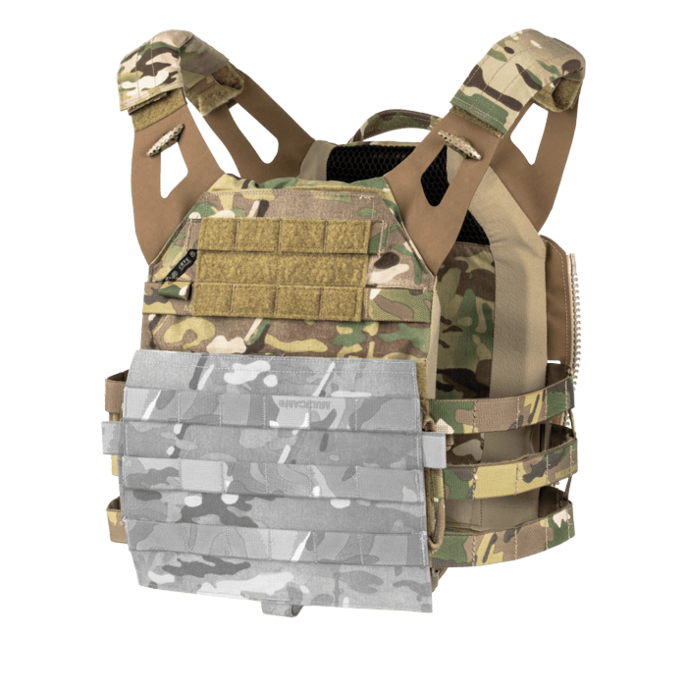
The Crye Precision JPC 2.0 is the standard reference point for lightweight minimalist carriers. At roughly 1 lb empty, it accepts 10"x12" SAPI or shooter-cut plates, gives you front and rear MOLLE real estate, and folds small enough to pack inside a 5.11 RUSH 24. Starts at $266.10.
The failure mode you'll actually run into: the hypalon shoulder strap fabric tears at the seam junction after 18 to 24 months of hard use, particularly when the carrier is loaded above 15 lb for extended periods. If you're running the JPC 2.0 with Level IV plates daily, inspect the strap stitching every six months. This is a known issue Crye hasn't redesigned out of the 2.0.
Crye Precision Airlite SPC — Best ventilation
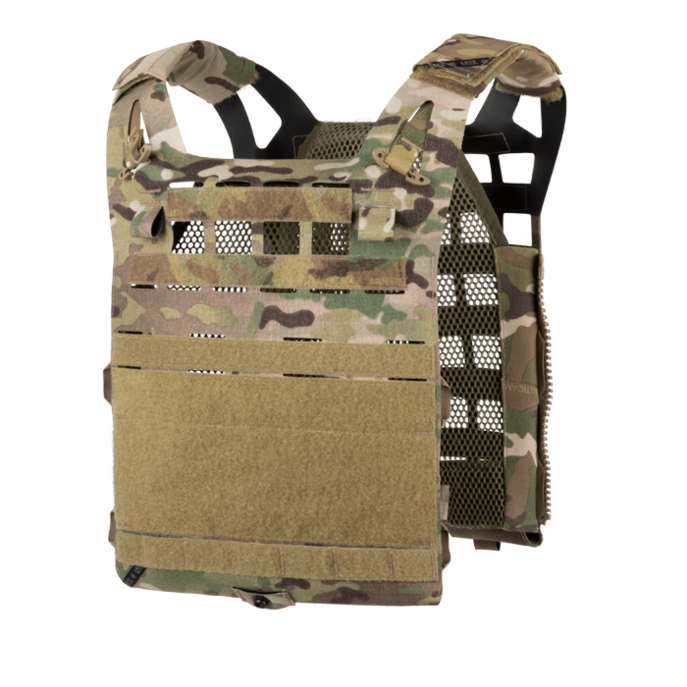
The Crye Airlite SPC splits the difference between the JPC's weight and the AVS's structure, using a spacer-mesh frame that keeps the carrier body off your torso. In dry desert heat over an 8-hour day, the difference in core temperature is measurable. Starts at $185.90.
The criticism that consistently shows up in user reports: the cummerbund attachment system uses a hook-and-loop interface that can loosen over a long patrol. Two users who ran this carrier in Arizona summers both replaced the factory cummerbund with an aftermarket elastic option within three months. The plate exposure on the lower edge is also more pronounced than on a traditional carrier — that bothers some users aesthetically, but it doesn't affect NIJ-rated protection coverage.
Crye Precision AVS — Best load-bearing system
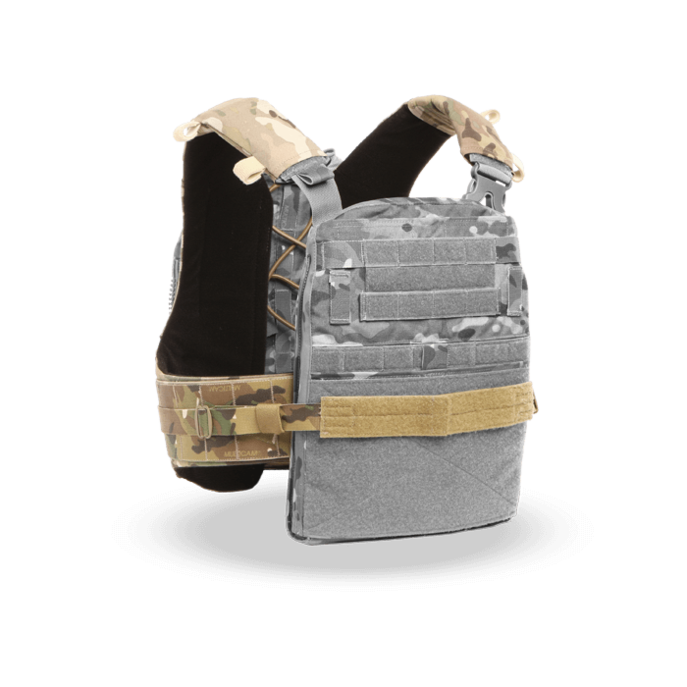
The Crye Precision Adaptive Vest System is a modular platform that starts as a bare harness and scales into a full armor system. The harness distributes plate weight across the hips and shoulders rather than stacking it on the trapezoids — if you're carrying Level IV plates for more than four hours, you'll notice the difference. The base harness is $285.30; the front and rear plate pouch set is $375.50, bringing total entry cost to $660.80.
Performance drops sharply without the chassis panels. Running the AVS harness alone with bare plate pouches, without the front structural panel, produces an uncomfortable and poorly stabilized carry that misses the design intent entirely. Buy the full system or buy something else.
Spiritus Systems LV-119 — Best modular system
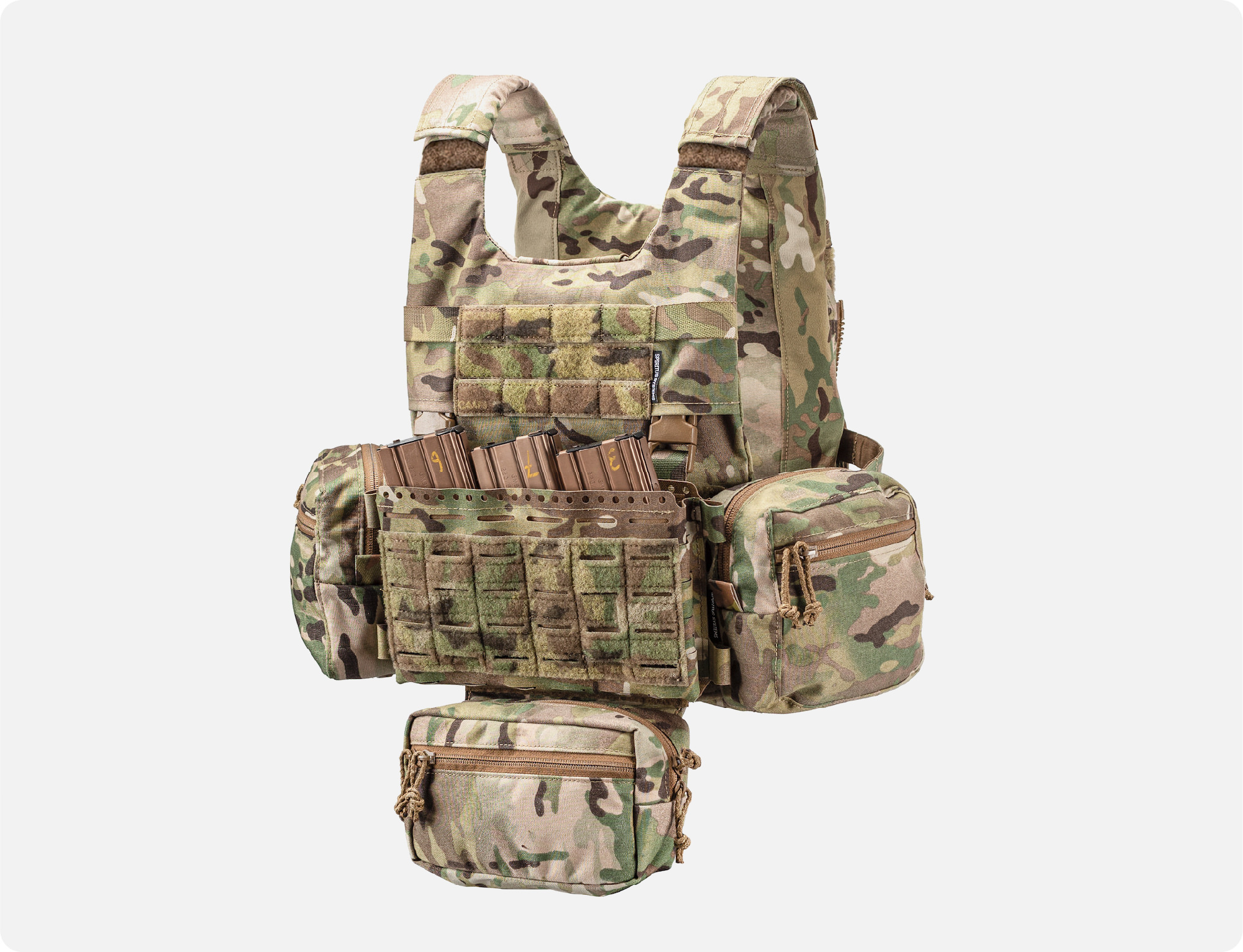
The Spiritus Systems LV-119 is the only carrier on this list that can legitimately run as a covert system worn under a shirt or as an overt plate carrier with full MOLLE buildout. The front and rear bags connect via hook-and-loop shoulder straps and are sold separately; a complete two-bag system starts around $219.90.
The sizing caveat is real and often undersold: new buyers frequently order the wrong size because Spiritus sizes by plate size, not body size. Order based on the physical plate you'll run — medium SAPI, large SAPI, or 10"x12" shooter-cut — rather than your shirt size. Getting this wrong means the bottom of the front bag rides off the xiphoid process and reduces coverage on the lower thorax.
Ferro Concepts FCPC V5 — Best materials and construction
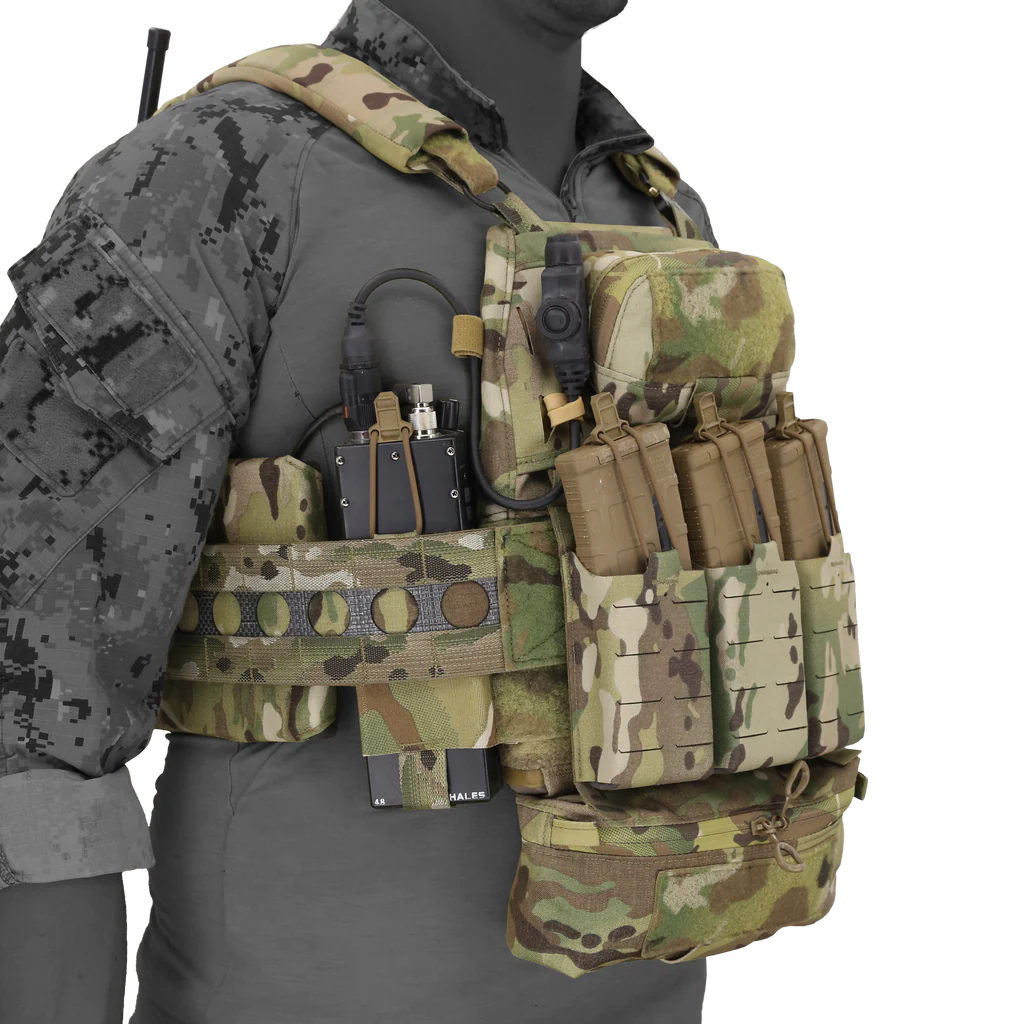
The Ferro Concepts FCPC V5 is built under the company's ADAPT philosophy: every surface accommodates either MOLLE/PALS attachment or zip-on panel integration. Communications panels, side armor, and cummerbund extensions all mount without tools. Starts at $281.00.
The assembly complaint is legitimate: the V5 ships as a chassis, not a ready-to-wear carrier. You'll need to source plates and a cummerbund, and decide on shoulder pad configuration. For experienced users that's a feature. For someone buying their first carrier, the a-la-carte build process can push total cost past $500 before the system is complete. Users with frames under about 5'7" also report the shoulder straps run slightly long even at full adjustment.
Shaw Concepts ARC V2 — Best for rifle shouldering comfort

The Shaw Concepts ARC V2 addresses the most common complaint in plate carrier ergonomics: shoulder strap bulk that interferes with rifle cheek-weld. The structural-elastic cummerbund maintains tension across the front panel without the carrier migrating up toward the neck during movement. Starts at $565.00.
The availability problem is real. Shaw Concepts runs limited production batches and sells out frequently. Users who waited six to eight weeks for a back-ordered unit report it was worth the wait; users who needed a carrier on a defined timeline largely moved to the Banshee 3.0 or FCPC V5 instead. The lack of a rear panel support structure is a documented design choice — some users want that changed.
Agilite K19 — Best for varied body sizes

The Agilite K19 was designed to the requirements of Israeli security forces, which means it had to fit a genuinely wide range of body types under operationally realistic load conditions. The cummerbund adjustment system is its standout feature: it distributes load across the hips more consistently than most competitors at this price point. Starts at $289.00.
Two documented issues: the shoulder straps can interfere with rifle shouldering on users with shorter neck-to-shoulder measurements, and the plate bag material bunches visibly when you're running plates smaller than the bag's designed capacity. Female users have specifically flagged that the cummerbund webbing can pinch at the lower edge. These are fit-specific complaints, not structural failures — but they're worth testing before a deployment.
Velocity Systems Scarab LT — Best ergonomic design

The Velocity Systems Scarab LT uses a patented swivel shoulder strap mechanism that adjusts to your shoulder width and neck thickness independently. If you've got a broader-than-average frame or an unusually thick neck, this solves the rifle-shouldering interference problem without padding modifications. Three cummerbund options are available. Starts at $338.00.
The weakness: the breathable lightweight cummerbund twists under sustained loads. Pouches mounted on it migrate inward over a long day and dig into the lower ribs. That's manageable with stiffer aftermarket options, but Velocity Systems' replacement cummerbund selection is limited. If you need to run heavy MOLLE loadouts on the cummerbund, you'll consistently get better results with the Banshee 3.0 or K19 cummerbund systems.

What is a plate carrier and how does it differ from a soft-armor vest?
A plate carrier holds hard armor inserts. A bulletproof vest is soft armor: woven Dyneema or Kevlar panels rated to NIJ Level II or IIIA that protect against handgun rounds but not rifle calibers. The plate carrier's hard inserts are what stop rifle rounds. Level III stops 7.62x51 M80 ball; Level IV stops .30 cal armor-piercing at 2,880 fps. The fabric shell of the plate carrier itself provides no ballistic protection — the plates do all the stopping.
Plate carriers are also equipment platforms: MOLLE/PALS webbing on the front, rear, and cummerbund lets you mount magazine pouches, medical kits, and radios in standardized positions. In military and law enforcement settings, the carrier's color and patch configuration also identifies team roles. Civilians use them for home defense staging, range training, and preparedness loadouts.
Which plate design fits your carrier?
Plate geometry affects both fit and coverage. Most carriers accept plates in these four formats:
- SAPI (Small Arms Protective Insert) — Rectangular with cut upper corners. NIJ Level III protection. Broad coverage area; standard military issue.
- ESAPI (Enhanced SAPI) — Similar shape, slightly larger and thicker. NIJ Level IV protection against armor-piercing rifle rounds. Heavier than SAPI.
- Swimmer's cut — Aggressive upper-corner removal for maximum arm and shoulder mobility. Ideal for climbing or water entry. Slightly reduced thoracic coverage compared to SAPI.
- Shooter's cut — Moderate upper-corner bevel that clears the rifle stock for cheek-weld without the full coverage sacrifice of the swimmer's cut. The most common civilian and LE choice.

Most carriers in this review accept 10"x12" plates in shooter-cut or SAPI profile. Verify your carrier's plate pocket dimensions before ordering plates. A 10"x12" plate that's 1.1 inches thick may not seat correctly in a pocket designed for 0.85 inch ceramic.
What does the cummerbund actually do?
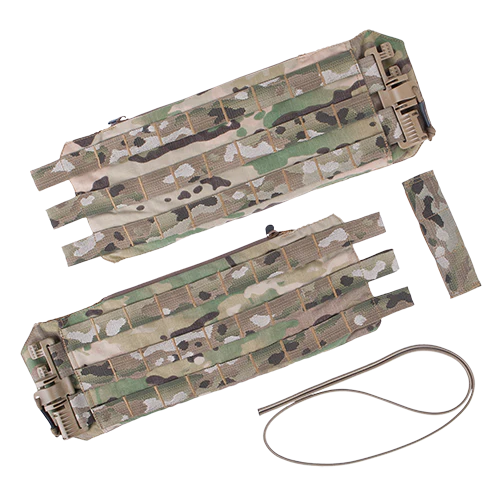
The cummerbund wraps your torso between the front and rear panels. It does three things: holds the plate carrier in position on your body, distributes plate weight off the shoulders onto the hip structure, and provides mounting surface for side plates and MOLLE pouches.
Side plates in the cummerbund — typically 6"x6" or 6"x8" curved soft inserts rated NIJ Level IIIA, or hard side plates for RF1/RF2 threats — extend lateral coverage to the kidneys and lower ribs. They add weight (2 to 4 lb per pair depending on plate type) and reduce side-bend range of motion. Whether that tradeoff is worth it depends on your threat environment.

All carriers featured in this guide have separately sold side plates compatible with their respective cummerbund systems.
How does MOLLE/PALS attachment work?

MOLLE (Modular Lightweight Load-carrying Equipment) uses rows of 1-inch nylon webbing stitched at 1.5-inch intervals to create a standardized attachment grid. MOLLE-compatible pouches use woven straps that lace through the grid in a specific pattern, locking the pouch in place under load. Every carrier in this review uses MOLLE/PALS-compatible webbing on at least the front panel.
Laser-cut MOLLE — as seen on the DFNDR QRC 2.0 and Ferro FCPC V5 — cuts the attachment channels directly into a laminate shell rather than stitching on webbing loops. That removes stitching as a failure point and saves roughly 50 to 80 grams per panel. The tradeoff is that laser-cut laminate is harder to repair in the field than stitched webbing.
What materials are plate carriers made from?

Material choice affects weight, durability, breathability, and cost. Here's what the major options actually do:
- 500D or 1000D Nylon — The standard. 500D is lighter; 1000D is tougher. Water-resistant, abrasion-resistant, and UV-sensitive over years of direct sun exposure. The Shellback Banshee 3.0 uses 500D.
- Squadron Laminate — Layers of synthetic fiber bonded under heat and pressure. Lighter than equivalent-strength nylon, laser-cuttable for MOLLE, and more rigid. Used in the DFNDR QRC 2.0. More expensive than nylon and harder to field-repair.
- Tweave — A stretch-woven fabric used in side panels for flexibility during movement. Durable under moderate loads but stretches permanently under constant heavy loads over 18+ months.
- Tegris — A thermoplastic composite used for structural reinforcement in high-wear areas. Lightweight and chemically resistant. Expensive and rigid; not used as a primary shell material.
- Spacer mesh — Open-cell fabric that creates an air gap between the carrier and your back. The Crye Airlite SPC uses it extensively. Reduces heat buildup, but absorbs sweat in wet conditions rather than wicking it away.
- HANK (High Abrasion Neoprene Kevlar) — Used in shoulder straps and cummerbunds for abrasion resistance and weather tolerance. Adds cost and requires specific care.

Do you need a quick-release system?
A quick-release system lets you or a treating medic pull a single handle and drop the entire carrier in under two seconds. It's standard on the DFNDR QRC 2.0 and available as an add-on for the Crye AVS and several others.
For law enforcement and military users: yes, a quick-release matters. For range use and home defense staging, it adds cost and a small amount of weight without a clear operational payoff — unless your threat scenario involves medic access. Verify any quick-release system under load before relying on it. Some designs bind when the carrier fabric is wet or compacted under a seated seatbelt.

Why does a drag handle matter?
A drag handle on the rear panel lets a teammate pull you to cover during a casualty extraction. Positioned at the top rear for visibility and grip clearance, it needs to hold your full body weight plus gear — typically 200 to 280 lb combined — under dynamic load. Most quality carriers stitch the drag handle directly into the main structural webbing rather than attaching it as an afterthought.

How do you balance weight and comfort in a plate carrier?
An empty carrier ranges from about 1 lb (Crye JPC 2.0) to 3 lb (Crye AVS with full chassis panels). Add Level III polyethylene plates at 1.4 lb each, front and rear, and you're at 4 to 6 lb before any pouches. Level IV ceramic plates weigh 6 to 8 lb each; a fully loaded carrier with IV plates, side plates, and mag pouches can exceed 30 lb.
Your body distributes that load differently depending on harness design. Hip-and-shoulder systems — the AVS, the K19 with cummerbund extended — reduce trapezoid fatigue over long carries. Shoulder-dominant systems like the JPC 2.0 and Airlite SPC put more load on the upper body, which matters over 6+ hours of wear. If you're running a carrier for more than four hours at a time, harness geometry is as important as plate weight.
Comfort isn't the same as padding. A carrier with thick shoulder padding that positions the plate incorrectly will cause more fatigue than a lightly padded carrier with proper plate placement. The front plate's lower edge should sit at the xiphoid process, not below the sternum. If the plate is riding low, shorten the shoulder straps before you start adding padding.
Frequently Asked Questions
What NIJ level should my plate carrier plates be?
For most civilian and law enforcement applications, NIJ Level III plates — rated under 0101.06 to stop 7.62x51 M80 ball at 2,780 fps — cover the most common rifle threats. Level IV plates defeat .30 caliber armor-piercing rounds and add 2 to 4 lb per plate. Choose III for mobility-priority scenarios and IV for threat environments where AP rifle rounds are a documented risk. No plates are currently rated under NIJ Standard 0101.07 as of May 2026; the 0101.07 Compliance Testing Program is still in progress.
Can civilians legally own a plate carrier in the United States?
Yes, in 48 of 50 states under federal law (18 U.S.C. § 931). New York and Connecticut restrict civilian body armor purchase; New York's restriction is under constitutional challenge in Heeter v. James (W.D.N.Y. 1:24-cv-00623), with summary-judgment briefing through end of June 2026. Federal law prohibits possession by anyone convicted of a violent-crime felony. Bulletproof Zone does not ship body armor to New York or Connecticut consumer addresses.
What is the difference between a plate carrier and a tactical vest?
A plate carrier holds hard armor inserts for rifle threat protection and uses MOLLE webbing as an equipment platform. A tactical vest (bulletproof vest) is soft armor — woven Dyneema or Kevlar rated to NIJ Level II or IIIA — that protects against handgun rounds but not rifle calibers. Some hybrid systems combine soft-armor panels with plate pockets; these are worn as a bulletproof vest with optional plate upgrade, not true plate carriers.
What plate size do most carriers accept?
The industry standard is 10"x12" in shooter-cut or SAPI profile. Large SAPI (10.25"x13.25") and medium SAPI (9.5"x12.5") are also common in military-surplus compatible carriers. Measure your carrier's plate pocket interior before ordering; plate thickness (0.6 to 1.1 inches depending on material and rating) can also prevent seating in tight pockets designed for thinner ceramic formats.
How long do hard armor plates last?
Most manufacturers rate hard armor plates at 5 to 10 years from date of manufacture under normal storage conditions — cool, dry, no direct UV. Ceramic plates can crack from drops or impacts without visible external damage; any carrier drop onto a hard surface from standing height warrants plate inspection. Polyethylene plates degrade faster under sustained UV exposure. Follow the manufacturer's replacement schedule. Body armor isn't a lifetime purchase.
Should I buy a plate carrier with or without plates?
Buy the carrier and plates separately so you can match threat-level protection to your specific use case. Bundled "plate carrier with plates" packages sometimes substitute lower-rated inserts to hit a price point. Bulletproof Zone lists plates separately with NIJ Listed 0101.06 Level III and Level IV options across ceramic, polyethylene, and multi-curve formats. Verify CPL status on the NIJ Compliant Products List at nij.ojp.gov before purchase.
What is the best plate carrier for a first-time buyer?
The Crye JPC 2.0 at $266 or the DFNDR QRC 2.0 at $349 for most first-time buyers: both are established designs with documented performance, accept standard 10"x12" plates, and have enough MOLLE real estate for a basic loadout without the build complexity of modular systems. The Shellback Banshee Elite 3.0 is the better choice if you plan to run a full duty loadout from day one and want the lifetime warranty backing.
Key takeaways:
- A plate carrier is a hard-armor platform; the carrier shell provides no ballistic protection on its own. The plates carry the NIJ rating, not the vest.
- NIJ Level III plates stop common rifle rounds. Level IV stops armor-piercing .30 cal. No plates are 0101.07-rated as of May 2026.
- Match the carrier to your load. Minimalist systems (JPC 2.0, Airlite SPC) work for shooter-cut plates and light pouches. Heavy sustained carry requires hip-distribution harnesses (AVS, K19).
- Plate carriers are legal for civilian purchase in 48 states. New York and Connecticut restrict civilian body armor transactions.
- Inspect hard armor plates annually and after any impact; ceramic plates can crack internally without visible surface damage.
Disclaimer: This article is for informational purposes only and does not, and is not intended to, constitute legal advice. Body armor laws change frequently at both federal and state levels. Consult a licensed attorney in your jurisdiction before relying on any information presented here. Bulletproof Zone makes no claim that body armor will provide complete protection in any scenario; no body armor is bullet-resistant in all circumstances. Last verified against published statutes and the NIJ Compliant Products List on May 2026.

Performance characterizations referenced in this article are based on the manufacturer's NIJ test parameters and/or independent laboratory testing as cited inline. NIJ does not "certify" body armor; products that pass the Compliance Testing Program (CTP) are issued a Notice of Compliance and listed on the NIJ Compliant Products List. Models referenced as "tested to NIJ standards" have not necessarily completed the CTP. Verify CPL status at https://nij.ojp.gov/topics/equipment-and-technology/body-armor/ballistic-resistant-armor before purchase.