


Female Body Armor 2026: Best Vests & Plates for Women
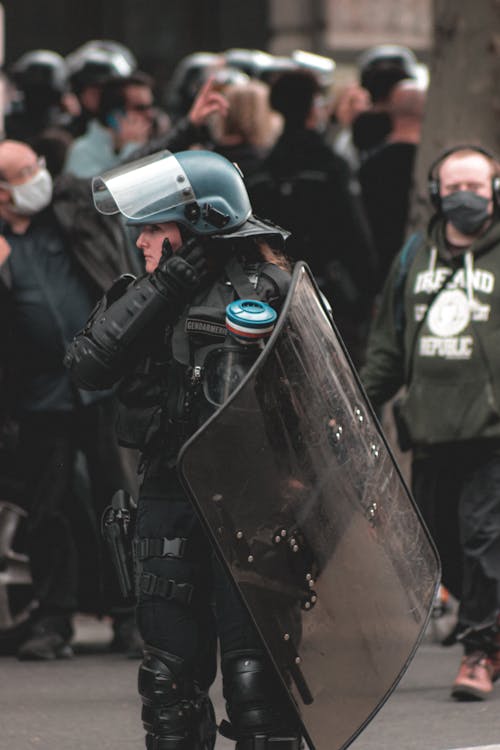
Quick answer: Female-fit body armor exists in two shapes: soft concealable vests (NIJ Level IIIA / HG2, rated for handgun threats up to .44 Magnum) and curved hard plates (Level III, III+, or IV / RF1, RF2, RF3, rated for rifle rounds). The right pick depends on threat profile, daily wear time, and bust size. Soft IIIA vests with darting and built-in cups carry the highest civilian volume; curved multi-curve hard plates fit larger chests better than flat or single-curve plates.
If you have ever pulled a male-cut plate carrier over your head and felt the front edges dig into your sternum, you already know the core problem with "unisex" body armor: it isn't unisex. The fit shifts coverage off the heart and lung lines, opens gaps under the armpit, and turns a long shift into a slow injury. This guide covers what changed in women's armor between 2018 and 2026, how to read NIJ threat ratings without falling for marketing math, and which vests and plates Bulletproof Zone actually stocks for the female form.
- Is there body armor for women?
- Can women wear men's body armor?
- How is women's body armor different?
- NIJ threat levels for women's body armor
- Best body armor options for women
- How to make female body armor more comfortable
- Federal and state purchase rules
- The future of body armor designs for women
- Frequently asked questions
Is there body armor for women?
Yes. Female-cut soft armor and curved hard plates are widely produced today. Until the mid-2010s, most U.S. manufacturers built around male torso geometry and told women to "size down or layer underneath." That stopped working as more women joined patrol, federal LE, security contracting, and EMS, and as civilian demand grew alongside concerns about active-shooter scenarios.
The U.S. Army's adoption of the Modular Scalable Vest in 2018 was the cleanest signal that female-fit armor was now a procurement requirement, not a niche preference. Civilian and LE retailers followed: Citizen Armor, Safe Life Defense, BulletBlocker, Premier Body Armor, and others now ship female-specific cuts in soft and hard armor.

Body shape matters because fit drives protection. A vest that rides 1.5 inches off the chest because it cannot accommodate a bust opens a strike path under the armpit and shifts the center mass of the front panel away from the heart. The same physics applies to flat plates that bridge across the chest instead of conforming. Coverage geometry, not "feel," is the protection metric.
Can women wear men's body armor?
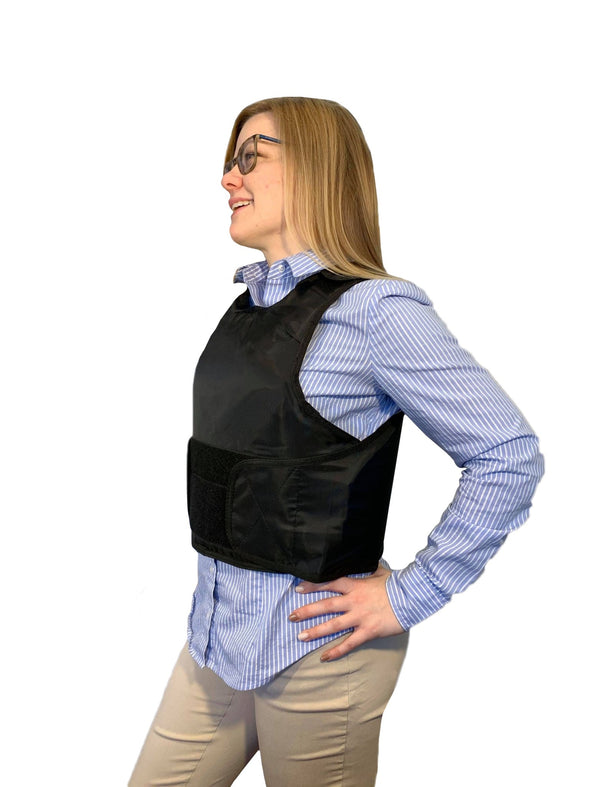
Sometimes, but with caveats. Lighter-build women with smaller chests can wear unisex soft vests comfortably. The Legacy IIIA Tactical Vest stocked at Bulletproof Zone is one example women report wearing without fit complaints. The problem is that "unisex" is engineered to a male-average torso, so the larger the bust, the more often the same vest produces a recurring set of issues.

- Compresses the chest. Larger busts get pinched between the front panel and the body. Pain is the first signal; the second is shallow breathing during foot pursuit or training drills.
- Bulges forward at the chest. The sides of the breast tissue ride out past the side opening of the vest, which leaves the area in front of the armpit uncovered. That zone is where many handgun rounds enter on a moving target turning to draw.
- Adds weight where it does not need to. Male-cut soft armor often runs longer in the front to cover an average-male sternum, which means an extra ounce of Aramid that never sits over a vital organ on a smaller female frame.
- Shifts during movement. Velcro and elastic side closures designed for a flatter torso bind, then release. Re-cinching mid-shift is the visible symptom; off-center coverage is the invisible one.
- Comes loose at the side closures. Female torsos taper differently, so the strap angles male vests use can pop open under load.

Not every woman experiences every issue. The wearer of the unisex Legacy IIIA Tactical Vest above may find the cut acceptable; another woman with a different bust profile may not. The reliable test is whether the vest sits flat against the sternum without pulling forward, and whether the side gaps stay closed when both arms come up to a shooting stance.
If a male-cut vest passes both tests, it works. If either fails, female-fit armor is the answer.
How is women's body armor different?
Three engineering changes set female-fit armor apart from male-cut equivalents:
- Built-in bust shaping (cups). Soft-armor panels are pre-formed or molded so the front panel curves over the bust instead of flattening it. Done well, this preserves coverage geometry without adding bulk. Done badly, it concentrates pressure on the underwire line.
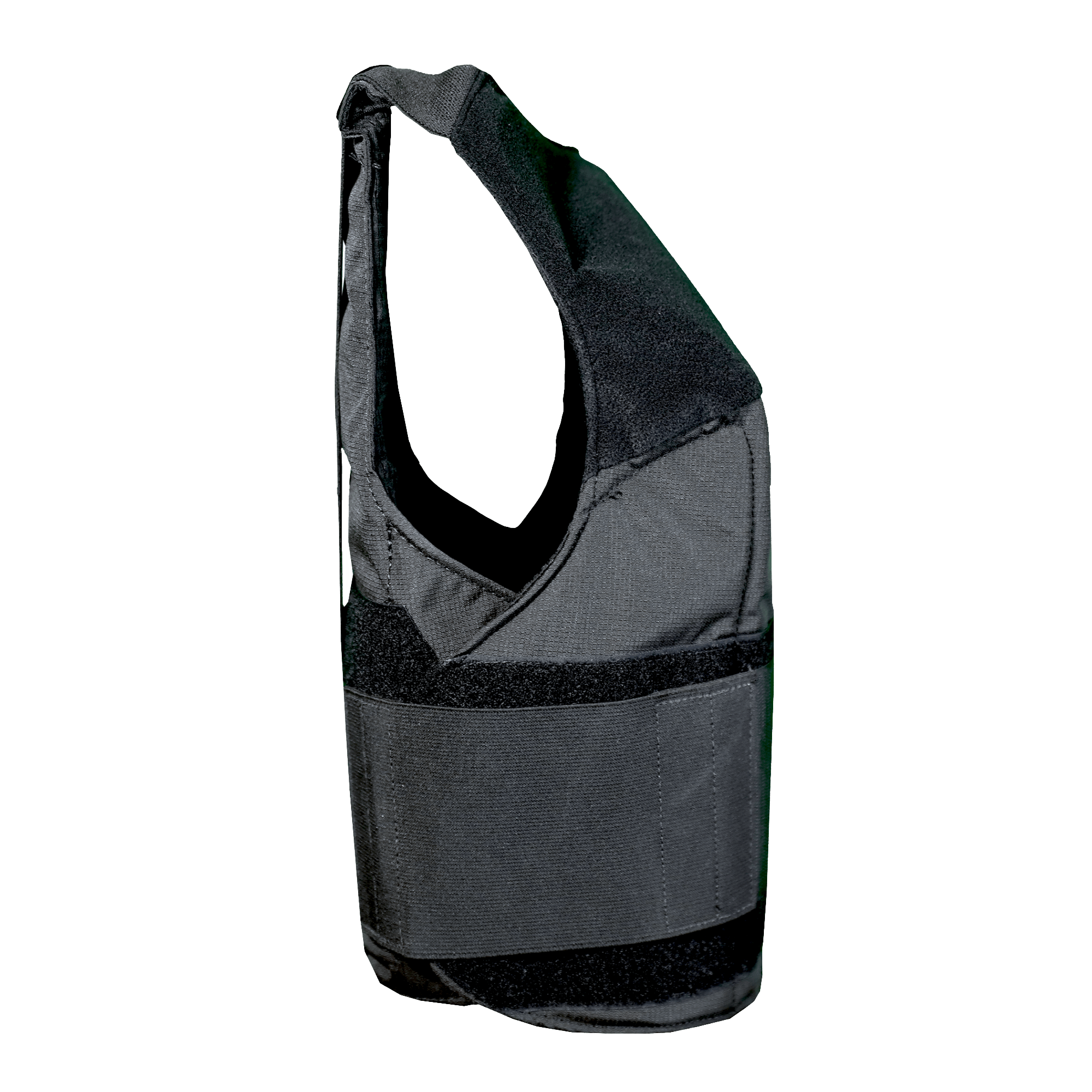
- Darting. The Aramid or UHMWPE plies are overlapped at specific points so the panel can curve in two directions without leaving an unballistic seam. Darting placement is the part of female-fit construction that takes real engineering. A misplaced dart leaves a measurable weak spot. Quality manufacturers test darted panels through the same NIJ procedure as flat panels.
- NIJ test profile. Curved armor is tested with shots positioned to interrogate the curved geometry, not just the flat plate test surface, because the failure modes differ. The current standard, NIJ Standard 0101.07, was published November 29, 2023; the legacy 0101.06 list will be maintained through at least the end of 2027.
The fourth difference is shoulder geometry. Female cuts trim the shoulder line forward of the trapezius so the panel does not shove a sports bra strap off-position. It sounds cosmetic until you spend ten hours in patrol gear.
NIJ threat levels for women's body armor
Threat-level vocabulary changed in 2023. The NIJ 0101.06 levels (II, IIIA, III, IV) are being replaced by 0101.07 levels (HG1, HG2, RF1, RF2, RF3). The crosswalk is straightforward; the marketing is not.
| 0101.06 | 0101.07 | What it stops | Typical use |
|---|---|---|---|
| II | HG1 | 9mm and .357 Magnum (handgun) | Concealable soft armor, light wear |
| IIIA | HG2 | Up to .44 Magnum (handgun) | Concealable soft armor, daily wear; female-armor volume tier |
| III | RF1 | 7.62x51mm M80 ball (rifle) | Hard plate, overt or low-vis |
| (new) | RF2 | RF1 threats plus 5.56 M855 at ~3,115 ft/s | Hard plate, intermediate-rifle gap |
| IV | RF3 | .30-06 M2 AP (armor-piercing rifle) | Hard plate, highest civilian threat |
Two phrasing notes that matter when you read product copy:
- "NIJ Listed" vs "NIJ Certified." Listing on the NIJ Compliant Products List means a specific model and serial passed the Compliance Testing Program. "NIJ Certified" is sometimes used loosely. As of May 2026, no products are listed under 0101.07 yet because no .07 CPL has been published; products listed under 0101.06 remain valid through the phase-out window.
- "+" ratings (IIIA+, III+) are manufacturer designations. They are not part of the NIJ 0101.06 or 0101.07 nomenclature. Some "+" products test against specific extra threats (FN 5.7x28mm, Liberty 9mm, AP rifle rounds); others use the "+" as branding without published test parameters. Always read the threat list, not the badge.
Best body armor options for women
1. Citizen Armor V-Shield Ultra Conceal Female Bulletproof Vest
For most civilian and off-duty wear, soft armor is the practical choice. Aramid (Kevlar) and UHMWPE plies conform to the torso better than rigid plates and do not stick out under street clothes. The V-Shield gets its name from the v-cut neckline and the bust-shaped front panel.

- Graphene nano-microfiber construction; manufacturer states a 66% weight reduction vs comparable Aramid panels.
- Standard option: NIJ Level IIIA / HG2 (Aramid).
- Elite option: IIIA+ (manufacturer designation, adds polyethylene; check threat list).
- Removable ballistic shields for laundering the carrier.
- 0.25" panel thickness.
- DWR antimicrobial coating; moisture-wicking face fabric.
- Front and back coverage; side coverage is partial (typical for concealable cuts).
Failure mode to know: the v-cut neckline trades sternum coverage for concealability. If your threat profile includes high-angle handgun shots, the higher neckline of the Civvy Covert below covers more of the throat-to-sternum vertical.
2. Citizen Armor Civvy Covert Female Bulletproof Vest

The Civvy Covert builds on the V-Shield platform and adds two specifics:
- Wraparound coverage including side panels (front, back, and sides).
- CPAI fire-retardant outer shell.
Like the V-Shield, the Civvy Covert ships in NIJ Level IIIA / HG2 or the manufacturer's IIIA+ tier. IIIA / HG2 is tested to defeat handgun threats up to .44 Magnum. The IIIA+ tier carries Citizen Armor's published special-threat coverage for FN 5.7x28mm, Winchester Ranger T-series SXT, and Liberty 9mm. None of those rounds are 0101.07 RF tier; the IIIA+ designation is still soft armor and is not rated for rifle threats.
3. RMA Defense Multi Curve Hard Armor Plate Level III+
Hard plates trade weight for the only ratings that stop rifle rounds. They are heavier, hotter, and louder under a carrier, but they are the answer when handgun-only soft armor is not enough.

RMA Armament tests this plate to NIJ 0101.07 RF1 parameters with the manufacturer's "+" tier indicating extended threat coverage. The multi-curve geometry is the part that matters for women: a single-curve or flat plate spans across the bust, while a multi-curve plate wraps two axes and sits flatter against curvier chests without bridging.
- 8.75" W x 11.75" H, SAPI/ESAPI cut, 3.91 lbs.
- Ceramic / polyethylene composite strike face and backer.
- Tested to NIJ 0101.07 test parameters; CPL listing depends on .07 CPL publication timing.
Other strong options for women
- BulletBlocker NIJ IIIA Bulletproof Vest for Women : full-coverage soft vest, popular daily-wear pick.
- BulletBlocker NIJ IIIA Women's Fortress Fleece Vest : soft-armor panel inside a fleece outer shell for low-visibility everyday wear.

For threat-level questions on the rifle side, our NIJ protection levels guide walks through HG1 through RF3 with ammunition examples.
How to make female body armor more comfortable
Discomfort is a tactical problem, not a vanity one. Pain shortens the time you will keep armor on, and armor not worn protects nothing. Five practices fix most fit complaints:
- Measure before you buy. Bust, underbust, waist, hip, and torso length. Compare each measurement to the manufacturer's size chart, not the brand average. If you fall between sizes, contact the manufacturer or the retailer's support team rather than guessing.
- Choose multi-curve hard plates over flat or single-curve. Multi-curve plates wrap two axes and reduce the bridging gap over a curvier chest. They also keep more rounds at angles closer to oblique, which improves backface deformation outcomes.

- Layer a sports bra (or two) under soft armor. A compression sports bra reduces forward bulge so the front panel sits flat. The same trick helps under hard plates that bridge across the bust line. This is fit, not modesty; it changes the geometry of coverage.
- Use the side closures, not the shoulder straps, to set fit. Shoulder straps set vertical position; side closures set how flat the panel sits. Most fit problems are diagnosed by tightening the side closures one click at a time.
- If off-the-shelf does not work, get fitted. Several manufacturers and Bulletproof Zone partners take measurements for cut-to-order soft armor. The cost premium is real; so is the difference in coverage geometry.
Federal and state purchase rules
Body armor is legal for civilians in 48 states under the federal baseline. 18 U.S.C. § 931 prohibits possession by anyone convicted of a violent felony, with a maximum 3-year sentence. The two states that depart from the federal floor:
- New York. Civilian purchase and possession are restricted to roughly 30 eligible professions (police, peace officers, military, EMTs, attorneys, journalists, others) under NY Penal Law § 270.21. Bulletproof Zone does not ship body armor to New York consumer addresses. The constitutional challenge Heeter v. James is in summary-judgment briefing through end of June 2026.
- Connecticut. Sales must be face-to-face, and buyers must hold a CT firearm permit, eligibility certificate, ammunition certificate, or long-gun eligibility certificate (Public Act 23-53 § 35, effective October 1, 2023). Bulletproof Zone does not ship to Connecticut consumer addresses.
For a full state-by-state breakdown, see BulletSafe's comprehensive state guide or our own state legality guide. California's AB 92, effective January 2024, extends the federal felon prohibition; Louisiana restricts wear within 1,000 ft of K-12 school property under La. R.S. 14:95.9.
The future of body armor designs for women
The 2018 transition from the famously heavy Improved Outer Tactical Vest to the Modular Scalable Vest was a real procurement shift, not a press release. The MSV is roughly 5 lbs lighter fully loaded, ships in scalable panel sizes, and is paired with the Female Ballistic Combat Shirt, a torso-cut soft-armor base layer designed for female anthropometry.

What that procurement signal means downstream is that female-cut hard plates and carriers are now in the supply chain at scale. The trickle-down to civilian product is already visible: more multi-curve female cuts, more accurate published threat lists, and more retailers carrying female-specific SKUs at the same threat-level coverage as their male equivalents.
Watch two areas through 2026 and 2027. First, the NIJ 0101.07 Compliant Products List. Once it publishes, the language across product copy will tighten because retailers will need to point at specific listings instead of "tested to .07 parameters." Second, female-fit hard-plate cuts at the RF1 / RF2 tiers from manufacturers other than the current handful, as the .07 program reduces the cost of test parameter compliance.

Frequently Asked Questions
What NIJ level is best for everyday concealed wear under clothes?
NIJ Level IIIA (0101.06) or HG2 (0101.07) is the volume tier for daily concealable wear. It defeats handgun threats up to .44 Magnum, fits under a button-down or t-shirt, and is the threat profile most armed civilians, plainclothes officers, and security professionals match in the field. RF1 / RF2 / RF3 (rifle threats) require hard plates and a carrier and are not concealable in any practical sense.
Can I wear a sports bra under body armor?
Yes, and most fitters recommend a compression sports bra as the under-layer. It flattens forward bulge, reduces movement of the panel against the skin, and keeps the front panel sitting against the sternum where coverage geometry is intended. A second bra layer does not improve protection; it improves panel position.
Does body armor expire?
Yes. Most soft-armor warranties are 5 years from the date of manufacture. The Aramid (Kevlar) and UHMWPE fibers degrade with sweat, UV, heat cycles, and folding creases. Hard ceramic plates have a longer manufacturer-stated service life (typically 10 years for ceramic / poly composite), but they should be re-inspected after any drop or impact. Never wear armor past its stated date for life-safety reasons.
How heavy is women's body armor?
A concealable IIIA / HG2 vest panel weighs roughly 1.0 to 2.5 lbs per panel depending on coverage and fiber. A complete two-panel soft system is 2 to 5 lbs. A pair of multi-curve Level III+ / RF1 hard plates is 4 to 8 lbs depending on cut and material; the lightest UHMWPE plates run closer to the bottom of that range and the steel plates run higher.
Is body armor legal for civilians in my state?
In 48 states, body armor is legal for adults who are not prohibited under 18 U.S.C. § 931. New York restricts purchase and possession to roughly 30 eligible professions. Connecticut requires face-to-face transfer and a state firearm permit or eligibility certificate. Louisiana restricts wear within 1,000 ft of school property. Verify against current statute or our state legality guide before purchase.
What is the difference between Level IIIA and Level III?
Level IIIA / HG2 is soft armor rated for handgun threats up to .44 Magnum. Level III / RF1 is hard armor rated for rifle threats up to 7.62x51mm M80 ball. They are not interchangeable. A IIIA vest will not stop a rifle round; an RF1 plate is hard, heavy, and not concealable. Many wearers run both: soft IIIA / HG2 for daily concealment, plus a plate carrier with RF1 plates available for high-threat scenarios.
Are "+" ratings (IIIA+, III+) recognized by NIJ?
No. The "+" is a manufacturer designation, not part of NIJ Standard 0101.06 or 0101.07 nomenclature. Some "+" tiers come with published special-threat test parameters (for example, FN 5.7x28mm and Liberty 9mm against IIIA+ panels), and some are marketing language without published parameters. Always read the threat list, not the badge.
How do I size female body armor without trying it on?
Use the manufacturer's size chart, not a brand-average sizing guess. Take five measurements: bust at the fullest point, underbust, natural waist, hip, and torso length from sternal notch to navel. If you fall between sizes, contact the manufacturer or retailer support before ordering. Many female-fit lines offer custom-cut options for buyers outside the standard size chart.
Key takeaways:
- Female-fit body armor uses bust shaping, darting, and female-cut shoulder geometry to maintain coverage where male-cut vests open gaps.
- NIJ Level IIIA / HG2 soft armor is the daily-wear volume tier; Level III / III+ / IV / RF1 / RF2 / RF3 hard plates are the rifle answer.
- "NIJ Listed" on the Compliant Products List is the precise phrasing; "+" ratings are manufacturer designations, not NIJ levels.
- Bulletproof Zone stocks Citizen Armor V-Shield and Civvy Covert (soft IIIA / HG2), the RMA Defense multi-curve III+ plate, and BulletBlocker female-cut soft armor.
- Bulletproof Zone does not ship body armor to New York or Connecticut consumer addresses; verify your state law before purchase.
Disclaimer: This article is for informational purposes only and does not, and is not intended to, constitute legal advice. Body armor laws change frequently at both federal and state levels. Consult a licensed attorney in your jurisdiction before relying on any information presented here. Bulletproof Zone makes no claim that body armor will provide complete protection in any scenario; no body armor is bulletproof. Performance characterizations referenced in this article are based on the manufacturer's NIJ test parameters and/or independent laboratory testing as cited inline. Verify Compliant Products List status at nij.ojp.gov before purchase. Last verified against published statutes and the NIJ Compliant Products List on May 3, 2026.