


Best Tactical Backpacks 2026: EDC, Bug-Out & Duty Picks
Quick answer: The best tactical backpacks in 2026 use 500D–1050D Cordura nylon, MOLLE/PALS webbing for modular attachment, and hydration bladder compatibility. For EDC, the Vertx Gamut 2.0 ($349) leads. For 72-hour assault packs, the 5.11 Rush72 (55L, $219) is the benchmark. Bug-out bags start at the Eberlestock Switchblade ($229).
The right tactical backpack is the one that fits your actual mission, not the one with the most MOLLE attachment points on the product page. Capacity, weight distribution, and material denier matter more than brand patches.
What makes a tactical backpack different from a regular pack?
Four things separate a real tactical pack from a hiking bag that happens to be olive drab: material denier, MOLLE/PALS webbing, hydration routing, and reinforced stress points.
On materials: 1000D Cordura handles abrasion from rocks, vehicle interiors, and dragging across concrete. 500D is lighter and still durable enough for EDC and short hikes. Most packs under $100 use 600D polyester, which looks similar but cuts through under sustained load. You'll know the difference after one trail with a full kit.
The MOLLE system uses rows of PALS webbing that let you weave on pouches, holsters, and IFAK mounts without permanent attachment. It's not decorative. If your pack has MOLLE webbing but only one main compartment with no internal organization, it's a cosplay bag.
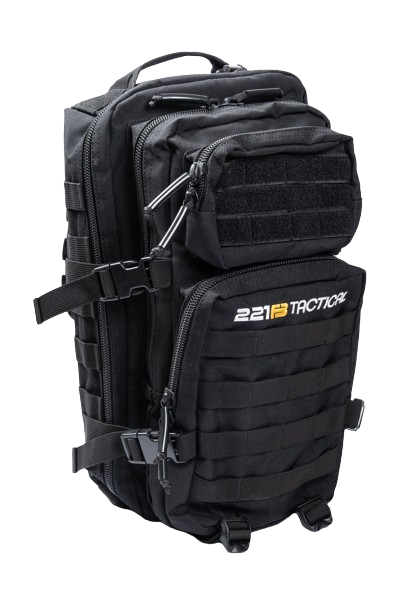
Hydration compatibility means a dedicated sleeve on the back panel, sized for a 2–3L bladder, with a routed drinking tube port at the shoulder strap — not just a water bottle pocket. Reinforced stitching at shoulder attachment points and the bottom panel is what determines whether the pack survives 60 lbs of gear or splits at the seams by month three.
Who actually uses tactical backpacks?
Military and law enforcement use tactical packs for real, obvious reasons: modular load-out, quick access to tools, and durability under continuous use. But the civilian use cases are just as legitimate.
EMTs and firefighters carry them for organized medical supply access where seconds matter. Preppers and emergency-preparedness civilians use them for bug-out bags with 72 hours of supplies. Outdoor enthusiasts prefer them over standard hiking packs for the MOLLE attachment flexibility when carrying additional gear like camp tools or game bags.

The EDC crowd uses tactical packs because a well-organized 20–25L pack with a dedicated laptop sleeve, hidden CCW compartment, and MOLLE exterior beats a $600 fashion backpack for actual daily utility. It's not about the aesthetic — it's about not having to dump the entire bag to find your charger.
How do you choose the right tactical backpack?
Capacity by use case
For EDC and short hikes: 20–30L. For 2–3 day trips and extended deployments: 30–55L. For full bug-out bags meant to carry 72+ hours of supplies: 50–70L. Going bigger than you need creates dead weight and shifting load. Going smaller than you need means strapping gear to the exterior, which increases drag and snag points.
Weight distribution
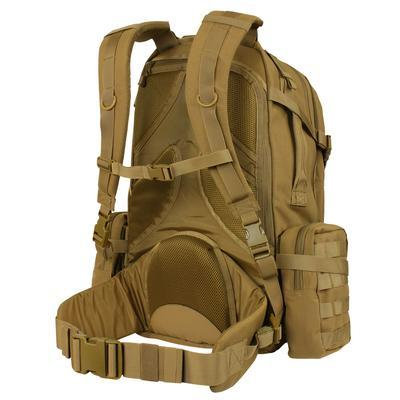
The suspension system matters more than the fabric. Look for adjustable padded shoulder straps, a breathable mesh back panel that creates airspace between your back and the pack, and a padded hip belt that transfers load from your shoulders to your hips. Compression straps prevent contents from shifting when you move. A pack that fits poorly at 15 lbs is miserable at 35.
Internal organization
Multiple compartments let you segregate gear by access frequency. Internal pockets keep small items from migrating to the bottom of the main compartment. MOLLE on the exterior expands your configuration options as your needs change. A pack with one giant main cavity and two side pockets is a gym bag that charges more.
Weather resistance and durability
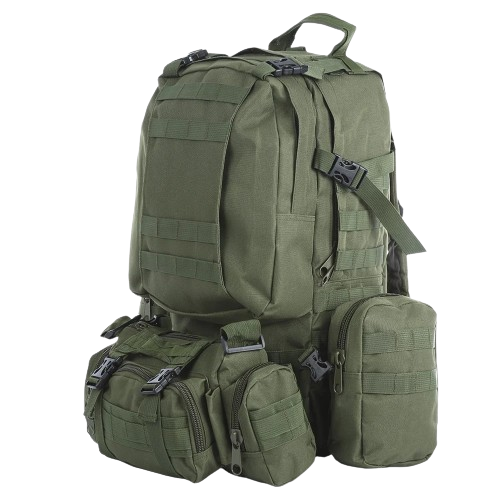
Water-resistant coatings (DWR) handle light rain. Waterproof bags require seam sealing and waterproof zippers, which cost more and aren't always necessary. For most use cases, 1000D Cordura with a DWR coating handles field conditions. If you're doing extended wet-weather ops, look for pack covers or bags with fully taped seams.
Specialty features worth paying for
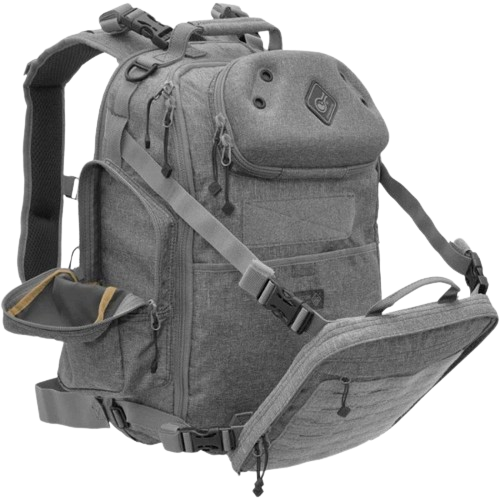
A dedicated hydration sleeve is not optional if you're moving for hours. A padded laptop compartment matters for EDC and LE duty use. Hip belt pockets are worth having on trail for phone and snacks. The Hazard 4 Drawbridge adds a beavertail panel that gives clamshell access to the main compartment without pulling the bag off — worth it for vehicle carry where you're regularly digging into the pack while seated.
There's no universal answer here. The right pack is the one that matches your specific use, not the one with the best spec sheet.
What are the best tactical backpacks for 2026?
Bulletproof Zone carries packs from 5.11 Tactical, Condor, Hazard 4, BulletBlocker, and others. The picks below cover the main use cases: EDC, assault/72-hour, law enforcement duty, bug-out, outdoor, CCW, and medical. Each has been selected based on construction specs, real-world use feedback, and actual availability.
Best EDC tactical backpack: Vertx Gamut 2.0
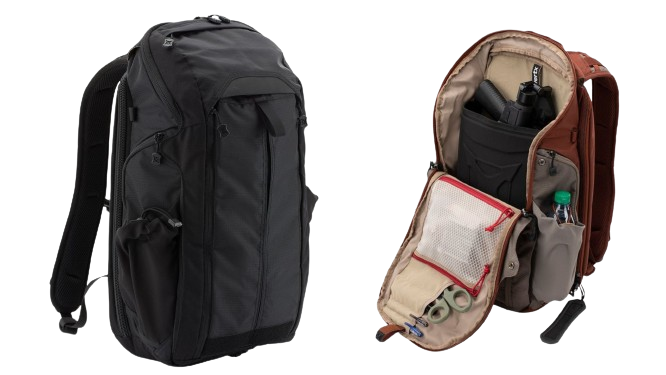
The Gamut 2.0 solves the problem that most "tactical EDC" bags fail at: it doesn't look like a range bag at the office. The main compartment runs a discreet adjustable panel that holds a PDW rifle when configured for it, or doubles as a padded laptop sleeve for daily use. The internal organization is genuinely good, with pockets sized for actual EDC items instead of generic mesh pouches that swallow everything.
Dual hose ports on the hydration system, 3D molded foam back panel for air circulation, heavy-duty YKK zippers, and bartacked seams at stress points. The removable waist belt disappears when you don't need it. At $349.99, it's not cheap — but it's cheaper than buying a mediocre EDC bag and then replacing it when the zipper pulls separate at month six.
One honest note: the CCW compartment runs tight for full-size pistols with aftermarket optics. Compact and subcompact carry is comfortable; a G17 MOS with a red dot is a friction fit.
Best tactical assault pack: 5.11 Tactical Rush72
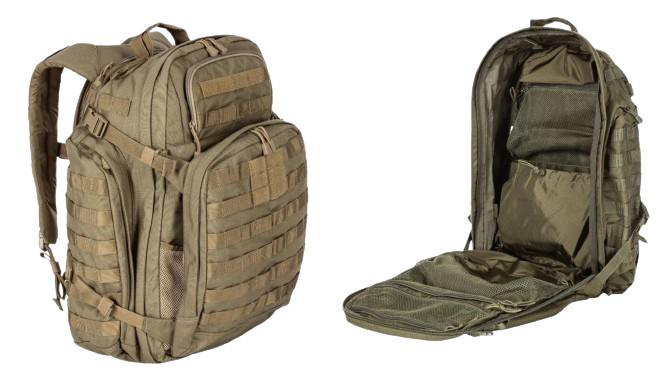
The 5.11 Rush72 is the default recommendation for a reason. 55 liters of organized capacity in 1050D water-repellent nylon, dual-density closed-cell foam shoulder straps, a contour yoke system, and a cinching waist belt that actually transfers load. It integrates with the 5.11 Tier System for additional modular pouches.
The pack's compartment layout keeps electronics, documents, hydration, and firearms accessories in separate dedicated spaces, so you're not digging through a pile when you need something fast. The dedicated hydration compartment fits a standard 3L bladder with hangers. At $219.99, it's the benchmark for 72-hour assault packs under $250.
The Rush72 runs heavy empty, around 4.3 lbs. If you're counting base weight for a backpacking setup, that matters. For vehicle kit and duty deployment it's irrelevant.
Best tactical assault pack runner-up: Condor Outdoor 3 Day Assault Pack
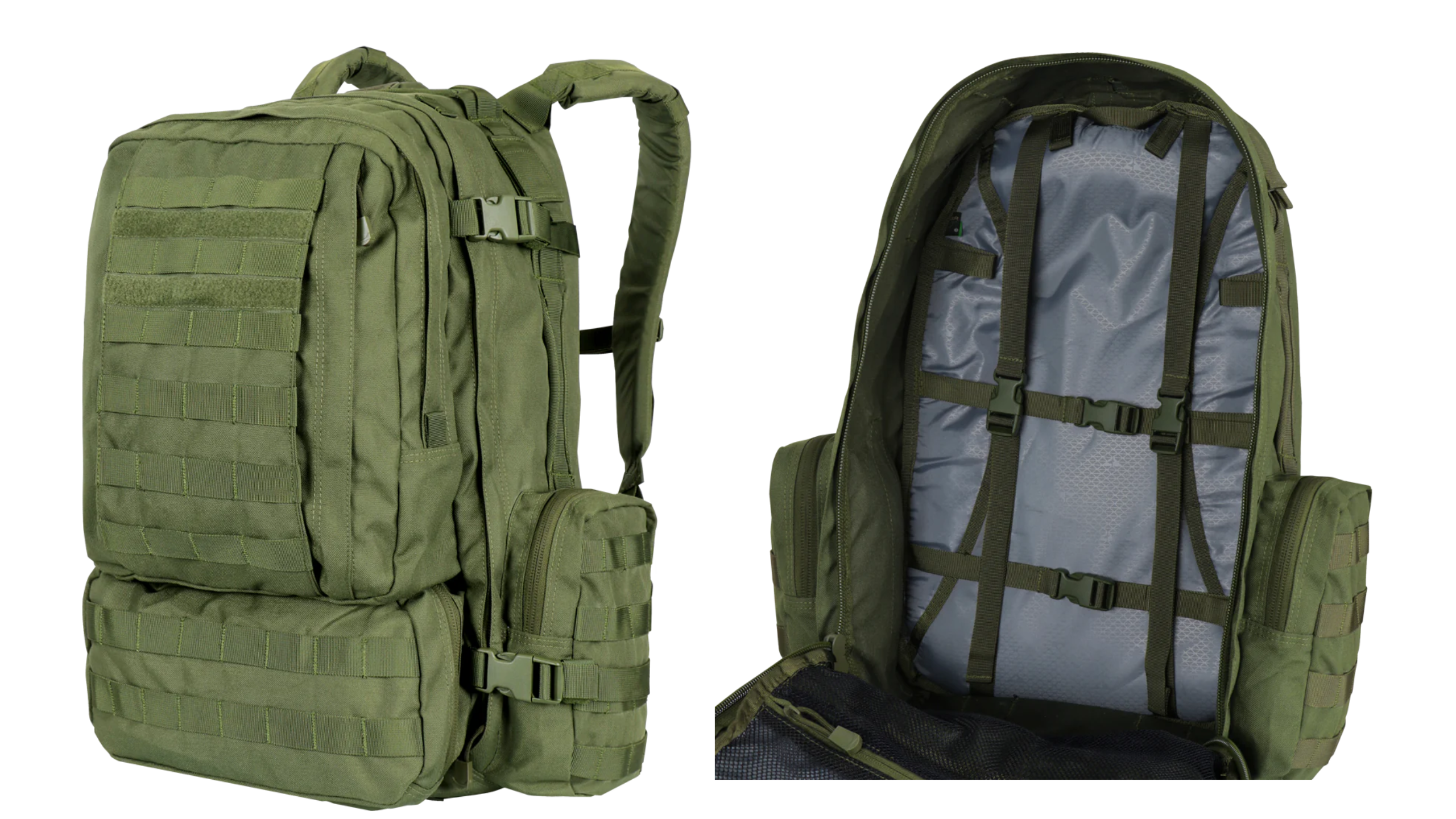
The Condor 3-Day Assault Pack is 50L at $134.99, which is about $85 less than the Rush72. You feel that gap in the suspension system: the back panel offers less structure and the shoulder straps are thinner. For a vehicle bag or a base camp kit that doesn't move much, that's fine. For a pack you're wearing for six hours over varied terrain, the Rush72's suspension justifies the price difference.
I carried the Condor 3-Day on a 3-day ranch patrol in central Texas in August 2024 with around 28 lbs of kit. By day two the top compression strap had loosened enough that the load was shifting noticeably on downhill sections. Tightened it manually and it held. Worth knowing if your pack is going to see real movement rather than just sitting in a truck bed.
For the price, the organization is solid: specialized compartments, extensive MOLLE exterior, padded straps. It's a legitimate pack at exceptional value, just not the Rush72.
Best tactical backpack for law enforcement: Hazard 4 Patrolpack
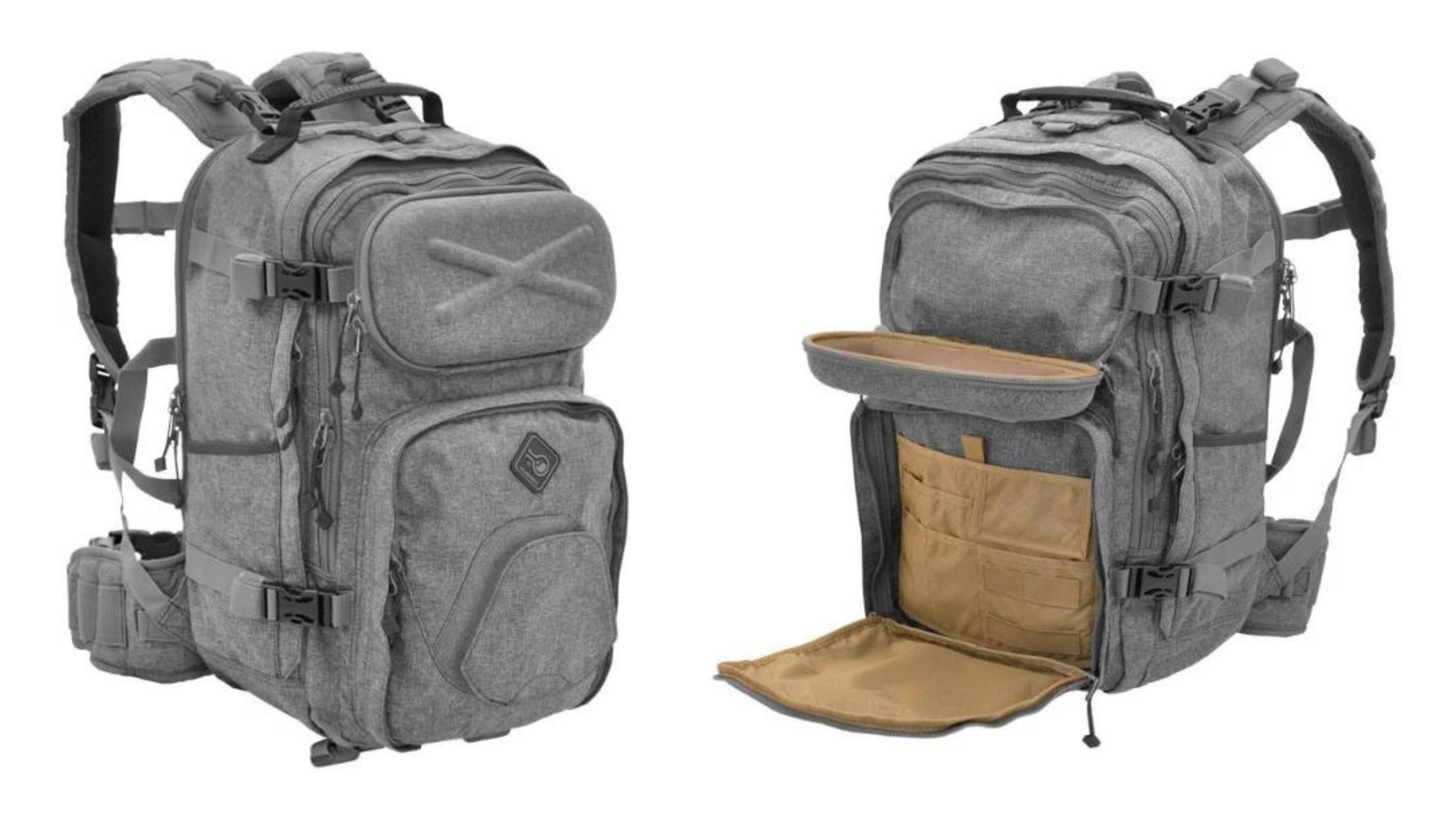
The Hazard 4 Patrolpack is a 16L duty daypack built specifically for law enforcement shift carry. The thermoformed back panel and unique harness system carry comfortably during extended wear. The MOLLE-compatible removable waist belt detaches and converts to a standalone platform for smaller pouches, which is genuinely useful when you're transitioning from vehicle to on-foot.
The large main compartment fits a 15" laptop. The padded back pocket holds a hydration bladder up to 100 oz. Hazard 4's signature paracord zipper pullers operate quietly, which matters more than it sounds during close-quarters situations. Constructed from Invista 1000D Cordura, water-resistant throughout. At $249.99 it's purpose-built for the use case rather than adapted from a hiking or military pack.
Best tactical bug-out bag: Eberlestock Switchblade
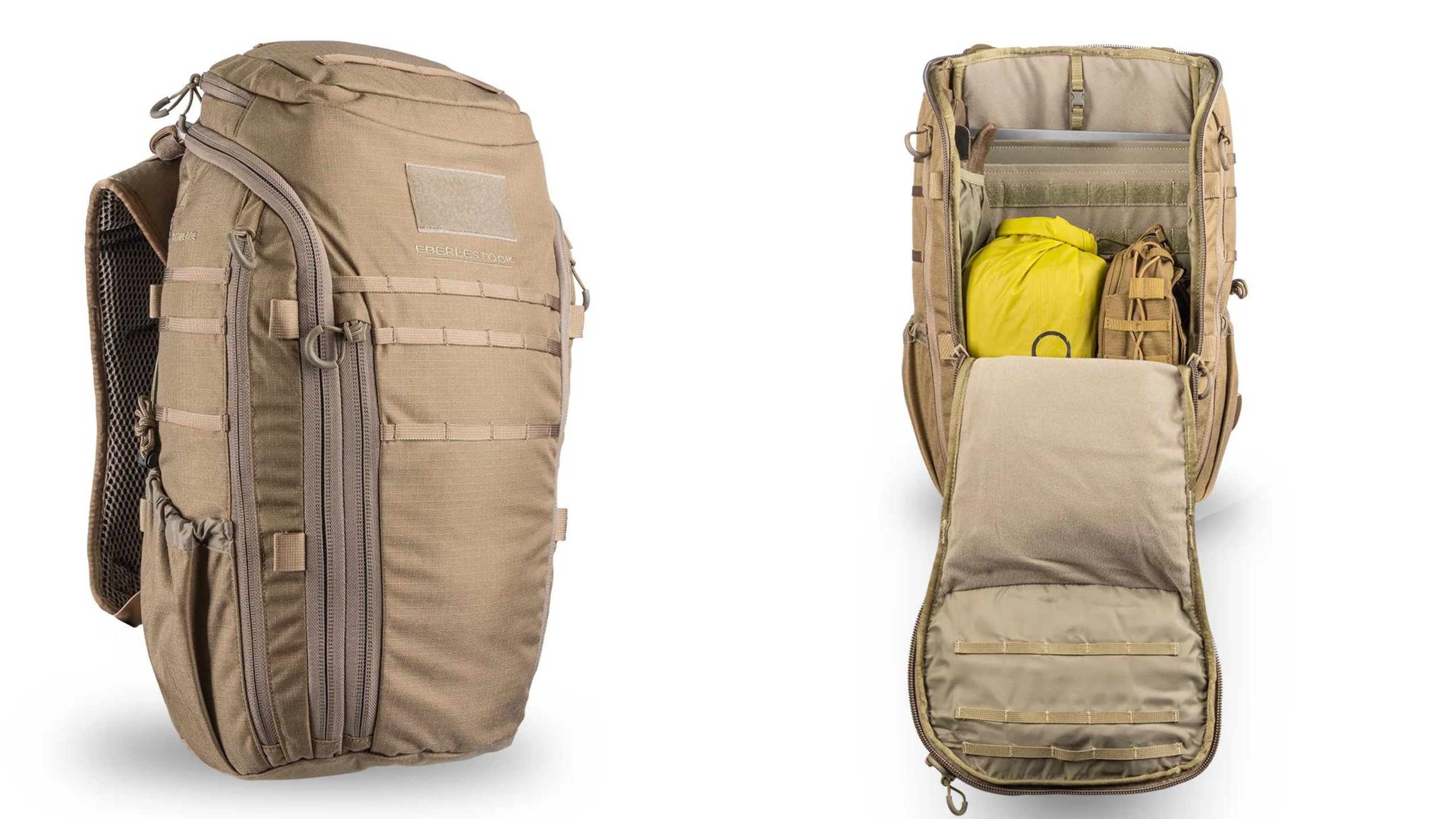
The Eberlestock Switchblade is the right call for preppers who want concealed carry integrated into a bug-out platform. The concealed carry pockets use rare-earth magnetic closures on both sides, ambidextrous for left or right hand draw, and they accommodate most full-size automatics without modification. At 3.6 lbs empty and with MOLLE-10 webbing that cuts weight by 60% versus traditional MOLLE, it doesn't sacrifice carry comfort for the CCW feature.
Internal loop-velcro PALS webbing lets you mount additional modular pouches inside for medical supplies or extra magazines. Dedicated pockets for the hydration bladder and small items keep the organizational logic clear. Starting at $229.00, it's competitive for what it does.
Best tactical backpacks for outdoor use: Kelty Redwing 44 Tactical and Mystery Ranch Terraframe 65
For outdoor-specific use, two packs earn the recommendation depending on load requirements.
Kelty Redwing 44 Tactical
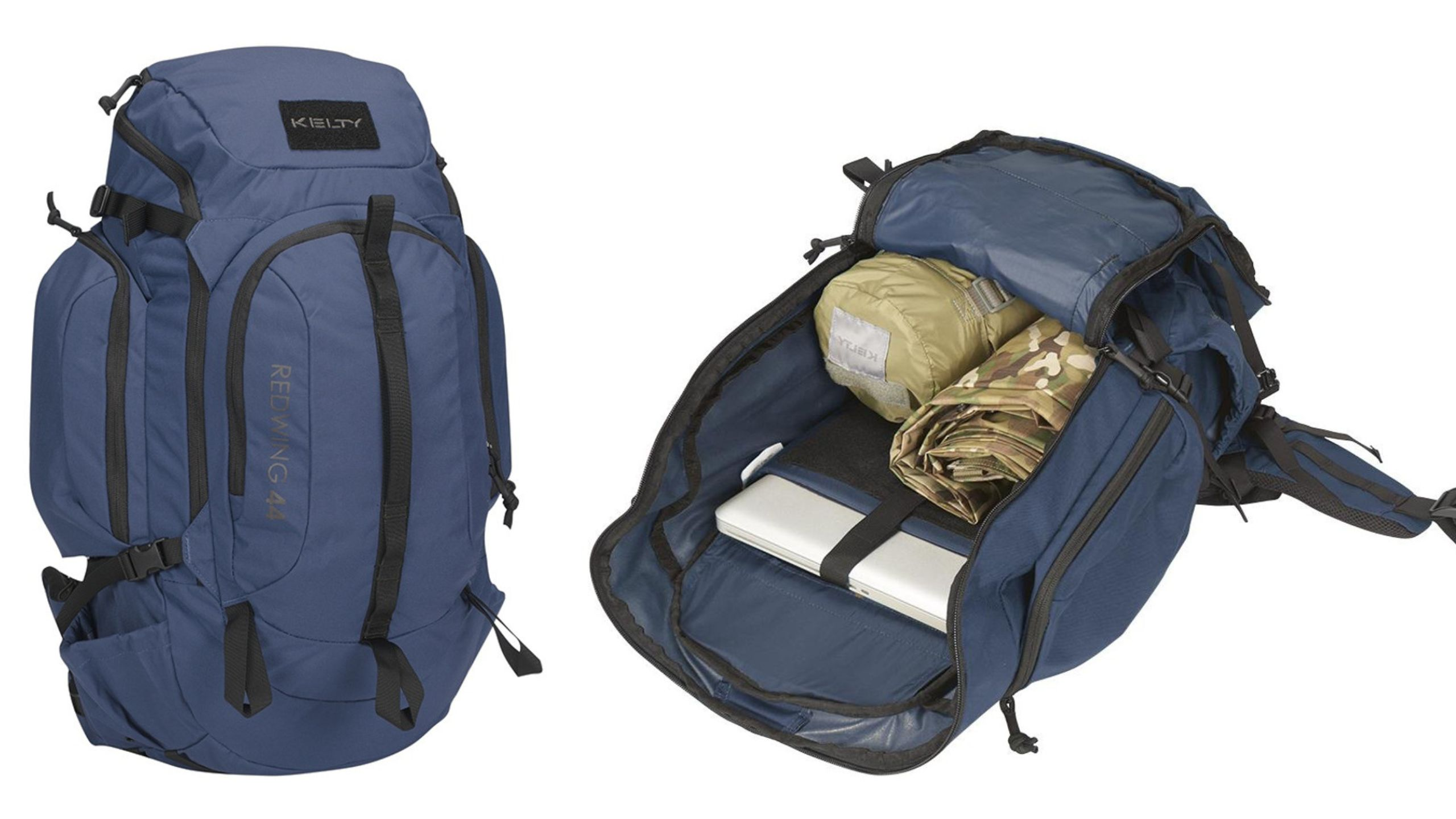
The Kelty Redwing 44 is 500D nylon, 44L, and 3 lbs 12 oz empty. The hybrid-loading U-zipper design gives you clamshell or top-load access depending on how you packed. The discreet laptop sleeve with external accessory hook provides low-profile carry for a compact firearm or essential tools. Eight heavy-duty zippers operate quietly. Available in four subdued colors for field use. Starting at $147.00, it's the outdoor value leader in this category.
Mystery Ranch Terraframe 65
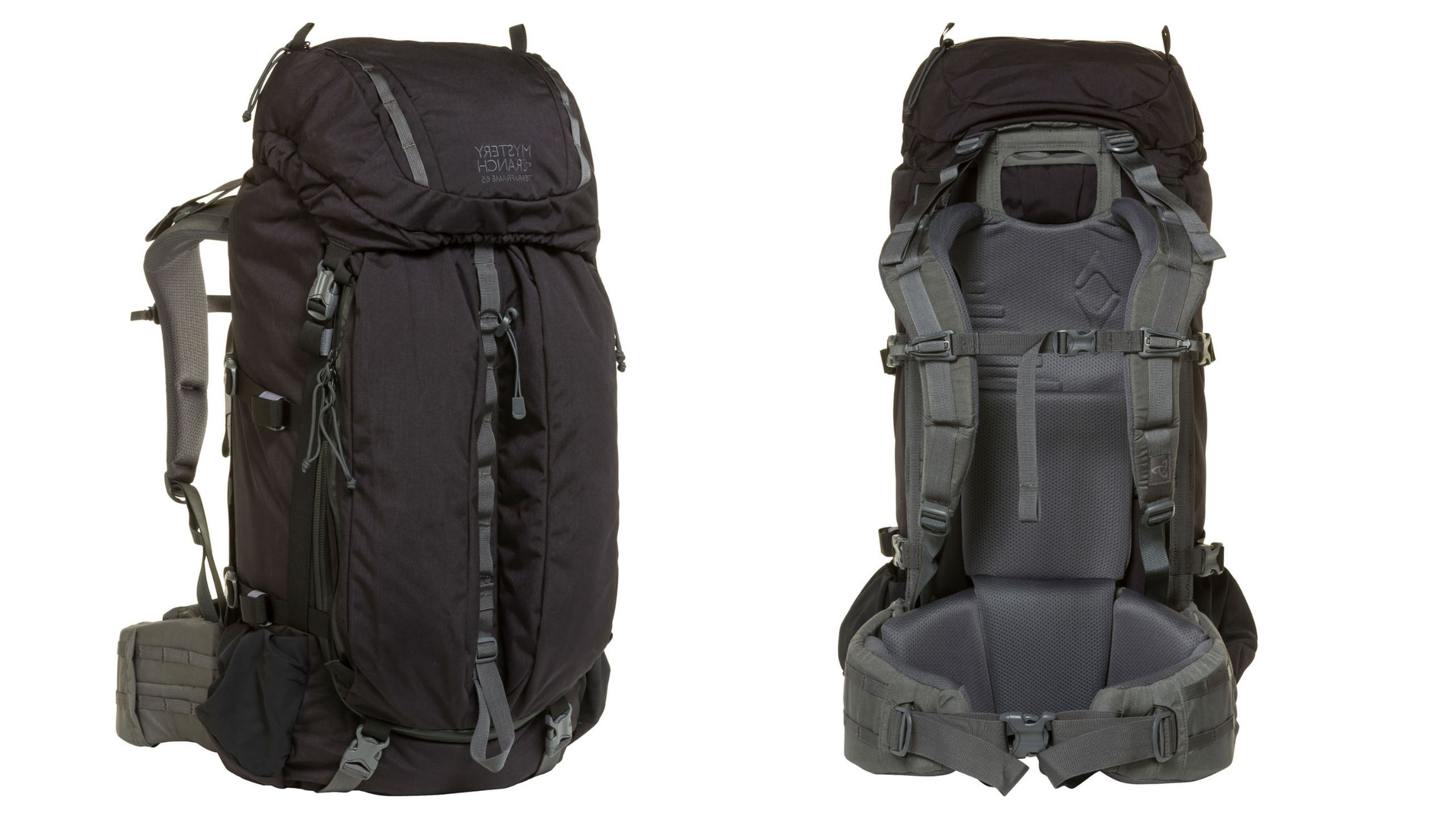
The Mystery Ranch Terraframe 65 is built for serious load capacity. The Guide Light MT frame with carbon fiber stays handles up to 150 lbs with torsional flex that lets you move naturally over rough terrain. The OVERLOAD feature lets you strap an animal harvest or oversized load to the external frame for pack-out. Telescoping yoke adjusts to torso length. Starting at $449.00, it's priced for hunters and backcountry operators who need the frame, not for casual day hikers who want the look.
Best CCW tactical backpack: Maxpedition Entity 27
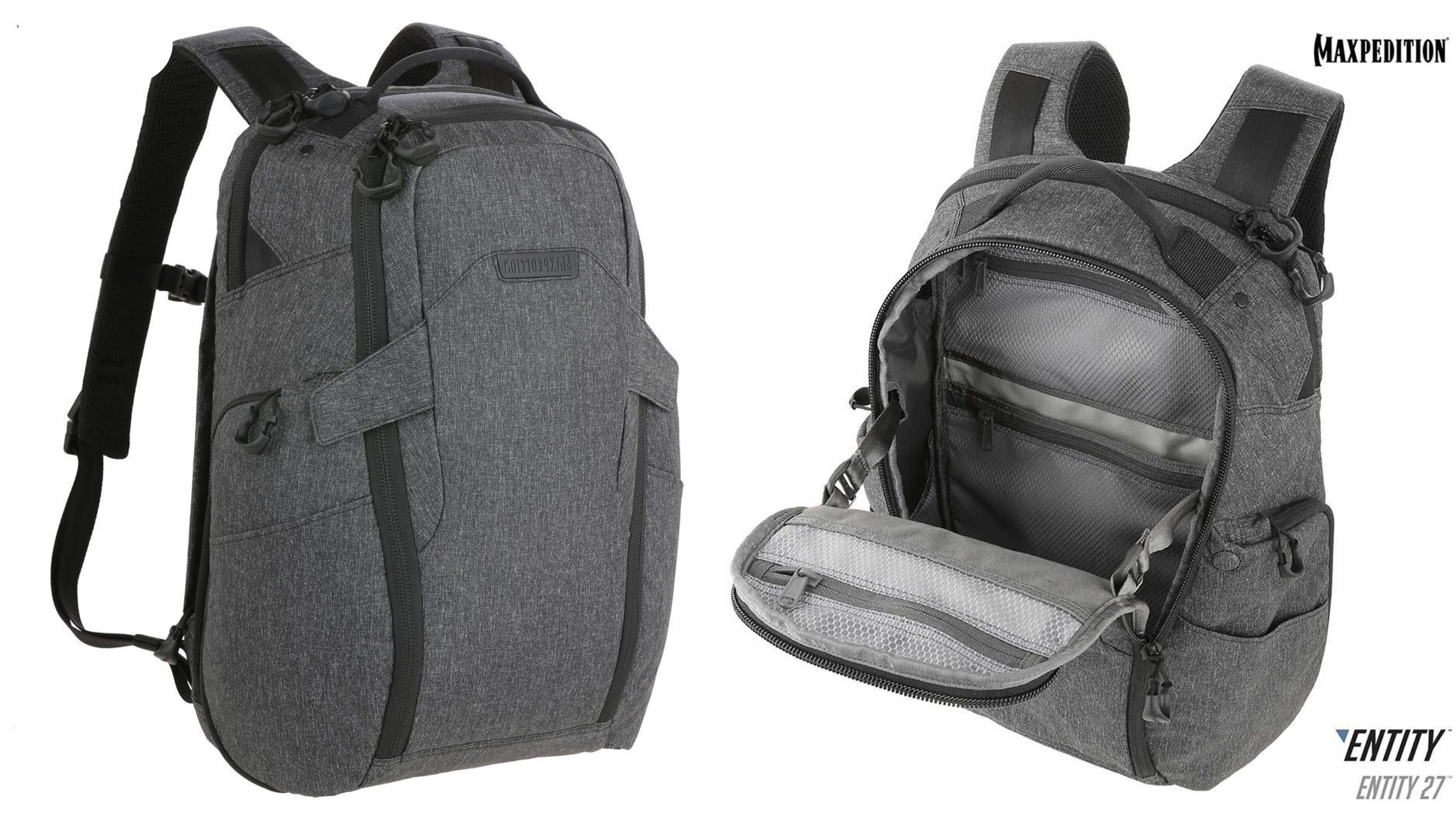
The Maxpedition Entity 27 is part of the Entity NTT (Non-Tactical/Tactical) series, designed to pass as a standard laptop bag in civilian environments. The dual-access CCW compartment is fully loop-lined with a Security Lockout Strip. Both the laptop compartment and main compartment are lockable. Trolley handle pass-through for airport travel. The tuckable magnetic wings give quick temporary closure on the main compartment.
At $149.99 it's the most affordable CCW-specific pack in this group. The tradeoff is that it's 27L, which is right-sized for EDC but won't work as a day-hike or bug-out platform.
Best medical backpack for civilians: Refuge Medical Field Medic Kit
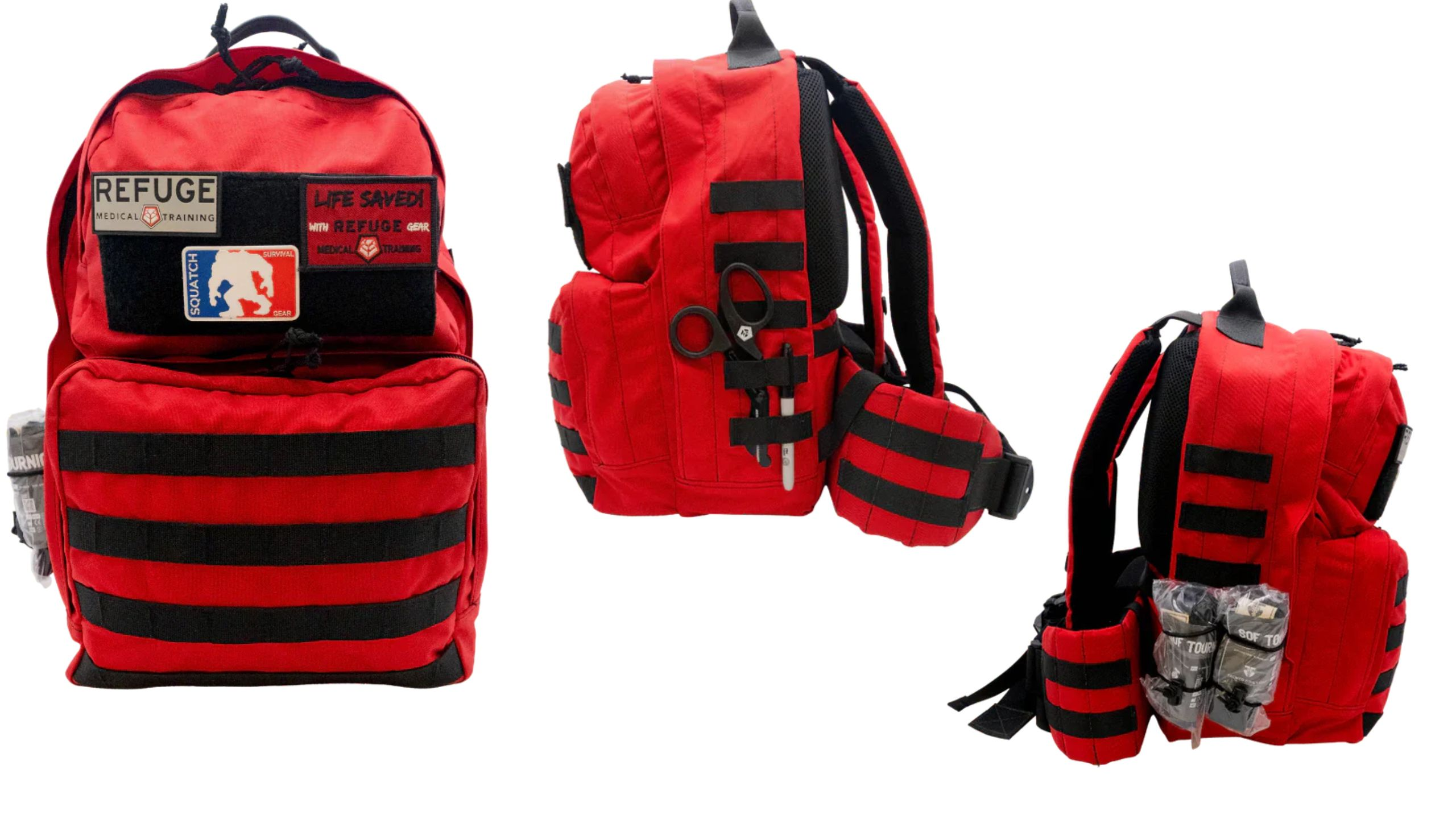
The Refuge Medical Field Medic Kit is a pre-configured trauma pack for civilians who want to support small-group care in austere environments. It includes SOF-T and CAT tourniquets, hemostatic gauze, chest seals, trauma shears, bandages in multiple sizes, splints, burn dressings, and a detachable BearMIN insert for immediate-access trauma supplies. The Berry-compliant backpack uses components from North American Rescue, MFASCO, H&H, and Medline.
At $999.99 and 15 lbs, this is not a casual purchase. It's for people who lead groups in the field, run ranges, or have a specific austere-environment medical role. If you want a single person-focused IFAK instead, the North American Rescue Solo IFAK at $89–$129 covers individual trauma care without the weight or price. The Field Medic Kit is the right tool for the right user; skip it if you only need to cover yourself.
Best minimalist tactical backpack: GORUCK GR1
The GORUCK GR1 is built in the USA with American-made materials and carries a lifetime guarantee. Flat-opening design for easy organization, padded shoulder straps, MOLLE exterior, and rainproof construction. TSA-compliant and sized to fit under an airplane seat. Available in 21L and 26L. Starting at $335.00.
Skip the generic "tactical" bags flooding Amazon under brands you've never heard of. Most use 600D polyester that splits at the seams under real load, feature MOLLE webbing with no internal structure, and have zippers that fail within a year. The GR1's lifetime guarantee exists because the construction justifies it. A $335 pack that lasts ten years beats a $79 pack you replace every 18 months.
How do you care for a tactical backpack?
Wipe down the exterior with a damp cloth after field use to clear grit before it works into seams. For deeper cleaning, use mild soap and a soft brush, then air dry away from direct sunlight. UV exposure degrades nylon over time, particularly DWR coatings.
Lubricate zippers with a silicone-based lubricant every few months or when you notice drag. Check for threads or fabric caught in the teeth before forcing a stuck zipper. On shoulder straps and buckles, look for cracking at stress points, especially on plastic side-release buckles in high-heat climates. A buckle that cracks in August training is a problem you don't want on a real deployment.
Store dry and clean in a cool, ventilated space. If storing for more than a few weeks, loosely fill the pack to maintain its shape and prevent fabric creasing at fold points.
Frequently Asked Questions
What size tactical backpack do I need?
For everyday carry (EDC) use, 20–30 liters handles a laptop, daily essentials, and standard carry items. For 2–3 day trips or extended duty deployments, 30–55 liters gives you room for clothing, food, and gear. Bug-out bags designed for 72-hour self-sufficiency typically run 50–70 liters. Going larger than your actual use case adds dead weight and encourages over-packing, which creates carry fatigue.
What is MOLLE webbing and why does it matter?
MOLLE stands for Modular Lightweight Load-carrying Equipment. It uses rows of PALS (Pouch Attachment Ladder System) webbing on the exterior of the pack, allowing you to attach compatible pouches, holsters, IFAKs, and other modular gear at specific positions rather than stuffing everything inside. The system was developed for military use and lets you reconfigure your loadout without buying a new pack. A pack with only MOLLE on the exterior but no internal organization is not a tactical pack; it's a regular bag with decorative webbing.
Are tactical backpacks good for everyday carry?
Yes, provided you choose the right model. Packs like the Vertx Gamut 2.0 and Maxpedition Entity 27 are designed specifically to look like civilian bags while providing internal CCW compartments, laptop sleeves, and tactical organization. Packs with obvious MOLLE grids, external magazine pouches, or subdued military colorways will read as tactical in office or urban environments. The right EDC tactical pack is one you'd carry to work without drawing comments.
What is the difference between a tactical backpack and a bug-out bag?
A tactical backpack is a construction and design category: durable materials, MOLLE webbing, organized compartments. A bug-out bag is a use-case category: a pre-loaded emergency pack configured for 72-hour self-sufficiency. Any sufficiently large tactical backpack can serve as a bug-out bag platform, but bug-out bags specifically prioritize maximum capacity (50–70L) and are configured with survival gear rather than duty equipment.
What denier fabric should I look for in a tactical backpack?
1000D Cordura is the standard for maximum abrasion resistance and durability under heavy load. 500D Cordura is lighter and appropriate for most EDC and moderate outdoor use. 600D polyester is common in budget packs; it looks similar but provides significantly less abrasion resistance and typically features weaker seams. For serious field use or packs that will see repeated heavy loading, 1000D or 500D Cordura is worth the premium.
Can I bring a tactical backpack on a plane?
Yes. Tactical backpacks are not restricted items. TSA does not prohibit tactical bags, MOLLE webbing, or subdued military colorways in carry-on or checked luggage. What matters is the contents: ensure any prohibited items are properly declared in checked baggage or removed entirely. Some tactical packs like the GORUCK GR1 are explicitly sized to fit under airline seats and are TSA-compliant by design.
What is the best tactical backpack under $200?
The Condor Outdoor 3 Day Assault Pack (50L, $134.99) is the strongest value option under $200 for an assault-capable tactical pack. The Kelty Redwing 44 Tactical ($147.00) is the best value for outdoor and hiking use. The Maxpedition Entity 27 ($149.99) leads for CCW-focused EDC carry. All three use legitimate construction; you're trading some suspension quality compared to $200+ options, which matters on long carries but is irrelevant for vehicle storage or light use.
Key takeaways:
- Match capacity to your actual use case: 20–30L for EDC, 30–55L for 2–3 day ops, 50–70L for bug-out. Oversizing creates dead weight.
- Material denier determines real durability: 1000D or 500D Cordura for field use, not 600D polyester marketed as "heavy-duty."
- Suspension system quality matters more than exterior MOLLE coverage for packs you'll actually wear for hours.
- The 5.11 Rush72 (55L, $219) and Vertx Gamut 2.0 ($349) are the benchmarks for assault and EDC respectively; the Condor 3-Day ($134) is the value pick if you're on a budget.
- Skip generic Amazon tactical bags with unknown brand names; the zipper and seam failure modes are documented and predictable.
Disclaimer: This article is for informational purposes only and does not, and is not intended to, constitute legal advice. Body armor laws change frequently at both federal and state levels. Consult a licensed attorney in your jurisdiction before relying on any information presented here. Bulletproof Zone makes no claim that body armor will provide complete protection in any scenario; no body armor is bulletproof. Last verified against published statutes and the NIJ Compliant Products List on May 2026.
Product specifications referenced in this article are based on the manufacturer's stated specifications at time of publication. Bulletproof Zone is a multi-brand retailer; product availability and configurations may change. Verify current product details on the relevant product page before purchase.