


What to Do During a Home Invasion: 2026 Guide

Quick answer: If a home invasion is happening right now, do these five things in order: assess quietly (how many, where), alert everyone in the home via a pre-agreed code, escape by a clear route if possible, lock yourself in a safe room if escape is blocked, and call 911 in a whisper. Stay put until law enforcement clears the scene. Do not confront the intruder.
Roughly 1.65 million home invasions happen in the United States every year, according to data aggregated from the FBI and DOJ. That works out to about 4,500 in a single day. Most last 8 to 10 minutes. Most happen between 10 AM and 3 PM, when someone is actually home. And over a third of invaders come through the front door.
That last detail matters more than people realize. The front door isn't just the most common entry point because it's weak. It's because most home invaders are opportunists who knock first.
What exactly is a home invasion?
A home invasion is when an intruder forcibly enters an occupied dwelling to commit a crime. That crime might be theft, robbery, assault, or worse. It's categorically more dangerous than a standard burglary precisely because you're home and the invader knows it.
Federal law doesn't actually recognize "home invasion" as a standalone offense. The punishable acts are whatever crimes accompany the break-in: assault, robbery, battery, murder. At the state level, only a handful of states treat the home invasion itself as a separate crime. Connecticut, Florida, Georgia, Illinois, Louisiana, Michigan, and Nevada are among them, though the specifics vary significantly.
What do the numbers tell us?
Because "home invasion" isn't a consistent legal category, the data is imprecise. But pulling from the Bureau of Justice Statistics, the FBI, and secondary aggregators gives us a workable picture:
- 30% of home invaders were armed [1]
- Just 12% of incidents were premeditated [2]
- About two-thirds of offenders were known to the victims [3]
- The average incident lasted 8 to 10 minutes [4]
- Most happened between 10 AM and 3 PM [5]
- Most invaders lived within a few miles of the target [2]
- Over a third entered through the front door
- Roughly 1.65 million occur annually in the US, or about 4,500 per day [6]
- The overall trend has been declining over the last decade
The 12% premeditation figure is the one most people find surprising. It means 88% of home invasions are impulsive or opportunistic. Deterrence works.
How do you prepare before it happens?
Home invaders look for soft targets. Deadbolts, exterior lighting, a visible camera, and a dog on the property are all friction that sends most of them somewhere else. You don't need to be impenetrable; you need to be less appealing than the house next door.
Harden your entry points
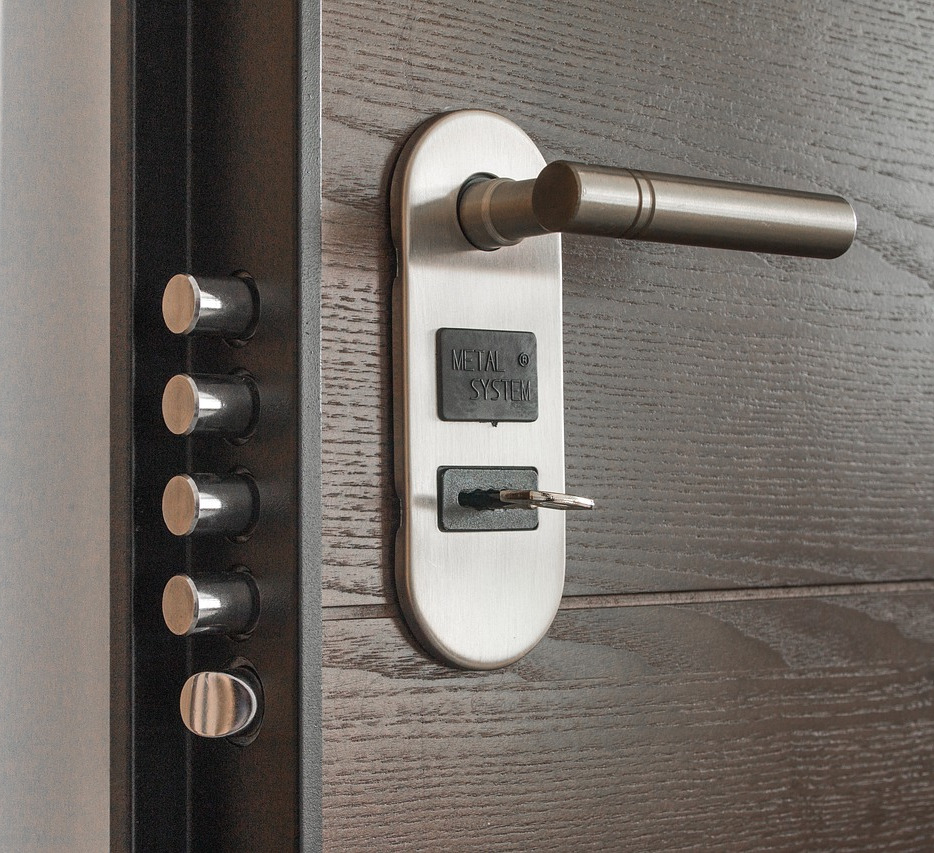
Reinforce exterior doors with a metal strike plate and 3-inch screws, not just the standard 3/4-inch hardware most doors ship with. Add a Grade 1 deadbolt if you don't already have one. Door chains are not adequate on their own: a solid kick will pop them. For ground-floor windows, shatterproof film or security bars are cheaper than replacing a broken frame after the fact.
A perimeter fence helps. Thorn hedges along the property line are an underrated deterrent. They don't look aggressive to neighbors but they're genuinely unpleasant for someone trying to approach a ground-floor window quietly.
Install a monitored alarm and cameras
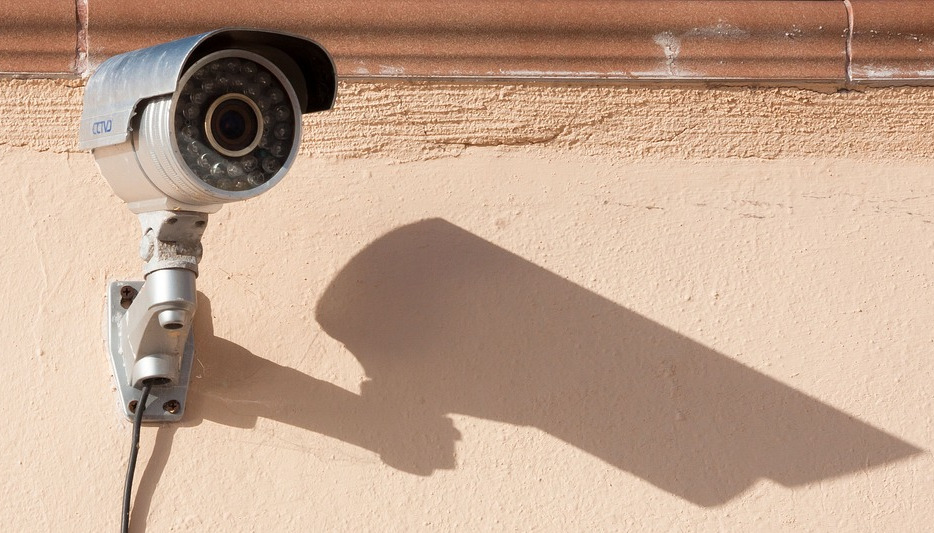
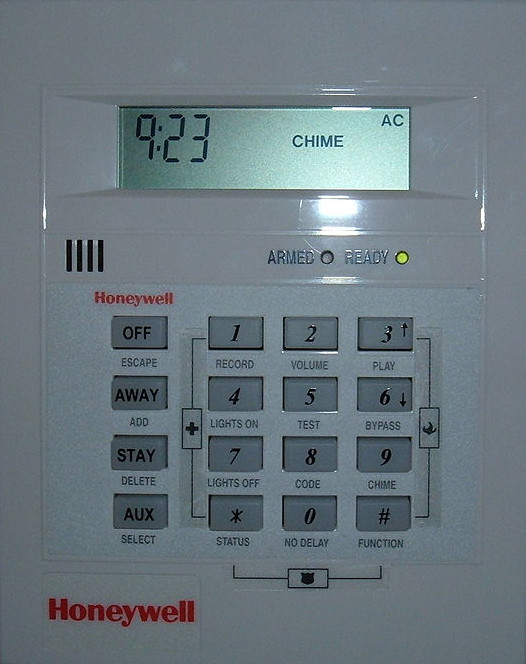
A professionally monitored alarm is one of the best-documented deterrents in the research literature. The combination of an audible siren and an automatic police notification is a harder problem for an intruder to solve than a lock. Mount cameras in visible positions at the main entry points. They serve two functions: deterring someone casing your home, and providing footage for identification afterward.
A doorbell camera, combined with a peephole you actually use before opening the door, eliminates the "I thought it was a delivery" problem that trips people up more than they'd like to admit.
Build free daily habits
Hardware is only as good as the habits around it. Ten zero-cost practices that reduce your risk:
- Know your neighbors. The single most effective crime deterrent in any neighborhood-watch study is mutual familiarity. People notice when something's off.
- Keep doors and windows locked even when you're home, even for a quick errand.
- Close blinds after dark. Valuables visible from the street are advertising.
- Don't leave tools, ladders, or unsecured equipment in the yard. They're entry aids for someone who wants your second floor.
- Don't hide keys under a mat, a rock, or above the doorframe. A small lockbox with a combination is $20 at any hardware store.
- Don't post your location or travel plans on public social media accounts.
- Vary your daily routine. Invaders who case homes first look for patterns.
- Use lamp timers when you're away. Set them to go on and off in different rooms at different times.
- Keep deliveries from piling up when you're traveling. A stack of packages is a vacancy sign.
- Don't put big-ticket purchase boxes curbside unbroken. A flat-screen box announces what's inside your house.
A dog, even a small one, is worth mentioning separately. The bark is the deterrent. Most residential burglars have said in studies that a barking dog alone was enough to make them move on.
What gear should you have ready?
Emergency bag
Keep a grab bag in or near your safe room. A bullet-resistant backpack is the obvious choice here because it doubles as both a bag and a ballistic shield if you have to move through an active threat. At minimum, the bag should contain: a charged phone and a backup battery, a flashlight, spare clothes and footwear, water, and a trauma kit (IFAK) with a tourniquet, chest seal, and hemostatic gauze.
Skip the generic "emergency kits" Amazon sells as bundles under unrecognizable brand names. Most of them have a tourniquet that fails basic arterial pressure tests and gauze that isn't hemostatic. Buy components from North American Rescue or Bulletproof Zone's first-aid selection where the supply chain is traceable.
Body armor for home defense
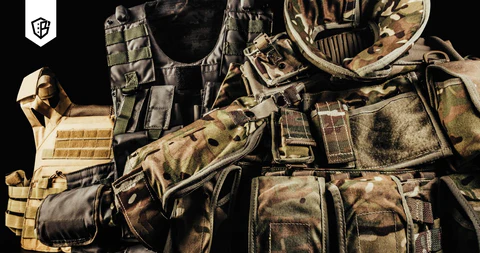
For home defense specifically, the three most practical options are a concealable soft armor vest, a dual-threat vest rated for both ballistic and edged-weapon threats, or a plate carrier with hard armor for situations where rifle rounds are a genuine concern.
For most civilian home defenders, anything NIJ Listed under 0101.06 at Level IIIA covers the statistical threat range. The vast majority of home invasion weapons are handguns, and a Level IIIA vest stops 9mm, .40 S&W, .45 ACP, and .44 Magnum. For a broader breakdown of what each rating stops, the Bulletproof Zone body armor catalog has specs listed per product.
Worth knowing: cheap vest carriers sometimes have a design failure no one mentions in reviews. The chest strap buckle on several off-brand plate carriers is a low-grade nylon side-release that cracks under load after repeated donning cycles, not from any ballistic event. If you're storing a carrier for emergency use, check the hardware every six months. This is less common in NIJ-tested products where the entire system goes through the compliance process, but it's a real failure mode in the grab-and-go tier of the market.
Knowing your legal position on force
Your right to use force in your own home depends heavily on your state. The three frameworks most states fall into:
- Duty to Retreat: you must attempt to withdraw before using force, even in your own home, in states that impose this requirement.
- Stand Your Ground: you may use proportional force without retreating first.
- Castle Doctrine: you may use lethal force without retreating when a threat enters your home.
Know which framework your state uses before you're in a situation that requires it. That's not a decision you want to make under adrenaline. And training matters here in a way no gear purchase replaces: taking a home defense course, learning to use a firearm under stress, and understanding how to put on and use body armor correctly are all skills that degrade without practice. Owning equipment isn't the same as being able to use it.
How do you make a home invasion plan?
A plan doesn't mean a perfectly scripted scenario. There are too many variables. What a plan does is reduce the number of decisions you have to make from scratch when your adrenaline spikes, your hands are shaking, and someone you care about is in the next room.
Keep it simple. Keep it flexible. Run it as a drill at least once a year, unannounced. I ran the drill with my family in a suburban Atlanta house in spring 2024, and the thing nobody warns you about is the cognitive weirdness of doing it for real. Your kids think it's a game until it isn't. Your spouse questions the route you've memorized because the furniture moved. You realize the "safe room" doesn't actually have signal. These are problems you want to find in a drill.
Map your escape routes
Walk every room of your home and identify all exit points. Ground floor windows, back doors, garage exits. Designate a muster point outside the property, somewhere reachable in under a minute, not visible from your front door, ideally a neighbor's house or a public landmark. Everyone in the household should know where it is without being told twice.
Set up a safe room
Pick one room with a solid-core door (wood or steel), a lock, and enough space for everyone likely to be home at once. The master bedroom usually works. The requirements:
- Solid-core lockable door, ideally reinforced
- Reliable cell signal or a landline
- Something heavy enough to brace against the door
- At least one electrical outlet for charging
- Your grab bag stored here, not in the garage
Identify backup hiding spots elsewhere in the home for scenarios where the safe room isn't reachable. Under-bed, closet, or bathroom with a lock are all viable depending on your floor plan.
Create a code word
Pick a word or short phrase that clearly signals "home invasion, execute the plan." Something like "SAFE ROOM" or "ESCAPE" works fine. Send it via text so you don't make noise. Make sure everyone in the household, including regular visitors and babysitters, knows the code and knows what to do when they receive it.
Rehearse it. An untested plan is just a list of good intentions. Like any well-thought-out emergency preparedness plan, it only works if the people involved have practiced it.
Get your insurance sorted
Check whether your homeowners or renters insurance covers personal injury and property loss from a home invasion. Many standard policies have exclusions or sub-limits that don't become obvious until you file a claim. Read the declarations page now, not afterward.
What do you actually do during a home invasion?
You've heard something. You're not sure. Or you're completely sure and your hands are already shaking. Here's the sequence:
- Stop and listen. Before you move, spend 10 to 15 seconds gathering information. How many voices do you hear? What direction are they coming from? Are they moving toward you? The answers change your next move.
- Alert everyone silently. Text your household code word to everyone in the home, plus anyone who is out and might come back. You don't want a family member walking in during the middle of it.
- Choose: escape or shelter. If the path to an exit is clear and doesn't cross the intruder's location, leave. Go directly to your muster point. If escape isn't possible, get everyone to the safe room, lock and brace the door, and stay put.
- Call 911. Speak in a whisper. Answer the dispatcher's questions. Don't hang up unless told to do so. If you can't speak safely, text to 911 is available through nearly 3,300 Public Safety Answering Points across the US. Stay in the safe room until responding officers have cleared the scene, even if the noise has stopped. Do not go back to check.
- Don't engage. If you've sheltered, don't yell, don't threaten, and don't try to confront the intruder even if you're armed and confident. If a face-to-face encounter happens despite everything, stay calm, avoid prolonged eye contact, and comply with demands. No possession is worth a lethal confrontation. If the intruder is armed or under the influence, the odds of a predictable outcome drop sharply.
Frequently Asked Questions
What is the first thing you should do if someone breaks into your home?
Stop and listen before moving. Try to establish how many intruders there are and where they are in the home. Then silently alert everyone in the household and decide whether escape or sheltering in place is the safer option. Call 911 as soon as you are in a position to do so without being heard.
Should you confront a home invader?
In almost every case, no. The goal is to get everyone in your household to safety. Confrontation introduces variables that are hard to control: you don't know if the intruder is armed, how many there are, or how they'll react. Even in states with Castle Doctrine protections, the safest outcome is one where nobody gets hurt. If the intruder only wants property, let them take it.
What body armor is best for home defense?
For most home defenders, a soft armor vest NIJ Listed under 0101.06 at Level IIIA covers the statistical threat range: it stops 9mm, .40 S&W, .45 ACP, and .44 Magnum. If rifle threats are a genuine concern based on your local crime environment, a plate carrier with Level III or Level IV hard plates is the upgrade. Bulletproof Zone carries options across both categories with product specs listed by NIJ certification level. No body armor is bulletproof, and no vest provides protection at 100%.
What should be in a home defense safe room?
At minimum: a solid-core lockable door, reliable cell signal, something heavy enough to brace the door, a charged phone or backup battery, your grab bag with a trauma kit (IFAK), and if applicable, your home defense firearm and body armor. A safe room with no cell signal is just a room with a locked door. Test it before you need it.
How long does a typical home invasion last?
According to data from the Bureau of Justice Statistics and security research, the average home invasion lasts 8 to 10 minutes. That is roughly the window between entry and when most invaders leave before police respond. A monitored alarm system that cuts that window by even two or three minutes changes the probability of police arrival during the event significantly.
What are my legal rights if I use force against a home invader?
It depends on your state. States with Castle Doctrine provisions generally allow the use of lethal force in your home without requiring retreat first. Stand Your Ground states allow force without retreat in any place you have a legal right to be. Duty-to-Retreat states require you to attempt withdrawal before using force, even in your own home. Know which framework applies in your state before you're in a situation requiring that knowledge. This article is not legal advice; consult a licensed attorney in your jurisdiction.
Does a home alarm system actually deter home invasions?
Yes, substantially. Research from the Rutgers School of Criminal Justice and FBI crime data consistently shows that homes without security systems are roughly three times more likely to be targeted than those with visible alarm systems. Professionally monitored systems are more effective than self-monitored because they guarantee a police call even if you're incapacitated or not home. The presence of signage alone has a measurable deterrent effect, though less than a working system.
Key takeaways:
- The five steps during a home invasion are: assess, alert, escape or shelter, call 911, and do not engage. In that order.
- 88% of home invasions are impulsive or opportunistic. Deterrence measures like lights, cameras, alarms, and reinforced locks work on most of them before entry.
- A soft armor vest NIJ Listed under 0101.06 at Level IIIA covers the handgun threat range that applies in the vast majority of home invasion scenarios.
- A rehearsed plan matters more than any single piece of gear. Run a drill at least once a year with your household.
- Know your state's self-defense law before you need it. Castle Doctrine, Stand Your Ground, and Duty to Retreat produce very different legal outcomes.
Sources
[1] https://bjs.ojp.gov/content/pub/ascii/vdhb.txt
[2] https://www.thezebra.com/resources/research/burglary-statistics/
[3] https://housegrail.com/home-invasion-and-burglary-statistics/
[4] https://adssecurity.com/10-burglary-statistics-you-should-know/
[5] https://www.adt.com/resources/when-do-most-burglaries-occur
[6] https://thesmallbusinessblog.net/how-many-home-invasions-happen-per-year-in-the-u-s/
Disclaimer: This article is for informational purposes only and does not, and is not intended to, constitute legal advice. Body armor laws change frequently at both federal and state levels. Consult a licensed attorney in your jurisdiction before relying on any information presented here. Bulletproof Zone makes no claim that body armor will provide complete protection in any scenario; no body armor is bulletproof. Last verified against published sources on May 2026.
Federal law (18 U.S.C. § 931) prohibits possession of body armor by anyone convicted of a violent felony. State restrictions vary; New York and Connecticut have the most stringent civilian-purchase restrictions. Bulletproof Zone does not ship body armor to New York or Connecticut consumer addresses.