


How Much Is a Bulletproof Vest? 2026 Price Guide

Quick answer: A bullet-resistant vest costs between $150 and $1,500 depending on protection level and material. Soft armor rated NIJ Listed Level IIIA under Standard 0101.06 runs $300 to $800. Hard armor plates rated Level III run $300 to $900 per plate. Level IV ceramic plates start around $500 and reach $1,500. The threat you're protecting against determines the right tier.
You already know you don't want to overpay. You also know this isn't the purchase where you find out what you got wrong. A bullet-resistant vest that can't stop the round coming at you isn't a vest — it's a false promise you paid cash for. So here's what actually drives the price of body armor in 2026, and what you should expect to spend at each tier.
How much does a bullet-resistant vest cost?
Across all protection levels and materials, body armor prices range from roughly $150 to $2,000 or more. That span is wide because "bulletproof vest" covers a Level II soft vest a security guard wears under a dress shirt and a Level IV ceramic plate that stops a .30 caliber armor-piercing round at 2,880 feet per second. They're not the same product.
Here's a quick breakdown by NIJ protection level under Standard 0101.06, which is still the dominant framework on the market as of 2026:
- Level II soft armor: $250 to $600
- Level IIIA soft armor: $300 to $800
- Level III hard plates: $300 to $900 per plate
- Level III+ hard plates (manufacturer designation, not NIJ): $400 to $1,000
- Level IV hard plates: $500 to $1,500
The NIJ published Standard 0101.07 in November 2023, which introduces new threat-level designations (HG1, HG2, RF1, RF2, RF3) to replace the old Level II through IV naming. No products are NIJ Listed under 0101.07 as of May 2026; the Compliant Products List hasn't published any .07 entries yet. You'll see manufacturers testing against the new parameters, but everything currently for sale is still priced and rated under 0101.06.
How much does backpack body armor cost?
Backpack body armor runs $99 to $490 for panel inserts, with plate-carrier-style backpacks costing a bit more. Our bulletproof backpack buyer's guide covers the types and what each actually stops. Worth noting: Louisiana prohibits ballistic gear on school property under La. R.S. 14:95.9 (backpack panels expressly exempt, but verify your state before buying for a student).
Why is body armor so expensive?
Two things drive most of the cost: materials and testing. The ballistic materials alone — Kevlar, UHMWPE, and alumina or boron carbide ceramics — are not cheap to source or weave into panels that can stop a 9mm FMJ at 1,400 fps without transferring lethal backface deformation to the wearer.
Testing is the second cost. Getting a model through NIJ's Compliance Testing Program requires submitting multiple samples to an approved lab, paying for those rounds and that range time, and waiting out the review cycle. A manufacturer that cuts that cost by skipping independent testing is saving money on your protection budget, not theirs.
Add compliance overhead on top: quality control, consistent manufacturing tolerances, and the documentation chain that makes a plate traceable if it fails in the field. None of that is free, and it all ends up in the retail price.
What factors affect body armor price the most?
NIJ listing status
The most meaningful price driver is whether a product is NIJ Listed on the Compliant Products List (CPL) under Standard 0101.06. NIJ Listed armor has passed the Compliance Testing Program at an approved lab, and the specific model and size are verifiable at nij.ojp.gov. Armor that is "tested to NIJ standards" but not on the CPL costs less, usually $50 to $150 less per piece, and carries more risk.
There's a meaningful distinction here. "NIJ Listed" means a specific model passed the Compliance Testing Program. "Meets NIJ standards" is a manufacturer claim, not a verified outcome. For anything you plan to wear when it matters, check the CPL before you buy.
Protection level

Higher protection costs more, and the jump from soft to hard armor is significant. For the full breakdown of what each level stops and which threats it doesn't, see our NIJ protection levels guide.
A quick summary:
- Level II ($250-$600): Soft, concealable, stops .357 Magnum and below. Kevlar construction. Good for plain-clothes security work.
- Level IIIA ($300-$800): Soft, concealable, stops high-velocity 9mm and .44 Magnum. The most common vest for law enforcement and security carry.
- Level III ($300-$900 per plate): Hard plates for a plate carrier. Stops most rifle rounds including 7.62x51 NATO at 2,780 fps.
- Level III+ ($400-$1,000): A manufacturer designation, not an NIJ level. Adds protection against 5.56 M855 and similar higher-velocity rounds that standard Level III may not stop. Note: "+" ratings (III+, IIIA+) are manufacturer designations and are not part of NIJ Standard 0101.06 or 0101.07 nomenclature.
- Level IV ($500-$1,500): Stops .30 caliber armor-piercing (AP) rounds at 2,880 fps. One certified hit per the NIJ test protocol; field performance against multiple hits varies by plate construction.
Material

Material is where you feel the price difference most. Here's how each category plays out:
Soft armor: Kevlar and UHMWPE
Kevlar (aramid fiber) runs $150 to $800 for finished vests and is the most tested material in the NIJ archive. UHMWPE (ultra-high-molecular-weight polyethylene) is lighter and moisture-resistant, and soft UHMWPE armor runs $100 to $300. UHMWPE doesn't perform as well against high-velocity rifle threats as Kevlar in the soft-armor tier, but for handgun-rated soft armor it's a solid choice.
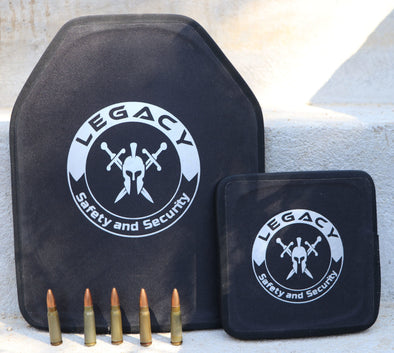
Hard plates: steel, ceramic, and polyethylene
- Steel ($300 to $500 per plate): Heaviest option, typically 7 to 8 lb per 10x12 plate. Steel causes spalling — bullet fragments ricochet off the strike face at high velocity. Every steel plate needs an anti-spall coating (Paxcon or similar polyurea) or a trauma pad in front; budget that additional $30 to $60 per plate. Skip steel if you're carrying for more than a few hours.
- Ceramic ($500 to $800 per plate): Stops rifle rounds by shattering the bullet's penetrator on impact. Lighter than steel, around 5 to 7 lb per plate, but ceramic fractures under multiple rounds faster than polyethylene. The RMA 1155 Level IV single-curve plate at ~6 lb is a benchmark here.
- Polyethylene ($300 to $800 for Level III, $500 to $1,000 for Level IV per plate): Lightest option at 3 to 4 lb for a 10x12 Level III plate. Polyethylene works by deforming and capturing the bullet within its woven UHMWPE matrix rather than shattering it. It can handle more hits than ceramic before degrading. Doesn't work ICW (in conjunction with) a IIIA soft backer as reliably as ceramic at Level IV; check the manufacturer's ICW rating.
Weight and weight premium
If you've done a full shift in hard plates, you already know what happens to your traps and shoulders after six hours. A standard ceramic Level III plate at 6 lb feels fine at hour two; by hour eight, you're modifying how you move just to compensate, and that's the thing that gets people hurt. The polyethylene plates that weigh 3 lb cost 20 to 30% more than a ceramic at the same threat rating. That premium is real and worth calculating against how long you'll actually wear the plates.
The ProtectVest L3 versus the ProtectVest L3 Air is a clean example of this tradeoff. Both use UHMWPE construction and stop the same threats. The Air weighs substantially less and costs more. If you're wearing plates for eight-hour patrol shifts, the delta on fatigue makes the Air the right call. If you're buying plates for the truck's gear bag and they come out twice a year for training, the standard L3 price point is more sensible.
Which brands offer the best value?
Bulletproof Zone stocks several brands that consistently hit the price-to-protection ratio well. Here's what you're actually buying at each price band:
- ProtectAgainst: BPZ's own affordable line. Plates, vests, and backpack inserts at entry-level prices. Good first armor for civilians who don't need to wear it daily.
- BulletSafe ($299 to $499): The VP3 IIIA vest is NIJ Listed under 0101.06 and one of the cleaner budget buys in the soft armor market. Straightforward product, no marketing inflation.
- Spartan Armor Systems ($200 to $700): ITAR-registered manufacturer (registration M38162) with a consistent CPL presence. Their AR500-core steel plates are competitively priced; their UHMWPE plates step up meaningfully in the mid-range.
- AR500 Armor ($150 to $600): Steel-plate specialists. Their AR500-core plates are affordable and durable. The spalling issue applies; their anti-spall coatings are thick and tested, but budget the anti-spall cost when comparing to ceramic. Note: AR500 uses "tested to meet and exceed NIJ standards" rather than NIJ Listed language; verify CPL status on any specific model before buying if NIJ listing matters to your use case.
- Ace Link Armor ($300 to $1,200): Broader range from concealable soft armor to Level IV ceramics. Good for buyers who want one source for multiple kit levels.
- Shellback Tactical ($150 to $500): Plate carriers and armor combos. The Banshee carrier with Spartan plates is a common entry-level hard-armor setup.
Skip the generic "tactical body armor" listings on Amazon from brands you've never heard of. The $75 "Level IIIA" panel with no listed Kevlar weight, no NIJ CPL listing, and no verifiable origin is not protection. It's a vest-shaped object that may get you killed while giving you false confidence. Buy from distributors who can show you a CPL entry.
How do you avoid buying bad body armor?
Two checks before you buy anything:
The pinch test. Pinch the soft armor panel. If you feel foam backing, walk away. Foam is used to pass the NIJ's backface deformation (BFD) limit because the ballistic material alone doesn't deform within acceptable tolerances. The NIJ caps BFD at 44mm; foam gets a marginal vest to that limit while leaving the ballistic panel itself weaker than a passing design. You won't get a bullet in the chest, but the BFD can still fracture ribs and bruise organs at the level a weak vest reaches.
The CPL check. Go to nij.ojp.gov and search the manufacturer and model. If it's not there, it's not NIJ Listed. That's not automatically disqualifying for every use case, but you should know which bucket you're buying from.
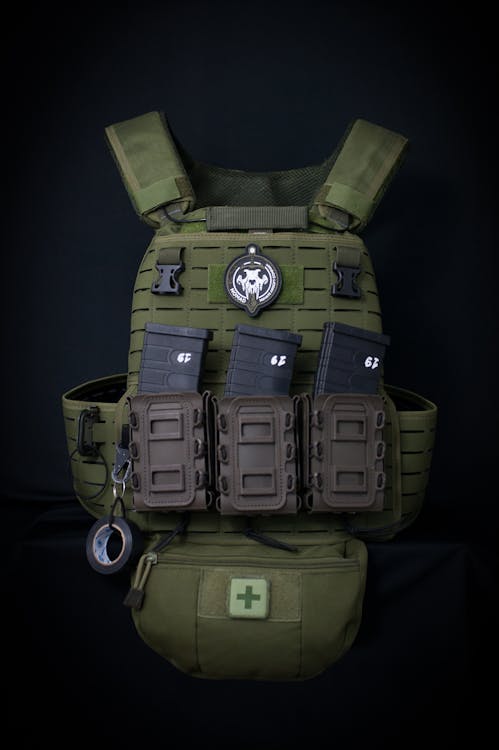
The version of this advice that actually helps: if you're buying armor for daily carry, spend the $50 to $100 extra to get something NIJ Listed. The Compliance Testing Program exists for exactly this reason. Bulletproof Zone's catalog links directly to CPL-listed models; if you don't see a listing reference on a product page, ask before buying.
Frequently Asked Questions
How much does a Level IIIA vest cost?
A Level IIIA soft armor vest runs $300 to $800 from reputable manufacturers. NIJ Listed models under Standard 0101.06 tend to sit in the $400 to $700 range. The BulletSafe VP3 at around $300 is one of the few CPL-listed vests at the lower end of that range. Avoid vests under $150 claiming IIIA protection without a CPL listing.
Is expensive body armor always better?
Not always. Price correlates most with weight and NIJ listing status, not raw stopping power. A $350 NIJ Listed Level IIIA vest stops 9mm and .44 Magnum as reliably as an $800 one. The higher price typically buys less weight, a better fit system, or additional coverage area. Spending more on a vest that fits poorly is worse than spending less on one that fits well.
What is the cheapest body armor that actually works?
The BulletSafe VP3 (Level IIIA, NIJ Listed under 0101.06) regularly comes in around $300 and has a clean CPL record. For hard armor, Spartan Armor Systems Level III steel plates start around $65 per plate before anti-spall coating. Both are verified against the NIJ CPL. Don't mistake cheap for ineffective; mistake cheap-with-no-CPL-listing for a risk you haven't priced correctly.
How much does a military-grade bulletproof vest cost?
The US military's Improved Outer Tactical Vest (IOTV) with ESAPI plates costs the government roughly $800 to $1,600 per set at contract pricing. Civilian equivalents at Level IV ceramic protection run $1,000 to $2,000 for a plate carrier plus two plates from a commercial manufacturer. "Military-grade" is a marketing phrase; what matters is the threat level and CPL listing.
Does body armor expire?
Yes. Most manufacturers recommend replacing soft armor after 5 years of regular use and hard plates after 5 to 10 years. The NIJ's ballistic testing doesn't include an aging component, but ballistic fibers degrade with UV exposure, sweat, and compression cycles. If you're buying used armor, treat any panel without a manufacture date as expired.
Can civilians legally buy body armor?
Yes, in 48 of 50 states. Federal law (18 U.S.C. § 931) prohibits possession by anyone convicted of a violent felony. New York effectively bans civilian purchase under NY Penal Law § 270.21 (under active litigation in Heeter v. James as of 2026). Connecticut requires a face-to-face transfer plus a state firearm permit. Bulletproof Zone ships to all other states.
Is Level IV body armor worth the cost?
It depends entirely on the threat you're protecting against. Level IV stops .30 AP rounds, which you're extremely unlikely to face as a civilian. For law enforcement or military contexts where rifle rounds are a real possibility, Level IV is worth the $500 to $1,500 per plate premium over Level III. For private security or civilian preparedness against handgun threats, Level IIIA soft armor at a fraction of the price is the more sensible choice.
Key takeaways:
- Bullet-resistant vests range from $150 (entry soft armor) to $1,500 (Level IV ceramic plates). The protection level you need depends on the specific threat you're protecting against.
- NIJ Listed under Standard 0101.06 is the verifiable baseline. Check the Compliant Products List at nij.ojp.gov before buying. "Meets NIJ standards" is a manufacturer claim, not a tested result.
- Steel plates cost less but require anti-spall coating and weigh 2 to 3 lb more per plate than polyethylene. Factor both into the real cost.
- The pinch test (foam backing = flag) and a CPL lookup take five minutes and will protect you from the biggest category of bad buys in this market.
- Bulletproof Zone stocks CPL-referenced brands including BulletSafe, Spartan Armor, AR500, Ace Link, and Shellback Tactical. Buy from a source that can show you a CPL entry.
Disclaimer: This article is for informational purposes only and does not, and is not intended to, constitute legal advice. Body armor laws change frequently at both federal and state levels. Consult a licensed attorney in your jurisdiction before relying on any information presented here. Bulletproof Zone makes no claim that body armor will provide complete protection in any scenario; no body armor is bulletproof. Last verified against published statutes and the NIJ Compliant Products List on May 2026.
Performance characterizations referenced in this article are based on the manufacturer's NIJ test parameters and/or independent laboratory testing as cited inline. NIJ does not "certify" body armor; products that pass the Compliance Testing Program (CTP) are issued a Notice of Compliance and listed on the NIJ Compliant Products List. Models referenced as "tested to NIJ standards" have not necessarily completed the CTP. Verify CPL status at https://nij.ojp.gov/topics/equipment-and-technology/body-armor/ballistic-resistant-armor before purchase.