


How Is Bullet-Resistant Clothing Made?

Quick answer: Bullet-resistant clothing is made by polymerizing para-aramid compounds (Kevlar, Twaron) or gel-spinning UHMWPE (Dyneema, Spectra) into high-tenacity fibers, weaving or cross-plying those fibers into ballistic fabric, laminating multiple layers under heat and pressure into rigid panels, encasing panels in a moisture-resistant cover, and stitching or inserting finished panels into garment shells. NIJ compliance testing determines the threat level each finished product can stop.
The gap between movie props and real-world bullet-resistant clothing comes down to materials science. A fabric's ability to stop a projectile depends entirely on the fiber's tensile strength and how energy is transferred along the weave. The two dominant families of ballistic fiber — para-aramid (Kevlar, Twaron) and ultra-high-molecular-weight polyethylene (UHMWPE, sold as Dyneema and Spectra) — each take a fundamentally different path from chemical plant to finished garment. Here is exactly how each gets there.
What Is Ballistic Fabric?
Standard clothing fabrics fail against projectiles because their fibers break under concentrated impact energy before that energy can spread. Ballistic fabrics work differently: high-tenacity fibers absorb and disperse impact energy along the weave plane, slowing the projectile until it deforms or stops. The key property is not hardness but tensile strength measured in grams per denier.
Kevlar 29, DuPont's original ballistic-grade fiber introduced for body armor use in the late 1970s, has a tenacity of roughly 23 g/denier. By comparison, high-tenacity nylon runs about 9 g/denier. That difference explains why you can make a 1.1 lb soft-armor panel that stops a .44 Magnum at 1,400 fps. Dyneema SK75 UHMWPE pushes tenacity above 35 g/denier at roughly half the weight of Kevlar for equivalent protection levels.
Bullet-resistant clothing at Bulletproof Zone uses panels made from both fiber families depending on the threat level and concealability requirements.
How Are Para-Aramid Fibers Made? (Kevlar and Twaron)
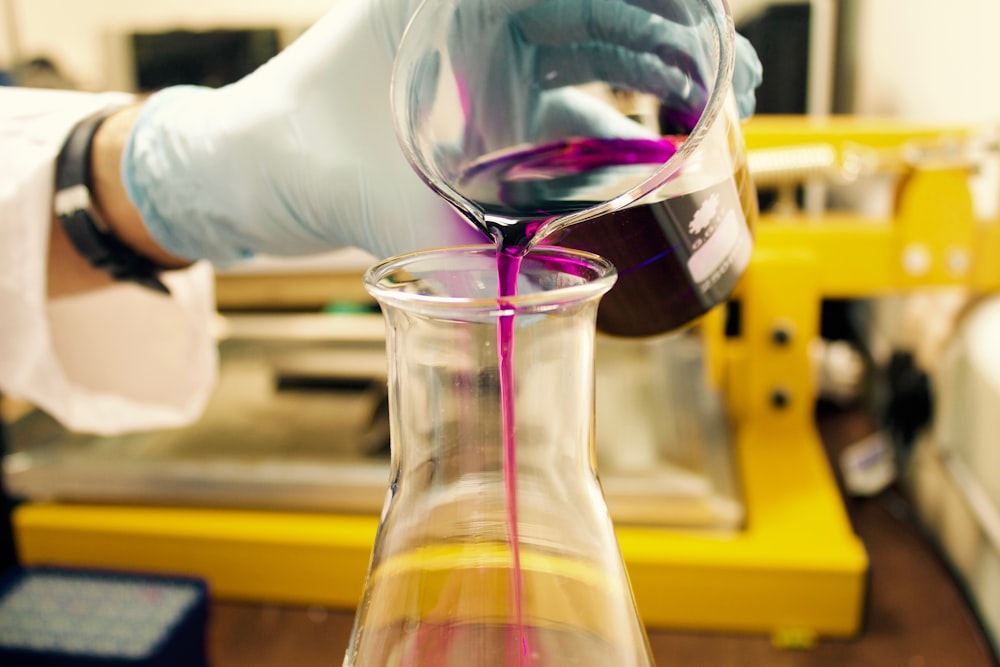
Para-aramid fiber production starts with a polymerization reaction. DuPont's Kevlar is made from two monomers: para-phenylenediamine (PPD) and terephthaloyl chloride (TCI). When mixed in a dry, cold solvent (N-methyl-2-pyrrolidone or NMP with a lithium salt catalyst), the two monomers react through condensation polymerization to produce poly(para-phenylene terephthalamide), the polymer chain that gives Kevlar its backbone.
The resulting polymer is dissolved in concentrated sulfuric acid to form a liquid-crystalline spinning solution called dope. That dope is forced through a spinneret (a die with hundreds of tiny holes) into a cold water bath in a process called wet spinning. The sulfuric acid dissipates into the bath, the polymer chains solidify into filaments, and the filaments are drawn under tension to align the molecular chains parallel to the fiber axis. That alignment is the structural source of Kevlar's high tensile strength: a load applied along the fiber axis runs directly down the backbone of the polymer chain rather than bending cross-links.
Teijin's Twaron uses the same para-aramid chemistry and a comparable wet-spinning process. For most ballistic applications, Kevlar and Twaron are interchangeable. The relevant differentiation at the armor level is fiber grade: Kevlar 29 (baseline, soft armor), Kevlar 49 (higher modulus, used in hard-armor composites), and Kevlar XP (cross-plied unidirectional, lighter weight for NIJ-Listed panels).
Meta-aramid fibers like Nomex are made from meta-phenylenediamine and isophthaloyl chloride. The resulting polymer chain bends at each aromatic ring connection rather than running straight. Meta-aramid is fire-resistant and used in flight suits and firefighting gear but has low ballistic utility — the kinked chain structure limits tensile strength compared to para-aramid. Do not confuse the two.

How Is UHMWPE Made? (Dyneema and Spectra)
UHMWPE (ultra-high-molecular-weight polyethylene) starts as an ordinary polyethylene resin — the same base polymer in plastic bags and cutting boards. The critical variable is chain length. Standard polyethylene has a molecular weight of roughly 200,000 g/mol. UHMWPE used for ballistics runs 3.5 to 7.5 million g/mol. That extreme chain length creates massive intermolecular entanglement that conventional melt-spinning cannot process.
DSM (makers of Dyneema) and Honeywell (makers of Spectra) both use gel-spinning to solve that problem. The polymer is dissolved in a solvent (typically decalin or mineral oil) at low concentration — around 2 to 5% by weight. That dilute solution allows the chains to partly disentangle in solution. The solution is extruded through a spinneret and then rapidly cooled to form a gel fiber. The solvent is extracted, and the gel fiber is super-drawn at elevated temperature to draw ratios of 30:1 to 150:1, aligning the chains along the fiber axis to the same effect as Kevlar's spinning tension.
The result: Dyneema SK75 has a Young's modulus of 120 GPa and specific strength approximately 15 times that of high-grade steel. It is also hydrophobic and resists UV degradation better than para-aramid. Its limitation for armor is low melting point (roughly 150°C) and susceptibility to creep at sustained loads. At Bulletproof Zone, we see UHMWPE panels dominating the concealable carrier market specifically because a Dyneema SK75 PE panel can achieve NIJ 0101.06 Level III protection at roughly 0.8 lb/sq ft versus 1.1 lb/sq ft for comparable ceramic.
How Are Ballistic Panels Made?
Fiber alone does not stop bullets. The finished fiber must be converted into a fabric architecture that spreads impact energy efficiently, then consolidated into a panel rigid or semi-rigid enough to limit backface deformation to the NIJ's 44mm limit on soft armor.
Weaving and Cross-Plying
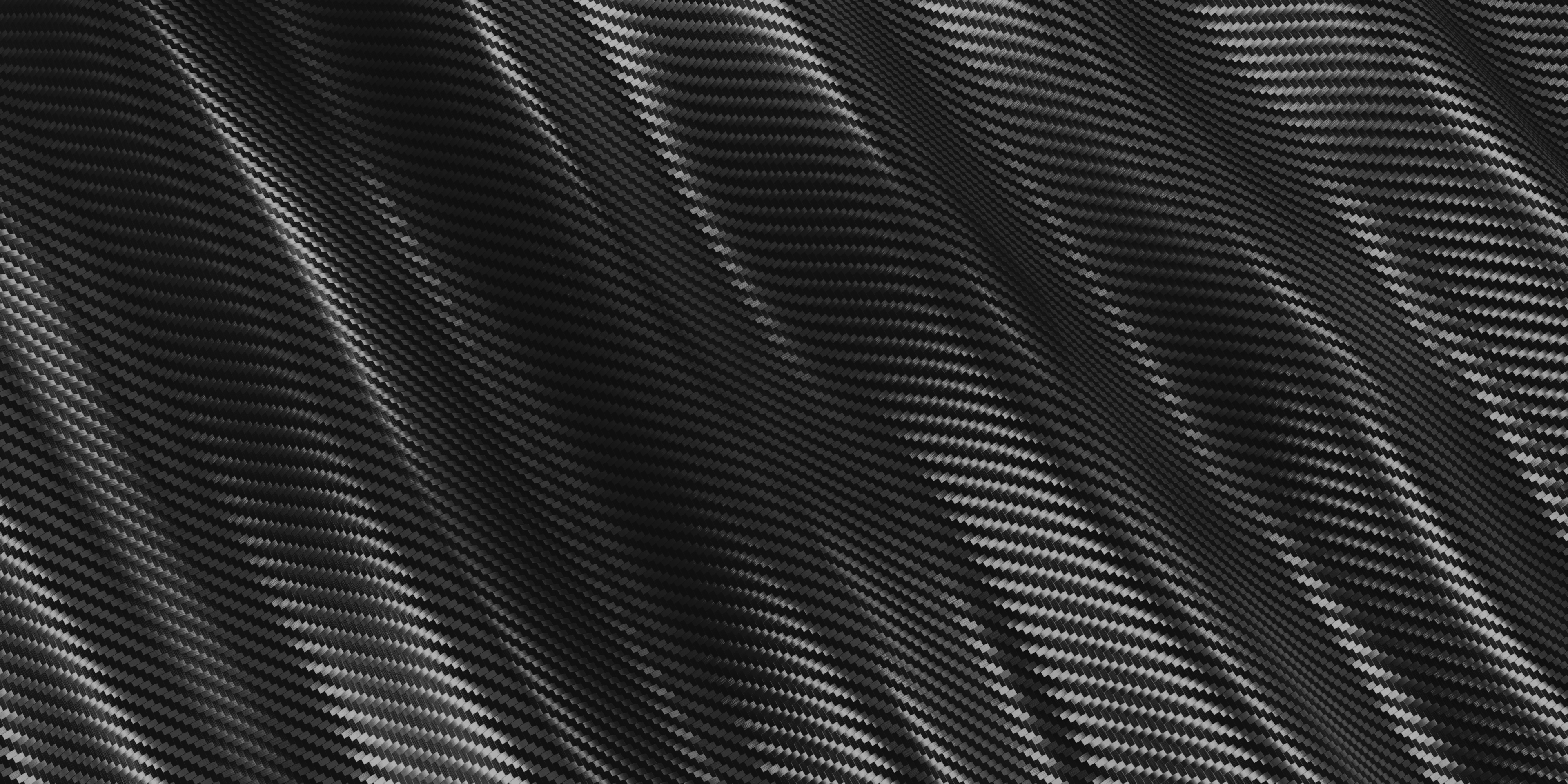
Para-aramid fiber is most commonly woven into a plain-weave fabric (warp and weft threads at 90 degrees). Each thread crossing is a contact point that grabs the projectile as it mushrooms. Basket-weave patterns using thicker bundles increase energy absorption at the cost of pliability. For soft-armor panels in concealable vests, woven Kevlar at 31 x 31 threads per inch is a common specification.
UHMWPE panels more often use unidirectional (UD) sheets rather than woven fabric. In UD construction, aligned fiber bundles are set in a resin matrix and cross-plied at alternating 0° and 90° orientations to create a sheet with bidirectional strength. Multiple UD sheets are stacked and pressed together. The cross-ply architecture spreads lateral deformation more efficiently than plain weave for rifle-threat levels.
Lamination and Panel Consolidation
Whether woven or UD, the fabric layers are stacked to a predetermined count. Soft-armor panels typically run 20 to 40 layers of woven para-aramid. The stack goes into a heated press at temperatures around 121°C (250°F) for Kevlar-based panels and somewhat lower for UHMWPE (to stay below the polymer's melting point). Pressure of 200 to 400 PSI consolidates the layers, and a resin or thermoplastic film between layers bonds the stack into a semi-rigid panel.
After pressing, the panel is trimmed to shape and tested for consistency. Thickness uniformity matters: a panel with voids or resin-starved zones will fail at that point even if the fiber count is correct.
The Protective Cover
A consolidated panel still needs a moisture barrier. Para-aramid absorbs up to 7% of its weight in moisture, and wet Kevlar loses roughly 25% of its ballistic resistance. Every soft-armor panel gets encased in a waterproof cover — most commonly a heat-sealed polyethylene or nylon shell with a water vapor permeability rating. The cover also protects against UV exposure, which degrades para-aramid fiber over time and is one reason manufacturers specify a 5-year service life on soft armor.
From Panel to Garment
The finished panel is either permanently stitched into the garment or designed for insertion into a dedicated pocket.
Stitched-In Panels
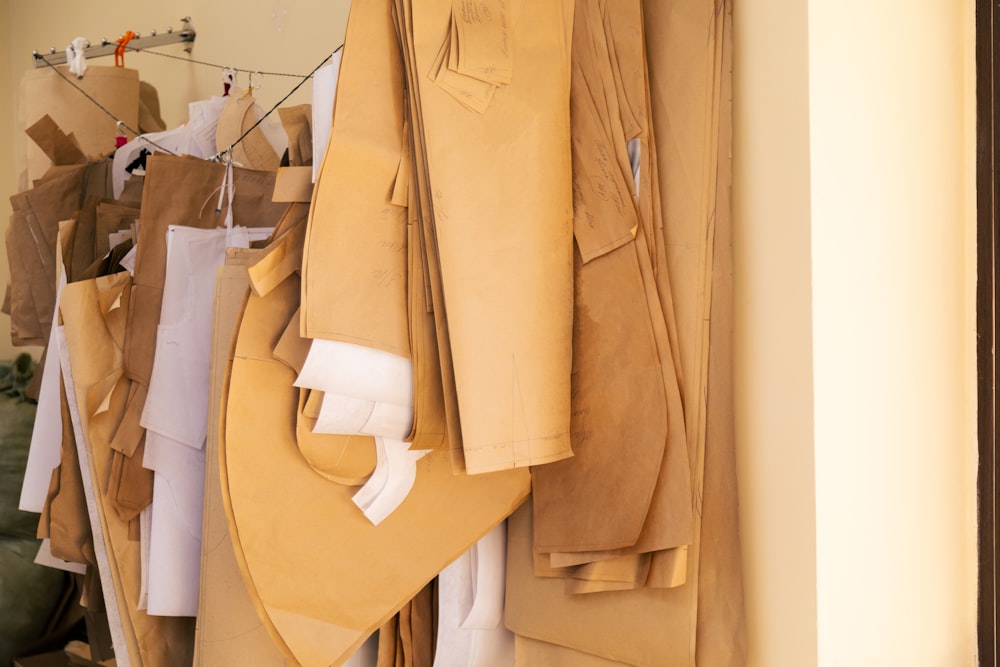
For permanently integrated construction (common in bullet-resistant T-shirts and hoodies), panels are cut to the garment pattern and attached using box stitching or quilt stitching. Box stitching runs the stitch line around the perimeter of the panel and creates more freedom of movement — the panel can flex slightly within its stitched boundary. Quilt stitching runs additional lines across the panel face, dividing it into sections. The result is stiffer and resists panel migration during wear, but adds manufacturing time.

Removable Panel Pockets
Outerwear — jackets, parkas, fleece pullovers — typically uses a sewn-in pocket accessed through a zipper or velcro flap at the bottom of the front and rear panel zones. The pocket keeps the panel in position without stitching through the ballistic layers themselves (stitching through panel material can compromise the fiber alignment at the needle path). Removable panels allow the garment shell to be washed while the panel is stored dry.
BulletBlocker, one of the better-known makers of civilian bullet-resistant clothing, uses this pocket approach across most of its outerwear line. The trade-off compared to permanently stitched panels: if a wearer forgets to reinsert the panel after laundry, protection is zero. Stitched-in construction eliminates that failure mode but complicates garment care.
For a side-by-side comparison of clothing styles and protection levels currently available, see our complete bullet-resistant clothing buyer's guide.
NIJ Compliance Testing — What the Certification Actually Means
The National Institute of Justice (NIJ) runs the Compliance Testing Program (CTP), which tests submitted armor against defined ballistic threats at accredited laboratories. A product that passes receives a Notice of Compliance and is listed on the NIJ Compliant Products List (CPL). That listing is the only basis for describing armor as "NIJ Listed" or "NIJ Compliant" without FTC exposure.

The current active standard is NIJ 0101.06 (2008), which uses the familiar Level IIA, II, IIIA, III, and IV designations. The CPL under 0101.06 was closed to new applications in January 2024, but products already listed remain valid through at least end of 2027. NIJ 0101.07, published November 2023, replaces the level designations with HG1 (formerly Level II), HG2 (formerly Level IIIA), RF1 (formerly Level III), RF2 (a new intermediate rifle tier), and RF3 (formerly Level IV). As of May 2026, no 0101.07 CPL has been published and no products carry a formal .07 compliance listing yet.
Some armor is sold as "tested to NIJ standards" without a CPL listing. That means the manufacturer ran tests internally or at a third-party lab against the NIJ test parameters, but did not submit the product through the full CTP. The product may or may not perform to the claimed level in field conditions. Before buying, verify current CPL status on the NIJ website directly.
See Bulletproof Zone's full range of bullet-resistant clothing and bullet-resistant vests, each listing indicating whether the underlying panel is NIJ Listed under 0101.06.
Frequently Asked Questions
What materials are used to make bullet-resistant clothing?
The two dominant ballistic fiber families are para-aramid (Kevlar by DuPont, Twaron by Teijin) and ultra-high-molecular-weight polyethylene (Dyneema by DSM, Spectra by Honeywell). Both are woven or cross-plied into ballistic fabric, laminated into panels, and sewn into garments. Some panels combine both fiber types for complementary performance at different threat levels.
How strong is Kevlar compared to steel?
Kevlar 29 has a tensile strength of approximately 3.6 GPa and a specific strength (strength-to-weight ratio) roughly five times that of structural steel. On a weight-for-weight basis, Kevlar absorbs more ballistic energy than steel, which is why a 5 lb soft-armor vest can stop a .44 Magnum when a comparable weight of steel plate cannot match the energy absorption per unit weight.
How many layers of Kevlar does it take to stop a bullet?
Layer count depends on the fiber grade, weave density, and threat level. A typical NIJ 0101.06 Level IIIA soft-armor panel against .44 Magnum at 1,430 fps requires roughly 20 to 40 layers of woven Kevlar 29 at 31x31 threads per inch. Heavier threats require harder materials — steel, ceramic, or composite hard plates — since stacking more Kevlar layers produces diminishing returns at rifle velocities.
What is the difference between Kevlar and Dyneema for body armor?
Kevlar (para-aramid) is stiffer, better tolerates heat, and is the dominant material in soft armor panels for handgun threats. Dyneema (UHMWPE) is lighter per equivalent protection level, hydrophobic, and commonly used in standalone hard plates for rifle threats. Dyneema panels are sensitive to sustained loads and elevated temperatures. Many modern hybrid plates use a ceramic strike face over a UHMWPE backing for weight savings with rifle-level stopping power.
Does bullet-resistant clothing have an expiration date?
Yes. NIJ 0101.06 specifies a 5-year maximum service life for soft armor under the compliance testing program. Moisture degrades para-aramid fiber, reducing ballistic performance. Dyneema and UHMWPE materials are less moisture-sensitive but still subject to UV degradation and mechanical fatigue from repeated wear. Most manufacturers print a "do not use after" date directly on the panel label.
Can bullet-resistant clothing stop rifle rounds?
Soft-armor panels sewn into clothing (Kevlar or Dyneema fiber, no ceramic or steel hard plate) are typically rated to stop handgun threats at NIJ Level IIIA (HG2) — up to .44 Magnum at 1,430 fps. Rifle rounds (5.56 NATO at approximately 3,100 fps, 7.62x51 NATO at approximately 2,750 fps) defeat soft armor. Stopping rifle threats requires hard plate inserts — ceramic, polyethylene composite, or steel rated to NIJ Level III (RF1) or Level IV (RF3).
Key takeaways:
- Para-aramid (Kevlar, Twaron) is made by wet spinning a polymerized sulfuric acid solution; UHMWPE (Dyneema, Spectra) is made by gel-spinning an ultra-dilute polyethylene solution and super-drawing to align polymer chains.
- Ballistic panels require proper fiber weaving or cross-plying, heat-and-pressure lamination, and a moisture-resistant cover — the fiber alone is not enough.
- Box stitching (more flexible) and quilt stitching (more rigid, better panel retention) are the two methods for integrating panels into garments.
- NIJ "Listed" or "Compliant" means a specific model passed the full NIJ Compliance Testing Program and appears on the active CPL — it is not a general certification applied to a whole brand.
- Soft armor stops handgun threats; rifle-rated protection requires a hard plate insert regardless of fiber quality.
Disclaimer: This article is for informational purposes only and does not constitute legal or safety advice. No body armor is bulletproof; bullet-resistant materials reduce but do not eliminate injury risk. Bulletproof Zone makes no claim that any product will provide complete protection in any scenario. Last verified against manufacturer specifications and the NIJ Compliant Products List May 2026.
Performance characterizations referenced in this article are based on manufacturer NIJ test parameters and published DuPont, Honeywell, and DSM technical literature. NIJ does not "certify" body armor; products that pass the Compliance Testing Program are issued a Notice of Compliance and listed on the NIJ Compliant Products List. Verify CPL status at nij.ojp.gov before purchase.