


NIJ Certification Explained: Listed, Compliant & Tested (2026)
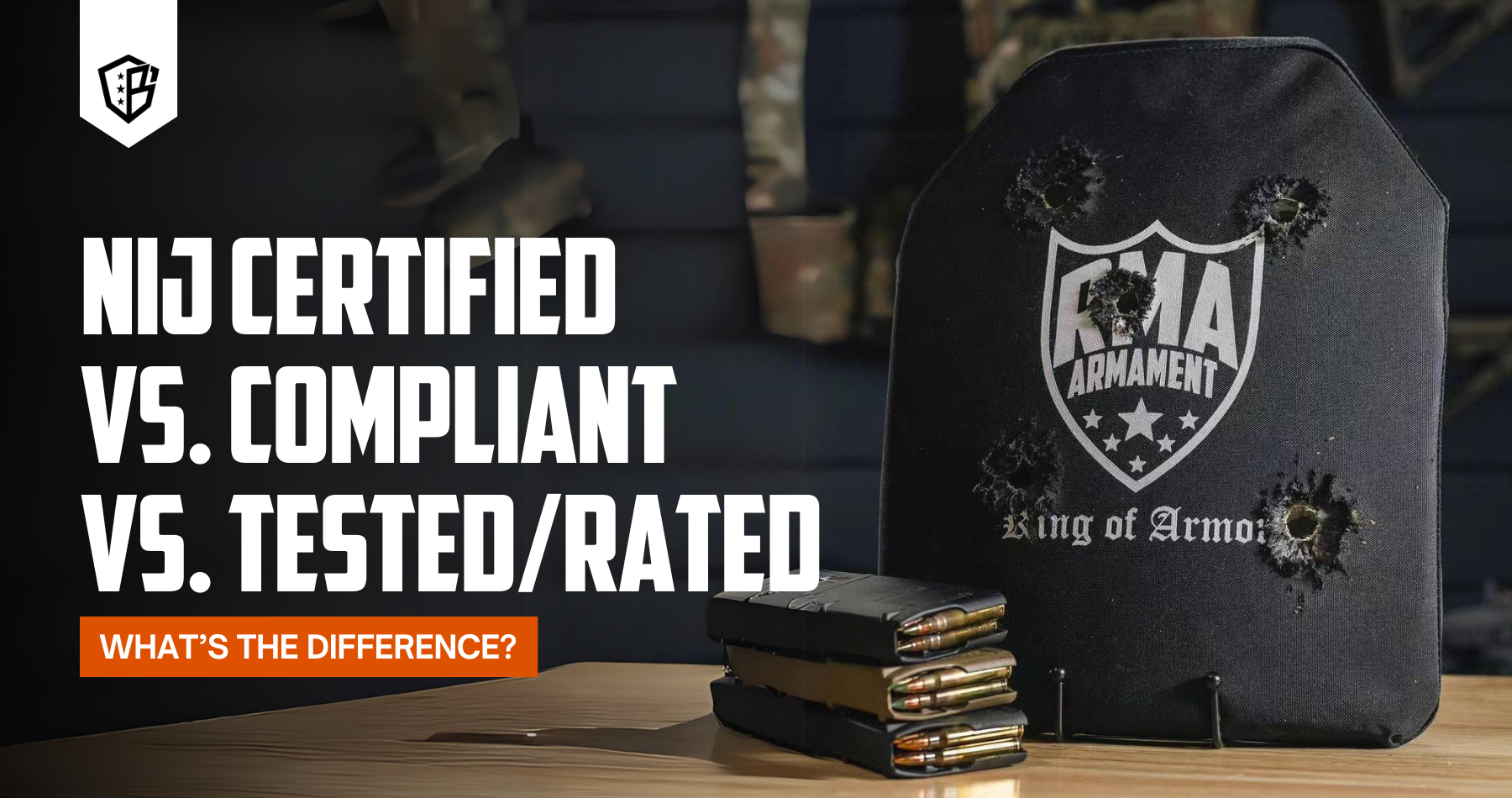
Quick answer: The NIJ does not use the word "certified." Armor that passes the NIJ Compliance Testing Program (CTP) is issued a Notice of Compliance and placed on the Compliant Products List (CPL). Manufacturers who say "NIJ Certified" are using informal language. "NIJ Compliant" typically means a manufacturer ran tests but the product may not be on the CPL. "NIJ Tested" is weaker still — tested, not necessarily passed. Only CPL-Listed armor carries independent third-party accountability.
Walk the floor at any trade show and you'll hear "NIJ Certified," "NIJ Compliant," and "NIJ Tested" used interchangeably. They are not the same. The difference between a product that is NIJ Listed (on the CPL) and one that is merely "tested by the manufacturer to NIJ parameters" is the difference between independent accountability and a company grading its own homework. For armor you're trusting with your life, that distinction matters.
What Is the NIJ?
The National Institute of Justice (NIJ) is the research and development arm of the U.S. Department of Justice. Among its mandates is setting performance standards for law enforcement equipment, including body armor. NIJ Standard 0101.06 has governed ballistic resistance testing since 2008. Its successor, NIJ Standard 0101.07, was published November 29, 2023, but as of May 2026 no 0101.07 CPL has been issued. Over 400 models remain Listed under 0101.06.
The NIJ runs the Compliance Testing Program (CTP) — a multi-lab independent process that tests submitted armor samples and, if they pass, issues a Notice of Compliance and adds the model to the publicly searchable CPL. The word "certified" never appears in NIJ's official documentation. That word is a manufacturer convention, not an NIJ designation.
How the NIJ Compliance Testing Program Works
The CTP is more demanding than most buyers realize. Manufacturers submit 7 to 37 samples per model. The samples are not cherry-picked by the manufacturer — they are drawn from production lots by the testing lab. Then the real stress begins.
1. Conditioning (Tempering)
A portion of the samples go through four conditioning sequences before any ballistic tests run:
- Thermal cycling: temperatures swing between 5°F and 194°F every two hours to stress adhesive layers and fiber matrix bonds.
- Static heat soak: 149°F for 10 consecutive days.
- Full submersion: plates soaked until saturated, then tested while dripping wet.
- Drop conditioning: plate loaded to 10 lbs, dropped strike-face-down onto concrete from four feet — twice.
2. Ballistic Testing
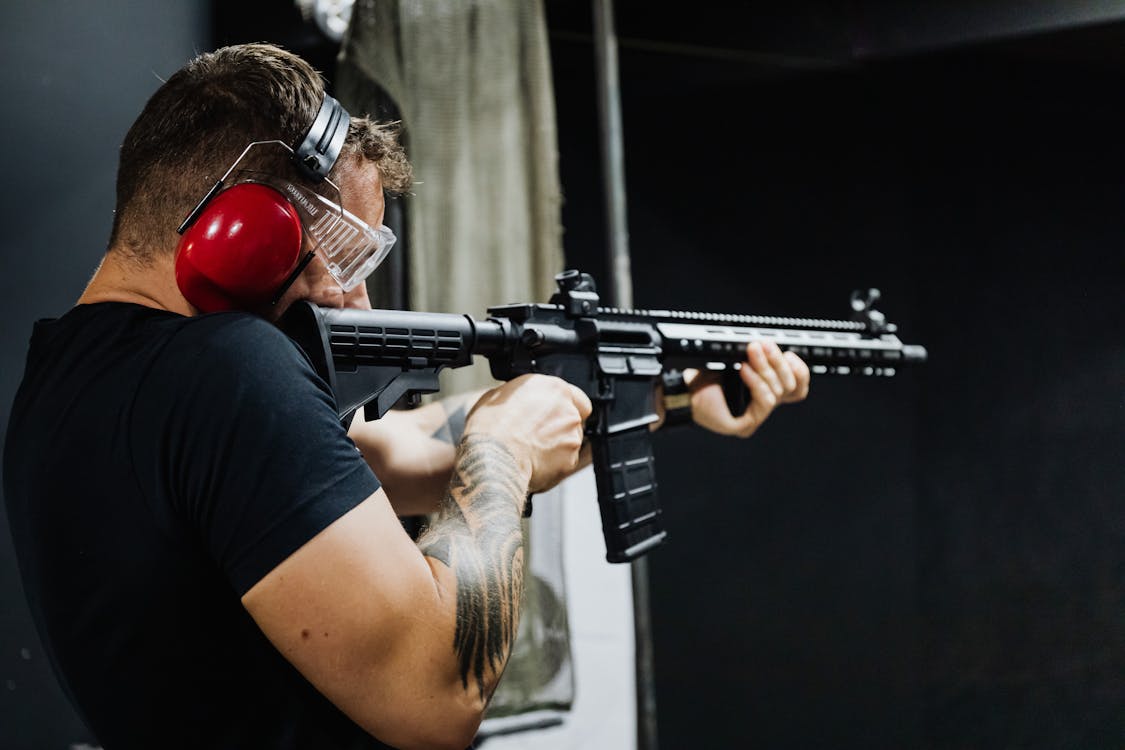
Plates mount on a clay backing calibrated to a specific hardness and temperature. Two test types apply:
- Perforation and Backface Signature (P-BFS / "V0"): measures backface deformation depth. Must stay below 44 mm to pass — deeper means more blunt trauma to the wearer.
- Ballistic Limit (BL / "V50"): finds the velocity at which the plate has a 50% probability of partial or complete penetration. Must exceed the standard's specified velocity for the threat level.
Under 0101.06, Level III plates face six hits of 7.62×51 NATO at up to
2,780 ft/s. Level IV plates face a single hit of 7.62mm armor-piercing
rifle at 2,880 ft/s.

3. Follow-Up Inspection and Testing (FIT)
Once Listed, a model doesn't stay listed automatically. The NIJ pulls random production samples every one to two years (annually for non-ISO manufacturers, biennially for ISO-certified ones) and re-tests them. A production run that drifts from spec loses its Listed status. This is the accountability layer that manufacturer self-testing cannot replicate.
What "NIJ Listed" Actually Means
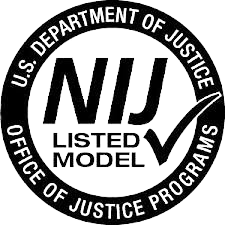
"NIJ Listed" is the accurate term for armor that has passed the CTP and appears on the NIJ Compliant Products List. Look for the "NIJ Listed" logo on the armor itself: on the back of hard plates, on the inner panel of soft armor vests. If you see that logo, the model passed independent third-party testing and is subject to ongoing FIT surveillance.
The most precise phrasing when describing such armor is "NIJ Listed under 0101.06 Level IIIA" (or III, or IV). When a vendor says "NIJ Certified," they almost always mean NIJ Listed. The informal usage isn't a lie in intent — but it creates legal gray area under FTC endorsement rules (16 CFR Part 255), since "certified by NIJ" implies an organizational endorsement the NIJ does not formally give.
Safe Life Defense, Premier Body Armor, RMA Defense, and several other manufacturers carry models that are NIJ Listed under 0101.06. You can verify any specific model by searching the CPL directly.
What "NIJ Compliant" Actually Means
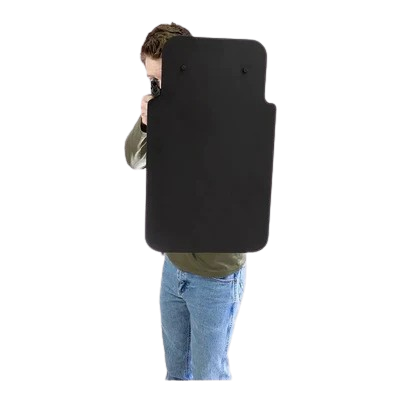
When a manufacturer labels a product "NIJ Compliant," it means the product was tested against NIJ performance standards. It does not confirm that the product is on the CPL or that testing was conducted by an independent NIJ-approved laboratory.
There are two legitimate scenarios where "NIJ Compliant" is the highest achievable label:
- The armor category has no CTP. Ballistic helmets, backpack inserts, ballistic shields, and Level III+ plates fall outside the CTP scope. No CTP means no CPL listing is possible. "Compliant" is the ceiling, not a shortcut.
- The manufacturer submitted to an independent NIJ-approved lab but chose not to enter the full CTP — typically because CTP costs and timelines are substantial, and the manufacturer wants to offer a lower price point.
The problem is that "NIJ Compliant" is also the label lower-tier manufacturers use after running their own tests at an uncredentialed lab, or testing to an outdated standard version, or testing a single sample rather than a production-lot batch. There's no external body distinguishing good-faith "Compliant" claims from sloppy ones.
Atomic Defense, for instance, claims testing to NIJ parameters — but the brand has accumulated BBB complaints and Reddit scrutiny (r/QualityTacticalGear) questioning whether their test methodology matches what the CPL process would require. By contrast, AR500/Armored Republic explicitly says "tested to meet and exceed NIJ standards" without a CPL listing, and their documentation is relatively transparent about what that means. Neither is Listed; but the accountability gap between them is real. Check the CPL, then check the company's test-report transparency.
What "NIJ Tested" Means
"NIJ Tested" is the loosest of the three labels. It indicates only that a test was performed against NIJ threat parameters. It doesn't specify who ran the test, which lab, whether the full protocol was followed, or whether the armor passed. I looked at a catalog last spring that listed six different vests as "NIJ Tested to Level IIIA standards" — two were CPL-Listed, two had independent lab reports available on request, and two had no documentation at all. Same label, three very different levels of accountability.
Treat "NIJ Tested" as a prompt to ask: tested by whom, at which lab, to which version of the standard, and is the test report available? A manufacturer with nothing to hide will produce that report. One who can't produce it isn't worth the risk.
Side-by-Side: Listed vs. Compliant vs. Tested
| Label | NIJ Issued? | On CPL? | Independent Lab? | FIT Surveillance? |
|---|---|---|---|---|
| NIJ Listed (CPL) | Yes — Notice of Compliance | Yes | Yes — NIJ-approved lab | Yes — annually or biennially |
| NIJ Compliant (mfr claim) | No | No (or not applicable) | Sometimes | No |
| NIJ Tested (mfr claim) | No | No | Unknown — ask for report | No |
Body Armor That Cannot Be on the CPL
The CTP covers plates and soft armor vest inserts meeting specific dimensional and threat-level criteria under 0101.06. Several common categories fall outside that scope entirely:
- Ballistic helmets — no NIJ helmet CTP exists as of May 2026. Every ballistic helmet is, at best, NIJ Compliant or NIJ Tested.
- Backpack inserts — no insert CTP. "NIJ Compliant IIIA" on a backpack panel means a manufacturer test, not a CPL listing.
- Ballistic shields — not covered by 0101.06.
- Level III+ plates — the "+" designation is not an NIJ threat level. Level III+ armor typically means the plate was independently tested to defeat 5.56 M855 Green Tips in addition to the standard Level III threat suite, but there is no CTP for this category. Note: "+" ratings (e.g., IIIA+, III+) are manufacturer designations and are not part of the NIJ Standard 0101.06 or 0101.07 nomenclature.

For all of these product categories, "NIJ Compliant" from a credible manufacturer is the legitimate standard. The question to ask is whether the test report is publicly available and which lab ran it. Helmets from Ops-Core, Avon Protection, and similar established manufacturers will have documentation; generic import helmets often won't.
NIJ 0101.07: What Changes in 2026
NIJ Standard 0101.07 was published November 29, 2023, alongside companion threat-level spec NIJ 0123.00. The new standard replaces the legacy Level I through IV nomenclature with a revised threat hierarchy: HG1 (formerly Level II), HG2 (formerly IIIA), RF1 (formerly III), RF2 (new intermediate rifle tier defeating 5.56 M855 at ~3,115 ft/s), and RF3 (formerly IV). Level IIA is eliminated.
As of May 2026, no 0101.07 Compliant Products List has been published. No armor model is "NIJ 0101.07 Certified" or "NIJ 0101.07 Compliant" in any formally verifiable sense. Products described as "designed to meet NIJ 0101.07 HG2 parameters" are tested to the threat specification, not Listed. The 0101.06 CPL remains the live reference. See the full NIJ 0101.07 explainer for the complete crosswalk.
For buyers looking at body armor right now: any vest or plate sold as "meeting NIJ 0101.07" means the manufacturer tested to the new threat parameters. Independent CPL verification under 0101.07 will come once the NIJ publishes the new CPL. Until that happens, the 0101.06 CPL is still the gold standard for third-party accountability.
Frequently Asked Questions
Does the NIJ actually certify body armor?
No. The NIJ does not issue certifications. Armor that passes the NIJ Compliance Testing Program (CTP) receives a Notice of Compliance and is added to the Compliant Products List (CPL). "NIJ Certified" is informal manufacturer language, not an official NIJ designation. The precise term is "NIJ Listed."
What is the NIJ Compliant Products List (CPL)?
The CPL is the NIJ's publicly searchable database of body armor models that have passed the CTP and received a Notice of Compliance. It is maintained at nij.ojp.gov. Any plate or vest model currently on the CPL has undergone independent ballistic testing and is subject to follow-up surveillance testing.
Can a ballistic helmet be NIJ Listed?
No. The NIJ CTP covers plates and soft armor inserts, not helmets. There is no CTP for ballistic helmets as of May 2026. Any helmet described as "NIJ Listed" is using inaccurate language. Helmets can be NIJ Compliant, meaning they were tested against NIJ ballistic threat parameters, but independent CPL listing is not possible for helmets.
What does "NIJ Compliant" mean if the armor isn't on the CPL?
It means the manufacturer tested the armor against NIJ performance parameters and claims it meets the standard. It does not confirm who ran the test, at which lab, or whether the full CTP protocol was followed. For plates and vests, this is a weaker claim than CPL-Listed. For helmets, shields, and backpack inserts, it is the strongest claim available since those categories have no CTP.
Is NIJ 0101.07 body armor available yet?
No NIJ 0101.07 Compliant Products List has been published as of May 2026. Armor marketed as "designed to meet NIJ 0101.07 HG2" or similar has been tested to the 0101.07 threat parameters, but no model carries formal CPL-level accountability under the new standard yet. The 0101.06 CPL remains the active reference for independently verified armor.
What is the difference between NIJ Tested and NIJ Compliant?
"NIJ Tested" simply means a test was performed against NIJ parameters. It does not confirm that the armor passed or that a credentialed lab ran the test. "NIJ Compliant" typically implies the test was completed and the product met the standard's requirements — but still without independent CPL verification. Both are weaker than CPL-Listed status.
How do I verify that armor is on the NIJ CPL?
Go directly to nij.ojp.gov/topics/equipment-and-technology/body-armor/ballistic-resistant-armor and search by manufacturer name or model number. If the exact model (including size and color variant in some cases) does not appear in the CPL, it is not NIJ Listed regardless of what the packaging says.
Key takeaways:
- The NIJ does not "certify" body armor. It issues Notices of Compliance. Products on the CPL are "NIJ Listed."
- "NIJ Compliant" is a manufacturer claim, not an NIJ designation. For plates and vests, it carries no independent accountability. For helmets and shields, it is the maximum possible label.
- "NIJ Tested" is the weakest label — it confirms only that a test occurred, not that it passed or was conducted by a credentialed lab.
- Verify any plate or vest model directly on the NIJ CPL before purchasing.
- No armor is NIJ 0101.07 Listed as of May 2026. The 0101.06 CPL remains the live standard.
Disclaimer: This article is for informational purposes only and does not constitute legal advice. Body armor laws change frequently at both federal and state levels. Consult a licensed attorney in your jurisdiction before relying on any information presented here. Bulletproof Zone makes no claim that body armor will provide complete protection in any scenario; no body armor is bullet-resistant in every circumstance. Last verified against published statutes and the NIJ Compliant Products List on May 2026.
Performance characterizations referenced in this article are based on the manufacturer's NIJ test parameters and/or independent laboratory testing as cited inline. NIJ does not "certify" body armor; products that pass the Compliance Testing Program (CTP) are issued a Notice of Compliance and listed on the NIJ Compliant Products List. Models referenced as "tested to NIJ standards" have not necessarily completed the CTP. Verify CPL status at nij.ojp.gov before purchase.